- What is GBS? A rare nerve disorder causing muscle weakness, often post-infection.
- Exercise Goal: Regain strength in legs, core, and upper limbs after hospitalization.
- Lower Body: Static quadriceps, ankle movements, hip exercises, side-lying leg raises.
- Core/Back: Bridging, knee rotations, and lower abdominal exercises.
- Upper Body: Shoulder/elbow strengthening, grip exercises with therapy balls.
- Advanced: Resistance band workouts for shoulders and knees (links included).
- Caution: Avoid high-risk activities (e.g., driving) until fully recovered.
Guillain-Barré Syndrome (GBS) is a rare condition that affects nerves in the body. The cause of GBS is unknown, but it often occurs after an infection. Symptoms include muscle weakness or paralysis, which can affect the arms, legs, face, neck, or tongue.
Gradually, it develops like paralysis, and if this problem progresses further, it affects our hands, so much that it also affects our respiratory system. The cause of this condition is unknown, and treatment includes rest, fluids, and medications. Patients with GBS should receive prompt medical attention.
Once the medical condition stabilises, the sufferer should immediately start exercises to regain the lost strength1. Until then, they should also avoid activities that might worsen symptoms. This includes avoiding high-risk situations such as driving until recovery is complete.
This article will cover strengthening exercises for both upper and lower extremities, including the trunk. These are straightforward exercises.
- Guillain-Barre Syndrome (GBS) Exercises: Effective Rehabilitation Workouts
- Best GBS Recovery Exercises for Legs & Lower Body
- GBS Strengthening Exercises for Core & Lower Back
- Upper Limb Exercises for Guillain-Barre Syndrome Recovery
- GBS exercise pdf
- Resistance Band Exercises for GBS Patients (Advanced Recovery)
- Resistance Band Shoulder Exercises for GBS Recovery
- Knee Strengthening Exercises with Resistance Bands

Guillain-Barre Syndrome (GBS) Exercises: Effective Rehabilitation Workouts
Once you are out of hospital you should start exercising. We have covered the exercises in three different parts. One is for the lower extremities including low, the second is for the trunk, low back and the third exercises for the upper extremities.
The upper extremities include exercises for the shoulder, elbow and fingers. The exercises we have covered here in this article are light. Once you feel you have regained enough strength, you can progress to more resistance exercises.
At the end of the post, I will share links to those resistance exercises. So let’s begin with exercises for the legs.
Best GBS Recovery Exercises for Legs & Lower Body
So, first of all, we start with the exercises to strengthen the muscles of the leg. For this, we will learn exercises for the knee joint, ankle joint, and thigh.
If there is weakness in the leg, it is very important to strengthen it by exercising it, so the first exercise we call the static quadriceps exercise or the knee press exercise.
#1 Static Quadriceps Exercise for GBS Muscle Weakness
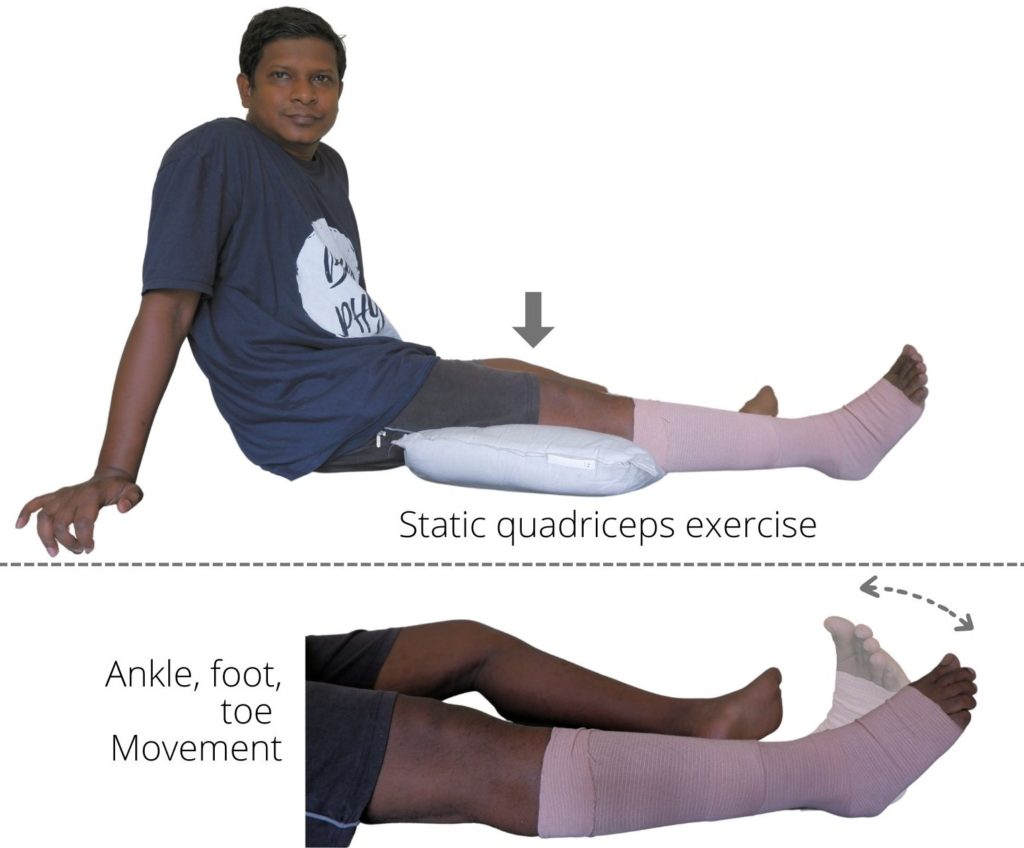
The static quadriceps exercise is one of the most effective exercises for Guillain-Barre Syndrome. To perform this exercise, you will need a pillow, a towel, or a roll of a bedsheet.
- Place the pillow (or towel, or bedsheet roll) under your knees.
- Now, slowly squeeze your quadriceps muscle and press down on the pillow with your knee.
- Hold this position for 5 seconds, counting from one to five, and the release it.
- You can do them together in both the legs simultaneously.
- Repeat this exercise at least 30 to 40 times in a session, although it is better to do as much as possible.
The static quadriceps exercise is an excellent exercise for Guillain-Barre Syndrome because it helps to improve muscle strength, especially in the legs.
When performing this exercise, you will feel your quadriceps muscles working hard to hold the position, which will help to strengthen them over time.
#2 Ankle & Toe Movement Exercises to Prevent Foot Drop
Many patients suffering from Guillain-Barré Syndrome (GBS) may experience a common symptom known as foot drop. For targeted exercises and electrical stimulation options, see our detailed guide on foot drop exercises and treatment.
However, even if you don’t have foot drops, you can still benefit from a simple yet effective ankle-toe movement exercise. This exercise involves movement of your foot, specifically focusing on ankle flexion-extension.
- To perform this exercise, sit comfortably with legs straight in front of you.
- In this position, bend your ankle and move your foot away from your body (plantarflexion).
- After a brief pause, move your foot towards your body, this is called dorsiflexion.
- Repeat this alternate plantarflexion and dorsiflexion 20 – 30 times in a session. However, the more you do the better it is.
#3 Hip Abduction & Adduction Exercises for GBS Patients
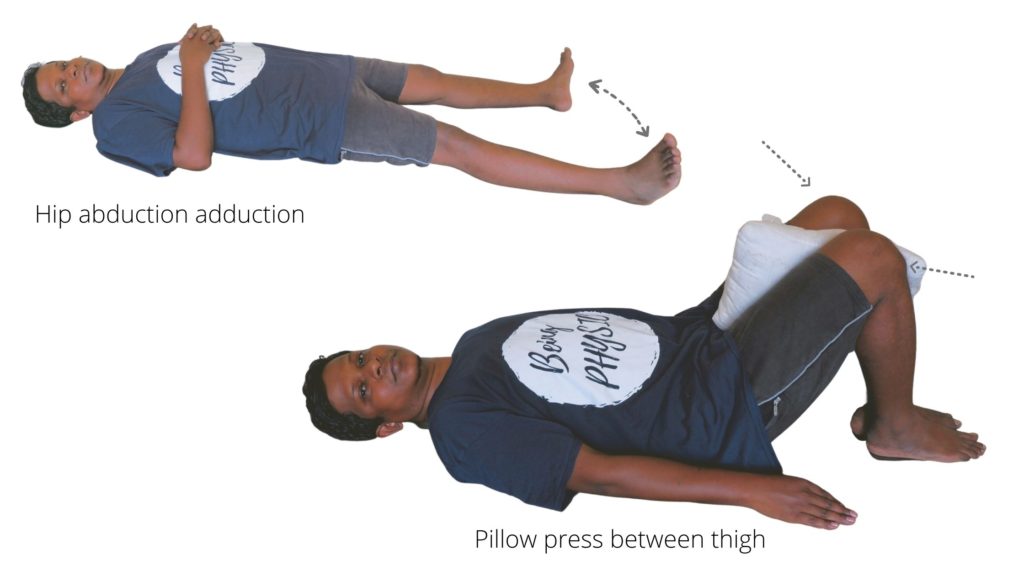
Our next exercise is the hip abduction adduction exercise.
- The starting position for this exercise will be lying flat on your back with your legs straight.
- Now, slowly move your leg away from your body without lifting it.
- Next, return your leg to the normal position and repeat the same movement with your other leg.
- It is recommended to perform this exercise 10 to 15 times in a single session.
#4 Pillow Squeeze Exercise: Inner Thigh Strengthening
One of the most effective exercises to strengthen the muscles inside your thighs is the pillow squeeze exercise.
- To perform this exercise, start by lying on your back with your legs straight and your arms at your sides.
- Bend both your knees and place a pillow between your knees. If you don’t have two pillows, fold a single pillow and place it between your thighs.
- Now, press the pillow between your thighs and hold for 5 seconds, then relax.
- Repeat this for at least 15 – 20 times in a session.
#5 Straight leg raise
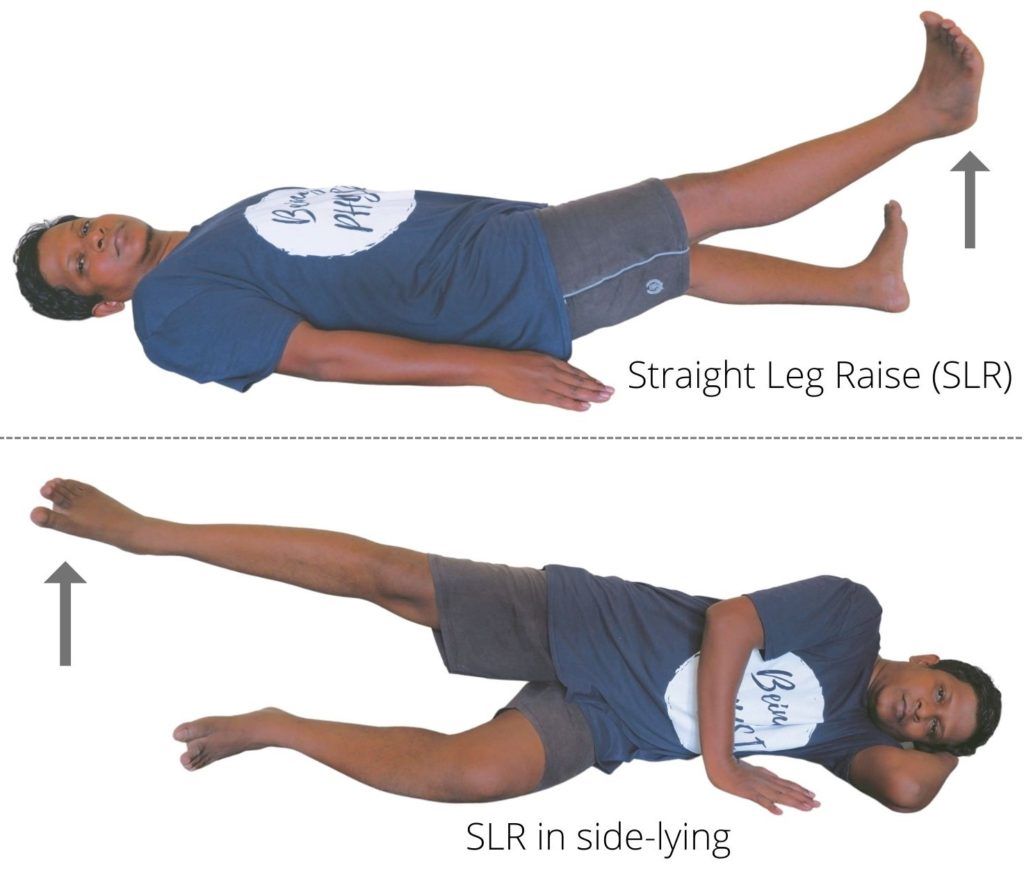
This exercise also helps to strengthen the quadriceps muscle. Here is the process of the straight leg raise exercise:
- In the lying position, first bend your ankle to point the toes towards yourself. This ensures the muscle contraction is isolated to the quadriceps muscles.
- Now, slowly lift your leg straight by keeping your knee straight.
- Ensure that you do not lift it more than 30 degree of angle.
- Hold this position for 5 – 10 seconds, and then lower down.
- Repeat this for 10 times in a session.
#6 Side-Lying Leg Raises for Hip Stability
Next, we target to strengthen the muscles on the outer sides of this. For this exercise, you have to come to side-lying position. Place the leg that is to be exercised on the top.
- So, start by lying on your side and bending both knees.
- Then, straighten your upper legs and lift them to a 30-degree angle.
- Hold this position for five seconds, counting to yourself: 1, 2, 3, 4, 5. Then, relax and repeat the exercise.
- Do this exercise at least 10 times in a session, and do it on both sides of your body.
GBS Strengthening Exercises for Core & Lower Back
Now let us discuss strengthening the muscles of our lower back to strengthen the muscles of the trunk. For this, the first and most basic exercise is the bridging exercise.
For safety, install an adjustable bed rail if you struggle with mobility during exercises.

- [Rock-Solid at 400 lbs: ASTM-Approved Safety Rail for Seniors] KingPavonini bed rails for elderly adult – safety you can…
- [From Twin to King: Stable, Adjustable Fit You Can Trust] The KingPavonini bed assist rail is height adjustable from 17….
- [Non-Slip Curved Handle – Stable Support for Recovery & Limited Mobility] The upper handle of the bed rail comes with pa…
#7 Knee Rotation Exercise for GBS Trunk Mobility
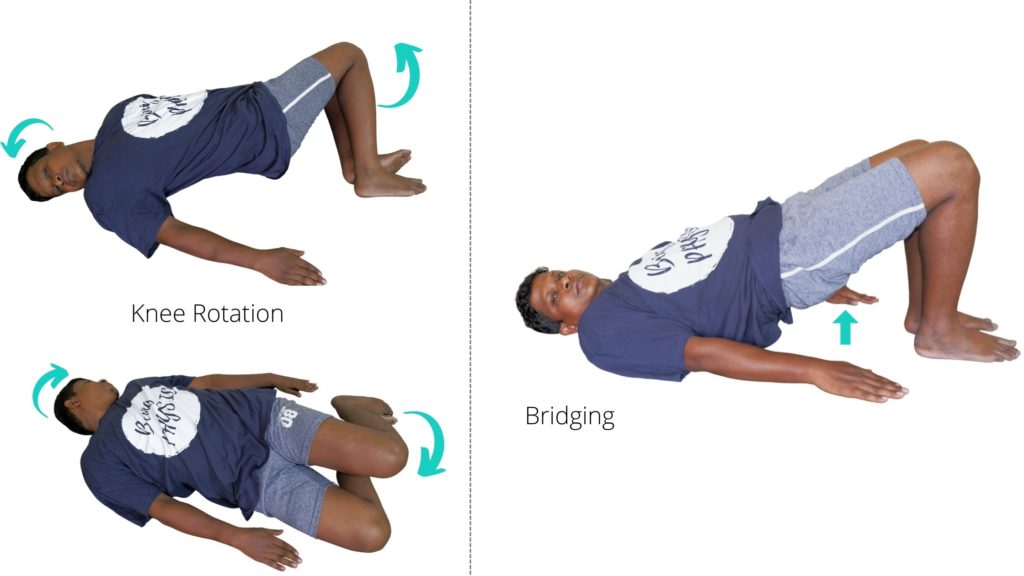
Knee rotation is a simple yet effective exercise to strengthen the lower trunk muscles.
- To start, lie down flat on your back and bend both knees, bringing your feet together.
- Next, rotate your legs to the left side and then to the right side, as if you’re swinging your knees from side to side.
- This exercise has no specific count, so feel free to move at your own pace. Aim to do it for three to five minutes in a single session.
#8 Bridging Exercise to Strengthen Lower Back Muscles
Next is the bridging exercise, an essential exercise to strengthen the core muscles. The starting position for this exercise will be lying flat on the back and bending the knees to keep the foot flat on the floor.
Place both hands on the side, as shown in the figure.
- In this starting position, lift your lower back as much as possible, taking it as high as possible.
- Hold the position for 5 seconds and then relax it down.
- Repeat the same process, counting 1 to 5, relax, lift your lower back again, count from 1 to 5, and relax.
- This exercise is a great way to strengthen your lower back muscles.
- We recommend to perform this exercise at least 15 to 20 times in one session.
#9 Lower Abdominal Exercises for GBS Core Stability

Our next exercise for Guillain-Barré syndrome targets the lower abdominal muscles. The position for this exercise is similar to the previous one, but the benefits are focused more on the lower abs.
Sometimes, the lower abdominal muscles can also be affected, so it’s important to engage them in your workout routine. Here’s how to do it:
- First, grasp your hands in front of yourself and keep your elbows straight.
- Then, lift yourself to the front, then to the left side, then to the right, and back to the centre.
- Repeat this movement, alternating sides, for as many repetitions as you can manage.
- There’s no specific count, but aiming for at least 10 to 15 repetitions is a good idea.
Upper Limb Exercises for Guillain-Barre Syndrome Recovery
Now, let’s move on to the upper limb. Many times it affects the hands of patients with GBS, so, for this, let me tell you about exercises. First of all, you have to strengthen the muscles around your shoulders.
#10 Shoulder flexion extension exercise
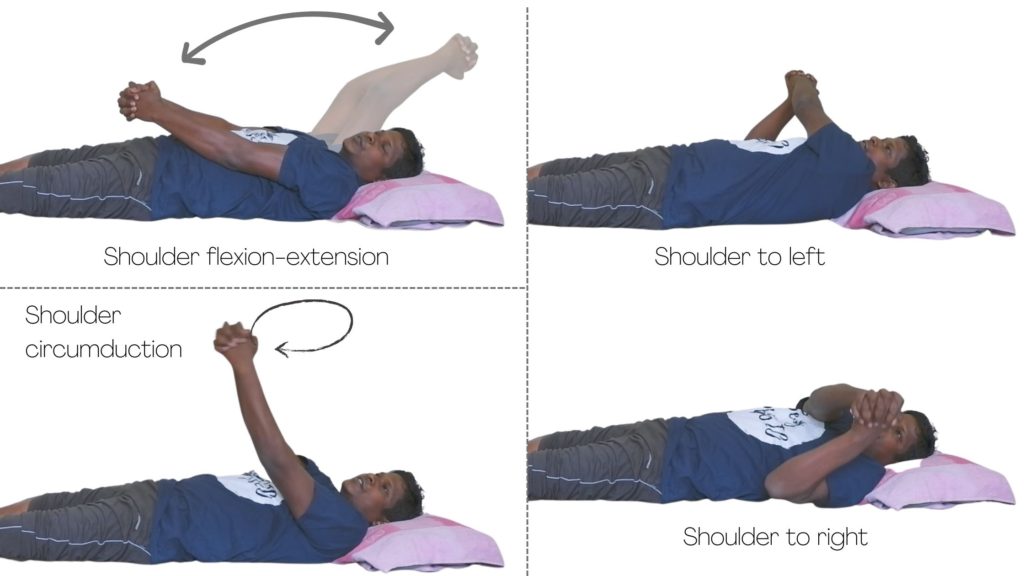
In Guillain-Barré syndrome (GBS) cases, shoulder strengthening exercises are crucial to help patients regain their mobility and strength. So, let us start with shoulder flexion and extension.
- To begin, lie down flat on your back and grasp your hand in front of you. Initially, you may need someone’s help to help you grasp your hand.
- Once you have a good grip, keep your elbow straight and lift your shoulder towards your ear. From there, please take it to the backside and hold for a few seconds.
- Then, bring it back to the normal position.
- Repeat this for 10 to 15 times in a single session.
#11 Shoulder sideways movement
- Now, in the same position, you can perform other exercises to strengthen your shoulder muscles further.
- For shoulder sideways movement, lift your shoulder vertically and then move your shoulder left and right as if waving your hand to the left and right sides.
- Again, repeat this exercise 10 to 15 times in a single session.
#12 Shoulder circumduction
- In addition to these exercises, you can also perform circumduction in the same position.
- To do this, rotate your hand clockwise and anticlockwise in a circular motion.
- Repeat this exercise 10 to 15 times in a single session.
Also Read: Paralysed Hand Can Improve Movement Using This New Device| Study
#13 Shoulder abduction and adduction
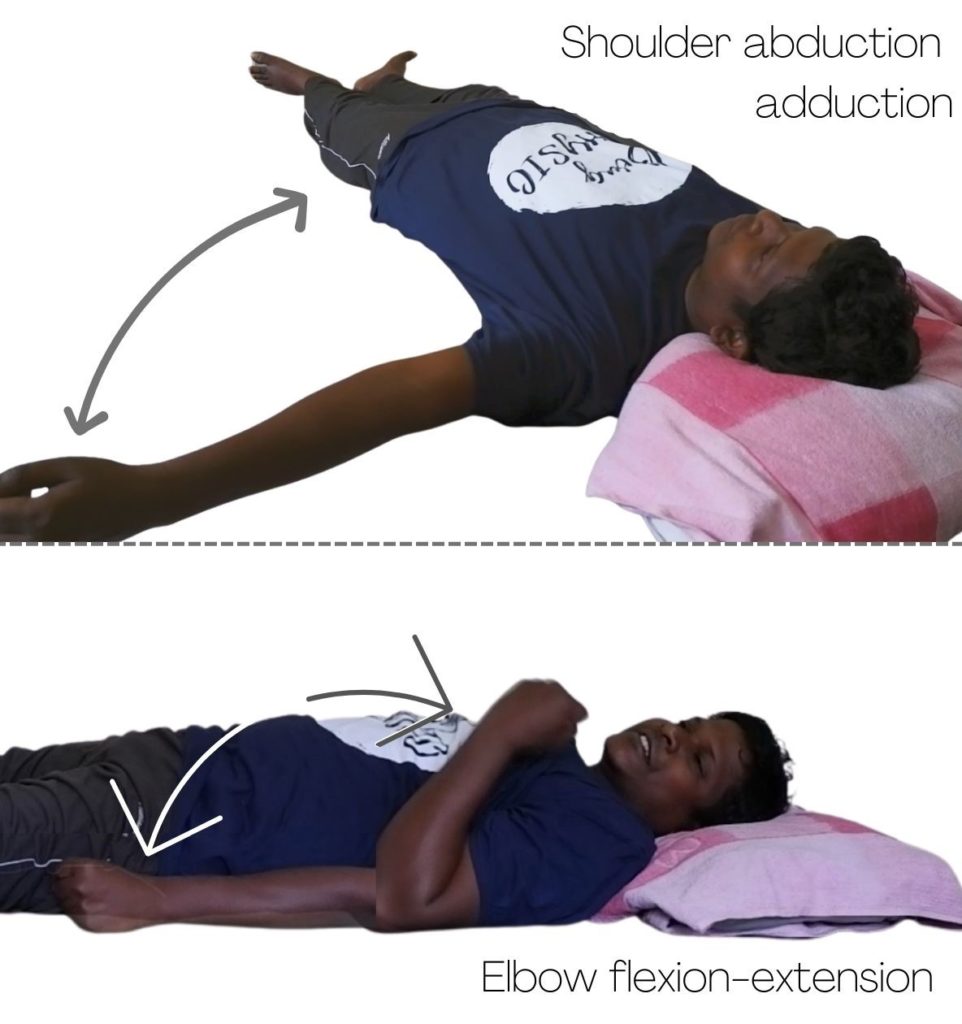
- Lie flat on your back with hands by your side.
- Now, abduct your shoulder by taking your arm away from your body. You dont have to lift, just slide on the bed.
- Then, adduct your shoulder by sliding your arm back to the starting position.
- Repeat abduction and adduction for 10 to 15 times in a single session.
#14 Elbow Flexion & Extension Exercises for Arm Mobility
In GBS, the sufferer has difficulty using their arm for day-to-day activities. For this, it is important to regain shoulder flexor and extensor muscle strength. Please follow these steps fot this exercise:
- In lying position, with arms by your side, slowly flex your elbow. Initially, you may need some outside assistance.
- After fully flexing your elbow, now try to straighten it.
- Repeat this alternated elbow flexion and extension for a minimum of 15 – 20 repetitions in a session.
#15 Wrist flexion, extension and circumduction
- Next, you can move on to the wrist flexion-extension exercise.
- Hold your arms before you, flex your wrists, and then extend them.
- Repeat this movement for 15 – 20 repetitions.
- After that, you can move on to circumduction, which involves rotating your wrists in a circular motion.
- Do this for both hands and repeat for a few sets.
- Remember, you can do all these exercises in the lying position I just demonstrated, or you can try them in a seated position if that is more comfortable for you.
#15 Grip Strengthening Exercises for Guillain-Barre Syndrome
Guillian Berry syndrome sufferers gradually develop weakness in the great they are unable to hold even a glass of water they have difficulty grasping any object, which affects their quality of life. To improve grip strength, we need to exercise it.
For this exercise, we need a silicone gel ball for a sponge ball you need to grasp the ball and squeeze it with the most strength you can do.
Replace the sponge ball with TheraPutty (extra-soft to firm) as your grip improves.


There is no specific count for this exercise. Whenever you are sitting, ideally, you don’t have any work, then you can hold the ball and perform the exercise. Slowly, you will find that you will improve your grip strength, and you can easily grab the glass of water.
There are many other good hand exercises for guillain barré, which are beyond the scope of this article. We highly suggest referring to this link for hand exercises in Guillain barré syndrome.
GBS exercise pdf
All these exercises I have arranged beautifully in the ebook. I strongly suggest you get it and keep it handy.
Resistance Band Exercises for GBS Patients (Advanced Recovery)
Apart from all this, I have made many videos to strengthen my arm and leg muscles. There is a type of exercise that can be done with these resistance bands to strengthen the shoulder muscles.
I have made videos on all these, so I will not discuss them here. I will give the link in the description. You go and have a good look there.
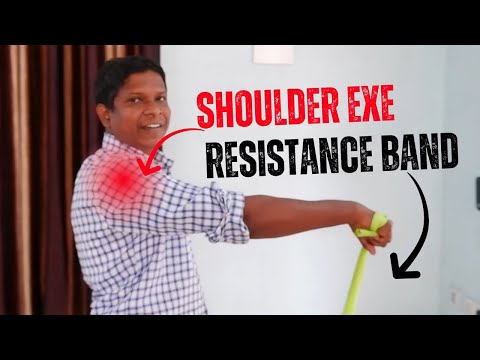
Resistance Band Shoulder Exercises for GBS Recovery
Here are 5 easy shoulder strengthening exercises using a resistance band.
Knee Strengthening Exercises with Resistance Bands
Here are the 7 best knee exercises with a resistance band
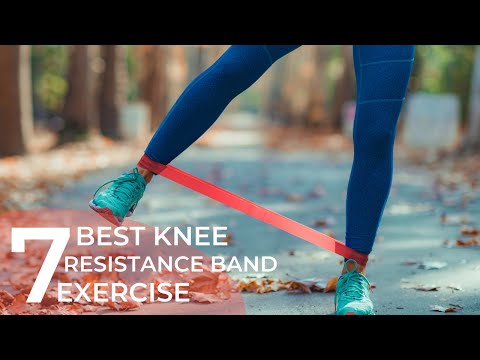
With the help of this band, you can do many exercises: you can exercise your knees, you can exercise your hips, and you can do exercises for your shoulder joint.
If you also want to buy it, I will give its link in the description; you can buy this resistance band. Apart from these exercises, you also have to pay attention to your diet and nutrition, and what supplements you will take?
Keep Reading: 7 Easy Exercise for Paralyzed legs at Home to Improve Walking
GBS Exercise FAQs

The author is a physiotherapist who has been practising for the last 17 years. He holds a Bachelor's in Physiotherapy (BPT) from SVNIRTAR (Swami Vivekananda National Institute of Rehabilitation and Research), one of the prestigious physiotherapy schools in India.
Whatever he learns dealing with his patient, he shares it with the world through blogs and e-books. He also owns a YouTube channel, "Sunit Physiotherapist" with over 8 lakh active subscribers. Here, he shares everything he gets to learn serving the patient.