Last Updated on January 30, 2026 by Sunit. S. Ekka
Acromioclavicular (AC) joint dislocations are common shoulder injuries that occur when the ligaments supporting the joint between your collarbone and shoulder blade are stretched or torn. This article explains what AC joint separation is, how it is classified, what you should look for on X‑ray, and the main treatment and rehabilitation options.
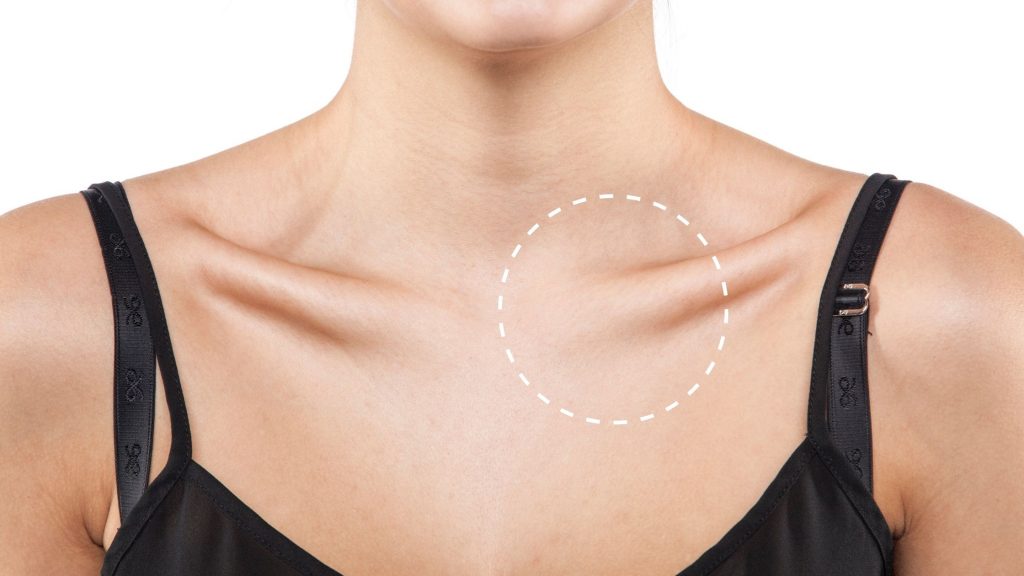
Acromioclavicular (AC) joint subluxation and dislocation are common shoulder injuries, especially after a fall directly onto the tip of the shoulder or a sports tackle. The AC joint is the small joint between the outer end of the clavicle and the acromion of the scapula, forming the bony bump you can feel on the top of your shoulder.
When the supporting ligaments are stretched or torn, the clavicle can partially slip (subluxation) or completely shift out of place (dislocation), creating pain, swelling and a visible step at the joint.
In this article, you will learn how AC joint subluxation and dislocation are classified, how to identify key X‑ray findings, and the main non‑surgical and surgical treatment options, with a special focus on rehabilitation and return to activity.
Anatomy of the Acromioclavicular (AC) Joint

So, before we proceed, let’s understand a little about its anatomy. This will help us understand it more deeply later. So, in the figure, you can see the clavicle and the acromion process of the scapula. They both are both held in place by ligaments called as the acromioclavicular ligament.
These are two ligaments between the coracoid process and the clavicle. We call it the coracoclavicular ligament (the conoid and trapezoid part).
These three ligaments together hold the clavicle in place. Any injury to this ligament results in dislocation or subluxation of the acromioclavicular joint.
Causes and Mechanism of AC Joint Subluxation and Dislocation
What is the mechanism of acromioclavicular joint subluxation and dislocation? Typically, it happens when a person falls on the tip of the shoulder with the arm adducted.
The first is direct injury to the shoulder. If someone hits the shoulder directly, causing any type of injury, usually, there is subluxation and dislocation. Usually, there is either subluxation or dislocation, depending on the severity of the injury.
AC joint subluxation

So, first, let’s understand subluxation and what happens in it. In subluxation, there’s a:
- Rupture of the joint capsule and the acromioclavicular ligament.
- The rupture occurs in the acromioclavicular ligament and also in the joint capsule.
As you can see, the figure represents rupture of the acromioclavicular ligament, including the joint capsule.
Dislocation of acromioclavicular joint

Now let’s move on to a dislocation. In a dislocation:
- In addition to the rupture of the joint capsule and acromioclavicular ligament, there is also the rupture of the coracoclavicular ligament.
- So, the ligament that holds the clavicle in place is ruptured.
- This causes the acromion process to displace to the lower side, and the outer end of the clavicle gets displaced to the upper side.
Rockwood Classification (Grade I–III)

Now, what are the different grades of acromioclavicular joint injury? According to the Rockwood classification, it is divided into three grades from Grade I to Grade III 1. Higher grades (IV–VI) involve more severe displacement and are usually surgical and managed by orthopaedic surgeons.
- Grade I
- Grade II
- Grade III
Grade I AC joint dislocation
What will happen in Grade One? In grade one,
- There will be a sprain only in the acromioclavicular ligament.
- But there’s no impact on the acromioclavicular ligament. There will be no rupture. There will be just a sprain.
Acromioclavicular joint dislocation Grade II
In grade two, there will be:
- A rupture of the acromioclavicular ligament, including the joint capsule. But in the coracoclavicular ligament, there will be just a sprain and nothing else. There will be no rupture there.
This will result in the acromioclavicular joint subluxating, but there will be no dislocation.
Grade III
Now we move on to grade three. In grade three:
- The acromioclavicular ligament and both coracoclavicular ligaments are completely ruptured. There’s no sprain here. It’s completely ruptured, and
- The clavicle is displaced upward, the acromion process is displaced downward, and the joint is completely dislocated. We’ll call this grade three.
Symptoms and Clinical Features
So, what are its clinical features?
- There will be pain.
- Swelling around the shoulder.
- Tenderness over the acromioclavicular joint. Tenderness will be present at this point. If you palpate the area, the patient will complain of pain.
- Shoulder movement will be painful and restricted. Obviously, shoulder abduction and shoulder elevation will be painful and restricted.
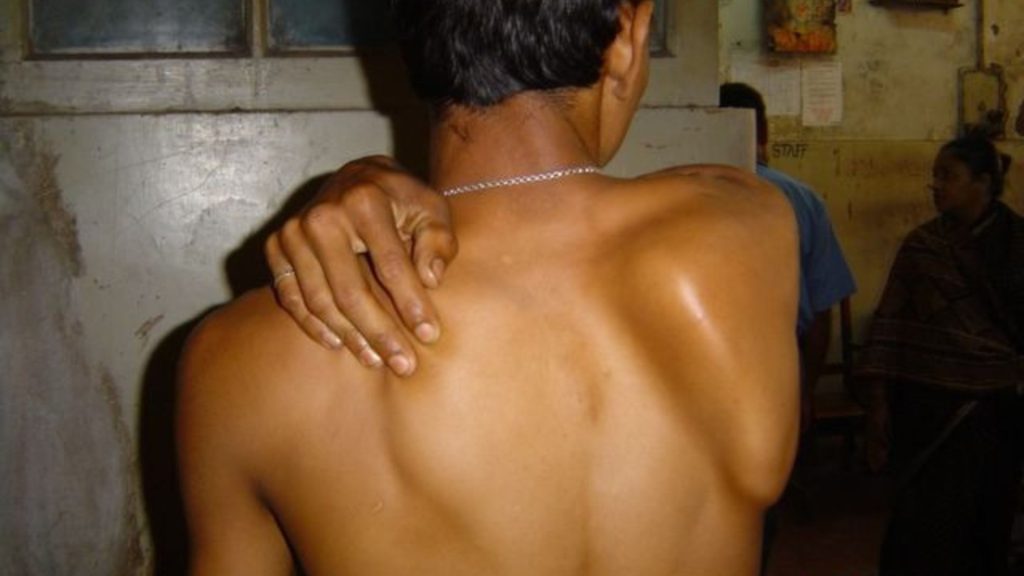
- In grade three injuries, the lateral end of the clavicle may be unusually prominent. That means the lateral end of the clavicle will become unusually prominent. That’s what upward displacement looks like. So, it’s more prominent here.
X‑ray and Diagnosis

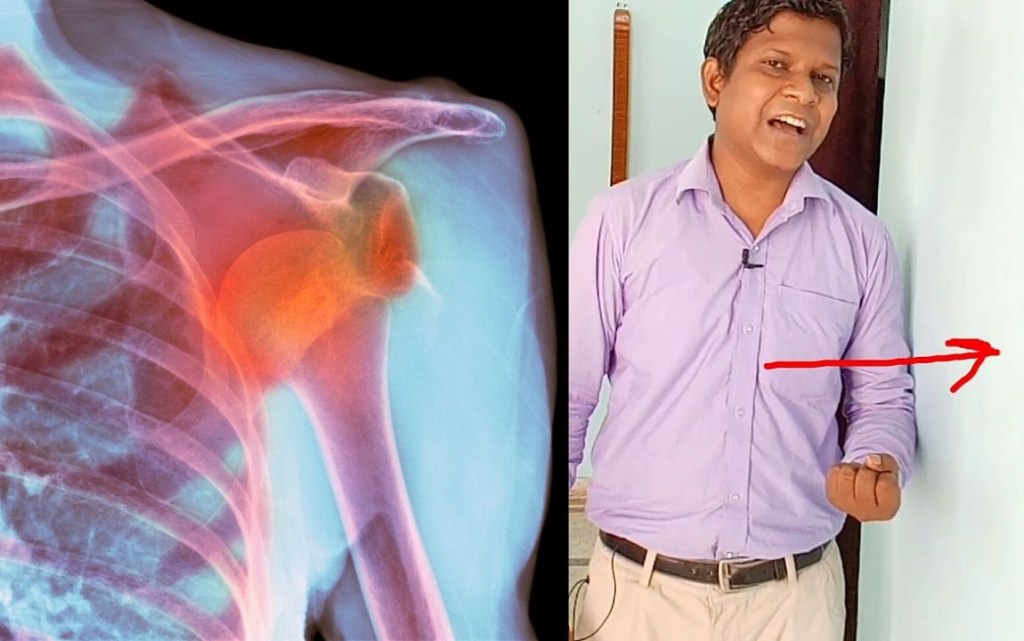
Now, how do we investigate this? We’ll take X-rays. X-rays of both shoulders showing the acromioclavicular joint2. That means, when the X-ray is taken, both shoulders should be covered by a single plate so we can compare them.
So, here you can see an X-ray covering both the right and left shoulders, and here you can see that you see a dislocation in one shoulder. On this side, we can see the dislocation of the shoulder.
So, this is how we’ll take X-rays and cover both shoulder joints. By comparing the two, we can investigate the extent of shoulder subluxation or dislocation.
Treatment: Conservative vs Surgical
Now, let’s move on to treatment. First, subluxation. What do we do for subluxation?
A triangular sling is given for two to three weeks. Some strapping is done. So, this sling or strapping may be required. There’s no need for surgery. In subluxation, the ligament gradually begins to realign within two to three weeks, and improvement occurs.
But once the sling is removed, we need exercises because there’s a high chance of shoulder stiffness.
Now what should we do for a dislocation?
We can also do stapling for a dislocation.
If the dislocation isn’t severe, but it’s very displaced, or when it’s badly displaced, then screw fixation from the clavicle to the coracoid process may be necessary. A screw is used to hold these two in place.
In a way, this screw is performing the function of the coraco-clavicular ligament: to hold the clavicle in place. Or, K-wire tension band wiring may also be required.
Sometimes, reduction is also done with a screw plate, which is the newer surgery these days.
Keep Reading: Best Exercises for Sternoclavicular Joint Dislocation
FAQ on Acromioclavicular joint dislocation

The author is a physiotherapist who has been practising for the last 17 years. He holds a Bachelor's in Physiotherapy (BPT) from SVNIRTAR (Swami Vivekananda National Institute of Rehabilitation and Research), one of the prestigious physiotherapy schools in India.
Whatever he learns dealing with his patient, he shares it with the world through blogs and e-books. He also owns a YouTube channel, "Sunit Physiotherapist" with over 8 lakh active subscribers. Here, he shares everything he gets to learn serving the patient.