

If you are suffering from Ankylosing Spondylitis/ AS then you must know about biologics. Biologics are a newer type of medicine that is effective in people with moderate to severe Ankylosing Spondylitis who have not responded to other treatments.
If you are someone who has tried all kinds of treatment but are not improving, then you may consider reading further.
You might be wondering why it’s a physiotherapy blog, and we are talking about medicine. Actually, I have a client with Ankylosing Spondylitis to whom I am giving physiotherapy. He is also taking biologics along with physiotherapy.
Biologics for ankylosing spondylitis
I have seen his condition, which made me share it with you all via this blog. My client is a 28-year-old male suffering from Ankylosing Spondylitis since last 9 years. Luckily, he has not developed any serious bony changes like a bamboo spine or joint fusion, except a problem in the hip joints.
He has developed narrowing of the joint space in both hip joints. Recently, he visited a rheumatologist who suggested biologics. He was prescribed 6 doses of it. By the time I am writing this post, he had already received 3 doses.
But before proceeding to biologics, let us discuss a little about ankylosing spondylitis.
What is Ankylosing spondylitis?
The name ankylosing spondylitis comes from the Greek word “ankylos,” meaning stiffening of a joint, and “spondylo,” meaning vertebra. Spondylitis refers to inflammation of the spine or one or more of the adjacent structures of the vertebrae.
Ankylosing spondylitis is a chronic disease which is characterised by progressive inflammation and stiffening of the joints and is a form of arthritis.
Who is affected?
If you are suffering from Ankylosing spondylitis, let me tell you that you are not alone. There are up to 65 million people worldwide who have the condition, including almost 5 million people diagnosed with it in Asia.
Most people first develop Ankylosing spondylitis between the ages of 15 and 40 years. It is about three times more common in men than in women.
What are its common symptoms?
- It starts with pain on the lower back. Slowly, it spreads to the whole of the spine. Pain flares up especially in the morning and often during the night (usually in the lower back, but often up to the neck).
- As the disease progresses, pain and stiffness start developing in multiple other joints (eg knees, ankles, hands, and feet)that get worse with rest and can improve with activity.
- Persisting pain for more than three months, and continuing for life.
- The severity varies from person to person, and not everyone will experience the most serious complications. Some will experience only intermittent back pain and discomfort, but others will experience severe pain and stiffness over multiple areas of the body for long periods of time.
- Ankylosing spondylitis is usually characterised by acute, painful episodes followed by temporary periods of remission where symptoms subside.
What are Biologics?
A biologic is different from other medicines. Unlike other medicines, these are not chemicals, it is a type of medication that is created inside a living cell, and this is why it is called biologics.
It is created by changing the DNA of certain cells. They are changed so that they are programmed to replicate themselves indefinitely. They are also programmed so that they can produce a desired antibody inside the body.
A biologic used for treating Ankylosing Spondylitis is programmed to produce an antibody against tumour necrosis factor (TNF).
How does it work in our body?
Biologics are TNF blockers (inhibitors) that block TNF. Tumour necrosis factor (TNFα, tumour necrosis factor alpha) is a signalling protein (cytokine) which is believed to be responsible for systemic inflammation.
A recent study conducted on 8000 psoriatic arthritis sufferers taking TNF inhibitors has shown that there is no increased cancer risk with TNFi treatment as compared to the general population.
TNF in controlled amounts is beneficial to our body, but in Ankylosing spondylitis sufferers it is found in excessive amounts. This results in inflammation in ankylosing spondylitis.
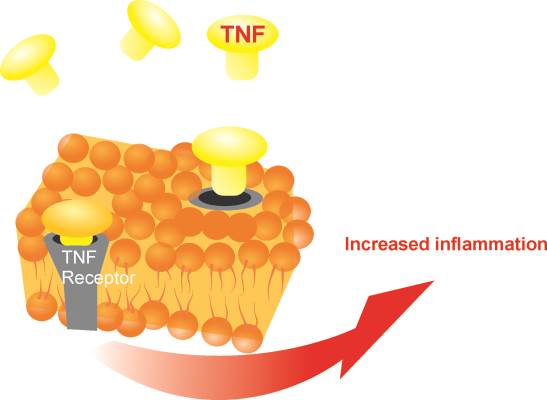
Biologics have been shown to be quite effective in treating ankylosing spondylitis (AS) in many people. They are designed to target TNFα of the immune system.
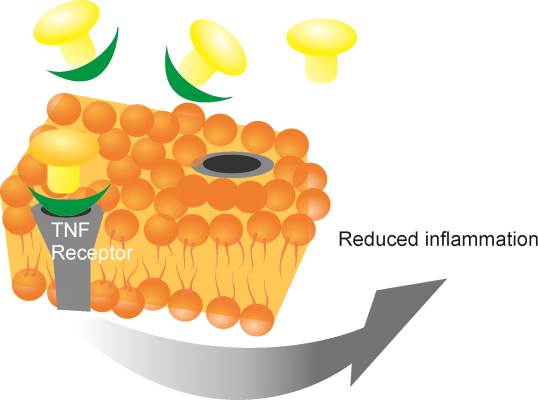
Biologics act by producing an antibody which blocks/ inhibit the action of this inflammatory TNFα. In this way, biologics can reduce inflammation and the resulting tissue damage and improve disease symptoms for many people who take them.
Are biologics right for me? The doctor will decide by considering many things. So consult your doctor about biologics.
Final words
Remicade (infliximab) is the brand name of the biologic that my patient received. It was given through injection. Like any other medicine, it has its own side effects. But one of the major drawbacks is its cost. A single dose of the injection cost him around 17000 INR.
Keep Reading: 11 Easy Exercises for Ankylosing Spondylitis to Improve Joint Stiffness
Source: www.spondylitis.org
Updates (August 2026)
This section was added to reflect important developments in biologic and advanced therapies for ankylosing spondylitis (AS) / axial spondyloarthritis (axSpA) since the original 2016 article.
Biologics are no longer limited mainly to TNF inhibitors. Current options and key advances include:
- IL-17 inhibitors (including dual IL-17A/F inhibition with bimekizumab / Bimzelx) are now established treatments. Bimekizumab was approved for active AS and non-radiographic axSpA and has shown sustained clinical and MRI benefits in long-term data.
- TNF inhibitors remain foundational. Multiple biosimilars (adalimumab, infliximab and others) have improved access and reduced cost while maintaining disease control when switching from reference products.
- JAK inhibitors (e.g., upadacitinib) are recommended options, generally positioned after TNF or IL-17 agents in many guidelines.
- 2026 treatment guidelines position TNF inhibitors and IL-17 inhibitors as equivalent first-line biologics after inadequate response to NSAIDs. Choice is guided by comorbidities (e.g., uveitis, IBD, psoriasis) and shared decision-making. Switching to a different mechanism is preferred over cycling within the same class after failure.
- Pipeline agents of interest include additional dual IL-17 nanobodies (e.g., sonelokimab with promising Phase 2 data) and novel mechanisms such as anti-TL1A and T-cell targeting approaches.
Physiotherapy and exercise remain essential companions to any medication strategy.
Supporting references / further reading:
- Bimekizumab in active axial spondyloarthritis: 52-week results from the BE MOBILE 1 and 2 phase 3 studies (PubMed)
- Long-term safety and efficacy of bimekizumab in axSpA: 2-year results (PubMed)
- Novel therapies for axial spondyloarthritis and future directions (2025 review)
- 2026 ACR/SAA/SPARTAN Guidelines for the Treatment of Axial Spondyloarthritis (summary)
- Spondylitis Association of America – Medications overview
Disclaimer: This update is for educational purposes only and is not medical advice. Treatment decisions must be made with a qualified rheumatologist based on individual assessment.

The author is a physiotherapist who has been practising for the last 17 years. He holds a Bachelor's in Physiotherapy (BPT) from SVNIRTAR (Swami Vivekananda National Institute of Rehabilitation and Research), one of the prestigious physiotherapy schools in India.
Whatever he learns dealing with his patient, he shares it with the world through blogs and e-books. He also owns a YouTube channel, "Sunit Physiotherapist" with over 8 lakh active subscribers. Here, he shares everything he gets to learn serving the patient.








Pingback: Rheumatoid arthritis vs osteoarthritis: which arthritis is worse? - Physiosunit