Key Takeaways: Scoliosis Exercises at Home
- Helpful for mild cases: May modestly improve mild curvature (often a few degrees) with consistent practice
- Time commitment: 10-15 mins twice daily (morning/evening)
- Best starter exercise: Cat-Cow stretch (10 reps/session) for general mobility
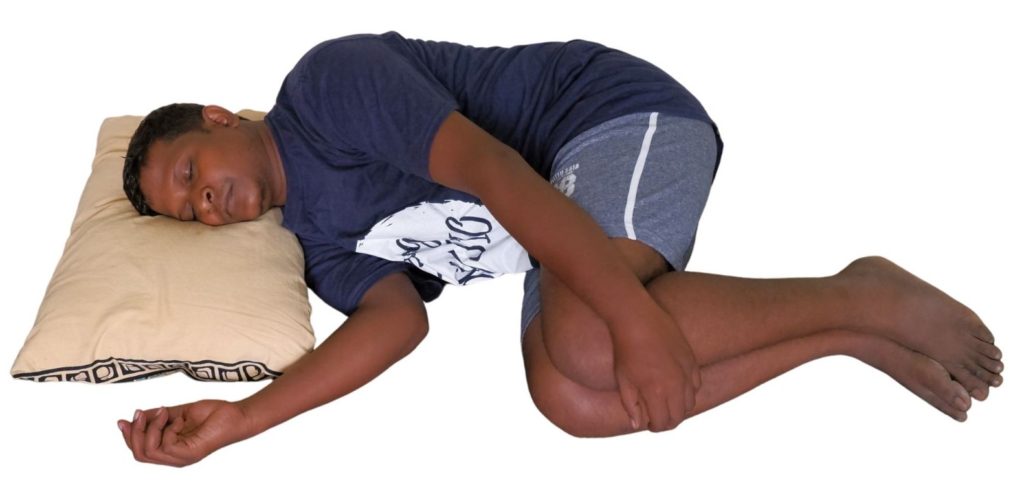
- Sleep tip: Side-lying with pillow under the convex (protruding) side for temporary unloading (15-20 mins)
- When to see a doctor: If pain increases or curve worsens
We will learn simple yet useful exercises for scoliosis at home. Research suggests that targeted exercise can support scoliosis management and symptom improvement. Scoliosis is an abnormal sideways curve in your spine. Normally, it is first seen and diagnosed in childhood or as a teenager.
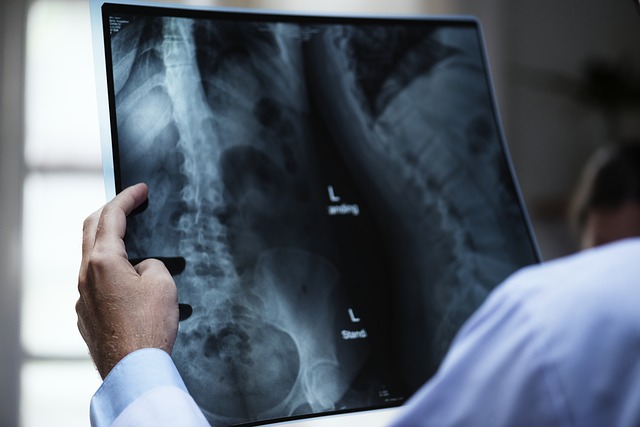
The degree of scoliosis depends on the angle of the curve. It may be small, large, or somewhere in between. But anything that measures more than 10 degrees on an X-ray is considered scoliosis.
The exercises below fall into two groups. The first group (bridging, cat-cow, quadruped work) are general mobility and core exercises that help keep the spine flexible and the supporting muscles active. They are useful foundations, but they are not highly curve-specific. For true curve-specific correction, methods such as the Schroth method, SEAS (Scientific Exercise Approach to Scoliosis), or side-shift techniques are more evidence-based and are best learned with a trained physiotherapist. The second group of exercises in this post aims at more targeted support of the curve and can complement professional care.
- 10 Best Scoliosis Correction Exercises to Do at Home
- 1. Bridging Exercise to Strengthen Your Spine (Step-by-Step)
- 2. Chest Raise Exercise for Mild Scoliosis (With Photos)
- 3. Cat-dog exercise for general spinal mobility
- 4. Quadruped Arm Raise to Improve Spinal Alignment
- 5. Quadruped Leg Lift to Support Spinal Stability
- 6. Advanced Quadruped Exercise (Arm + Leg Raise Combo)
- Targeted Scoliosis Exercises for Spinal Curve Support
- Final Tips to Maximize Your Scoliosis Exercise Results
- FAQ on scoliosis
10 Best Scoliosis Correction Exercises to Do at Home
A common misconception is that people with scoliosis should avoid exercising because it might worsen their condition. However, several exercises can help support the spine and manage symptoms.
These exercises strengthen muscles that support the spine and help maintain good posture. They also improve balance and coordination, which helps reduce the chance of falling. For a broader posture routine you can pair with this programme, see our guide to posture correction exercises at home.
1. Bridging Exercise to Strengthen Your Spine (Step-by-Step)
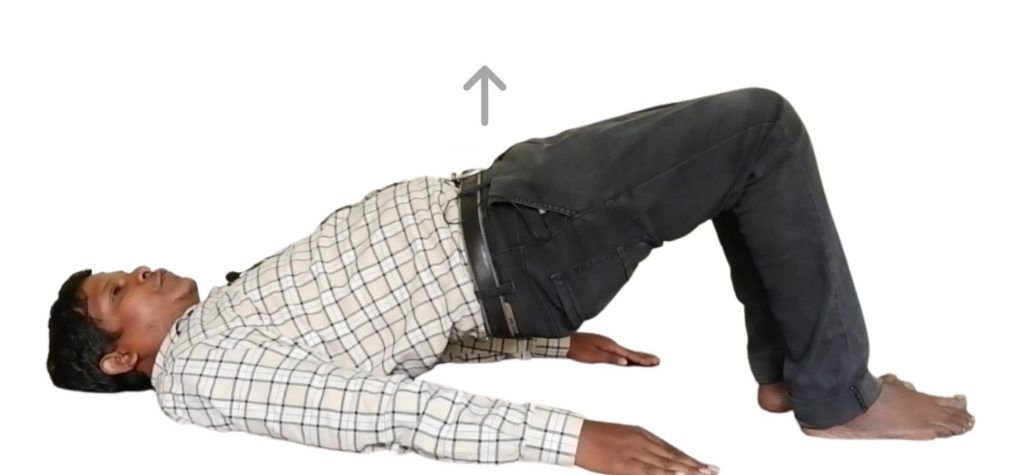
Bridging is a general mobility and core-strengthening exercise. It is not a curve-specific scoliosis correction method, but it helps improve flexibility and reduce stiffness across the spine, which is a useful foundation before more targeted work. For more options that build spinal support, see our guide on the best exercises to strengthen your spine.
- First, lie down flat on your back with your arms at your sides.
- Slowly lift your hips off the ground, lifting them as high as possible. As you lift your hips, focus on engaging your core and glutes to create a stable base.
- Once you’ve raised your hips as high as you can, slowly lower them back down to the ground, taking care to move in a controlled and deliberate manner.
- Hold the bridge position for 5 seconds to make the exercise more effective before lowering your hips back down.
You should feel a gentle stretch across your lower back and hips as you perform this exercise. This stretch can help to release tension and improve flexibility in the spine.
Clinical Evidence: Core training reduced spinal curvature by 3.8° in adolescents—comparable to bracing in that study, without psychological side effects (Chen et al., 2023). Individual results vary.
2. Chest Raise Exercise for Mild Scoliosis (With Photos)
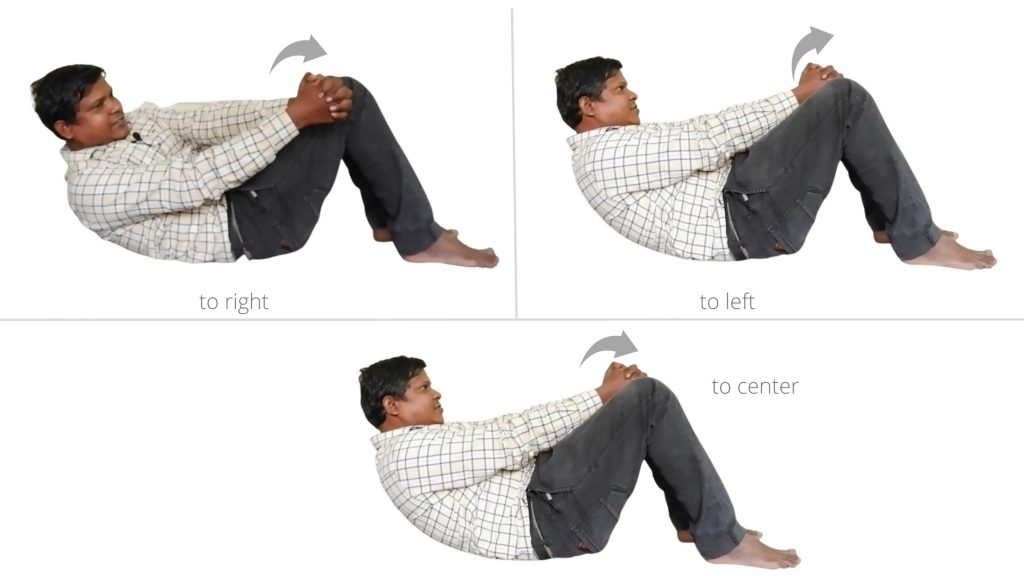
For this exercise, we will start with the same position as in the previous exercise.
- To begin, clasp your hands together in front of you.
- From this starting position, slowly raise yourself diagonally to right side as shown in the figure.
- Hold this position for a few seconds before returning to the starting position.
- Then, repeat this movement to the left side, holding the position for a few seconds before returning to the starting position.
- Now, once again, lift yourself, and this time, move forward straight forward.
- Repeat this sequence 10 times, but feel free to do more if you feel comfortable doing so.
3. Cat-dog exercise for general spinal mobility
Cat-cow (cat-dog) is a general mobility exercise that gently mobilises the whole spine. Like bridging, it is not a highly specific scoliosis correction method (unlike Schroth, SEAS, or side-shift), but it is an excellent starter for reducing stiffness and improving awareness of spinal movement. Assume a quadruped (hands-and-knees) position.
- To start, lift your spine upwards into a rounded (cat) position.
- Then curve your spine downwards into an arched (cow/dog) position.
- Alternate smoothly between cat and cow, moving with your breath.
- Aim for about 10 controlled repetitions per session, twice daily. Stop if you feel sharp pain.
4. Quadruped Arm Raise to Improve Spinal Alignment
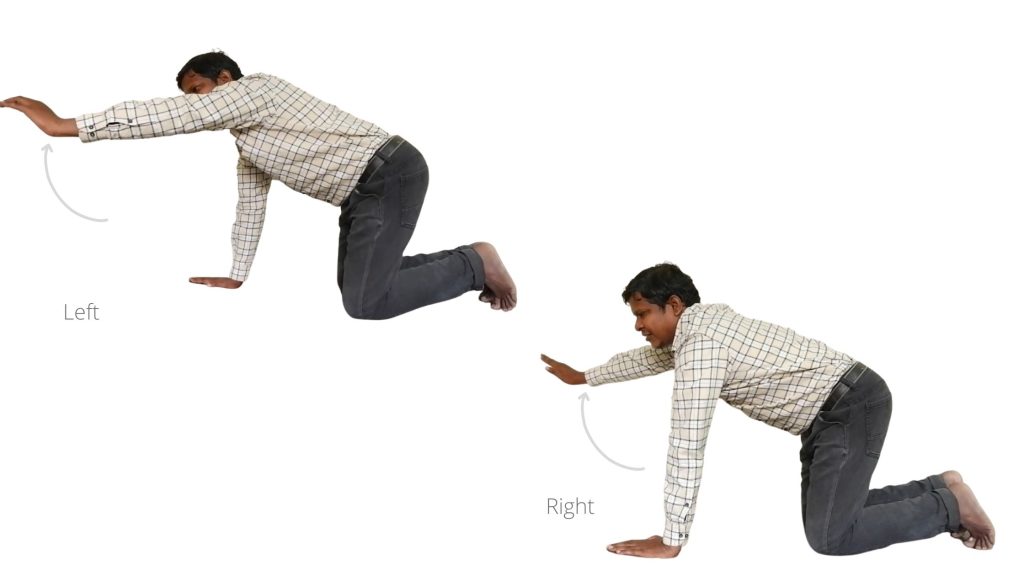
For the next exercise, you will be in a quadruped position, which means getting on your hands and knees.
- Once you’re in position, raise your hands straight up while keeping your elbows fully extended. To better understand what this looks like, refer to the figure provided.
- Start by raising your left hand straight to shoulder level and holding it there for a few seconds.
- Then, slowly lower your left hand back down to the ground.
- Next, raise your right hand straight to shoulder level and hold it there for a few seconds before lowering it back down slowly.
- Continue alternating between your left and right hands, raising and holding each one for a few seconds before lowering it back down.
- Repeating this exercise at least 20 times in a single session is recommended, but the more repetitions you do, the better it will be for your muscles.
5. Quadruped Leg Lift to Support Spinal Stability
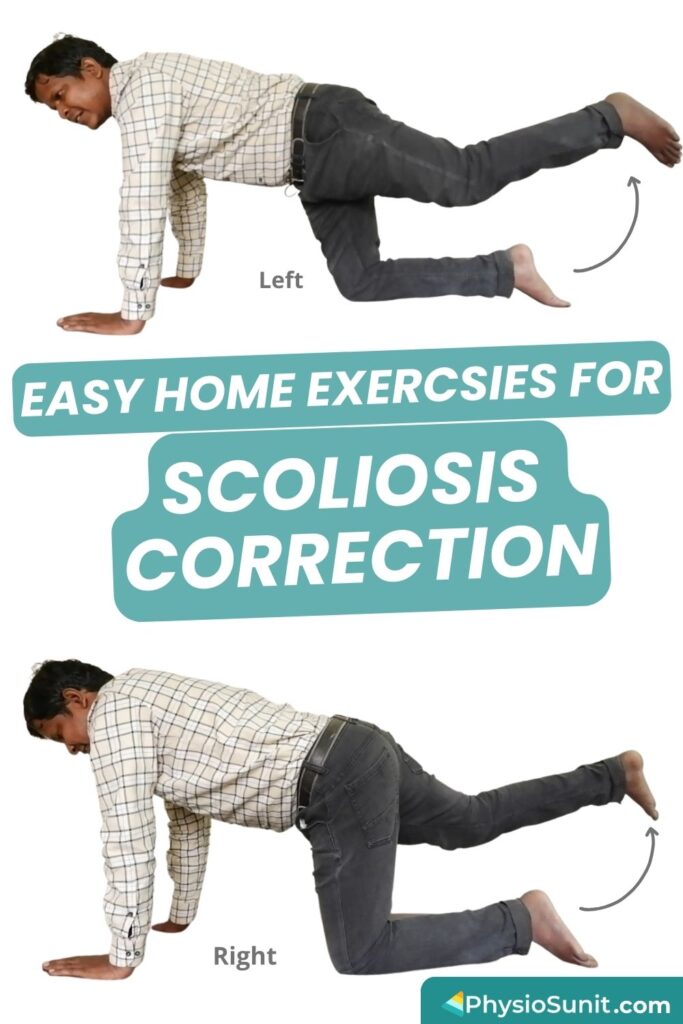
In this exercise, we will continue with the quadruped position and focus on lifting our legs. Start by getting on all fours, with your hands and knees on the ground and your back straight.
- Now, we will lift one leg at a time. Let’s start with the left leg. Raise your left leg comfortably without forcing it too much. You should feel the stretch in your glutes and hamstrings.
- Hold the position for a second, then slowly lower the leg back down.
- Repeat the same process with your right leg. Lift it comfortably, hold it for a second and then slowly lower it down.
- Now, alternate between lifting your left and right leg. Lift your left leg, lower it down, then lift your right leg and lower it down.
- Repeat this process at least 20 times in a single session, 10 times on each leg.
6. Advanced Quadruped Exercise (Arm + Leg Raise Combo)
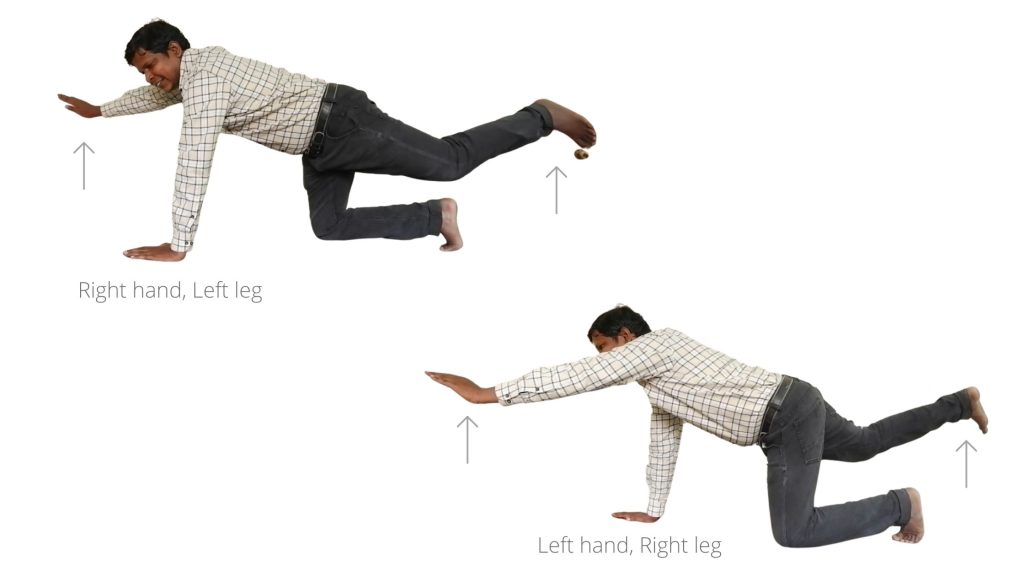
In the next exercise, we will be raising both hands and legs together.
- The starting position will be the same as the previous one. ie, quadruped position.
- In this position, we have to raise one hand and one leg. It is essential to note that when I raise my left hand, you have to lift your right leg, oppositely.
- Take a look at the figure, where the right hand and left leg are raised together, and then the left hand and right leg, and vice versa.
- It should be the opposite of what you are lifting – if you are raising your right hand, then lift your left leg.
This exercise is beneficial for relaxing the stiffness in your spine. You can start with a minimum of 15-20 repetitions in a single session, but the more you do, the better it is for your body.
Targeted Scoliosis Exercises for Spinal Curve Support
7. Side-Lying Hip Lift for Adult Scoliosis Support
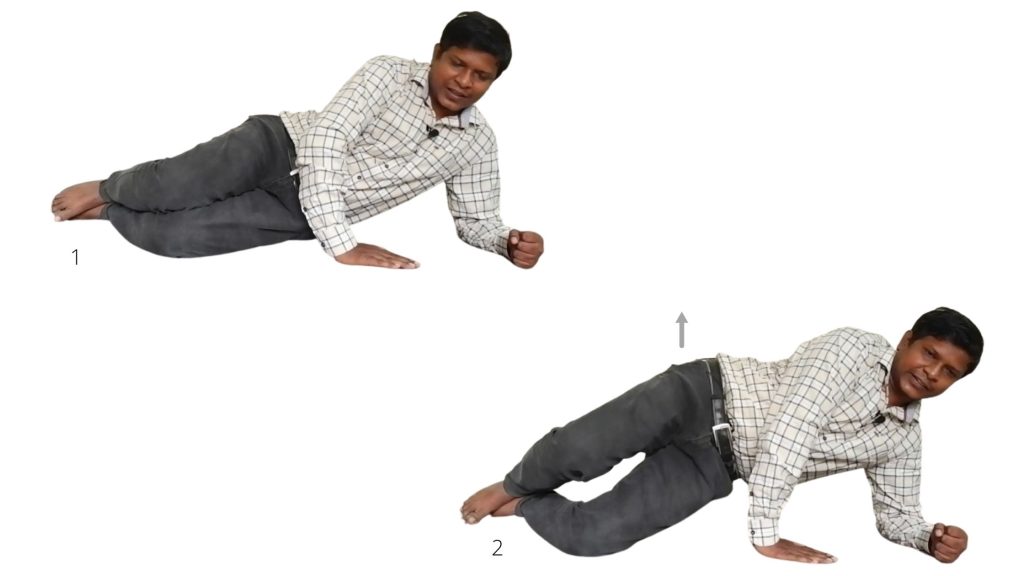
Now we move toward more targeted work. Scoliosis creates a sideways curve, so one side of the trunk is typically more convex (protruding) and the other more concave. The goal of this exercise is to work the muscles and soft tissues related to the convex side. Lie on the side of the convexity so the protruding part of the ribcage or trunk can be unloaded and the opposite side can work more effectively. If one-sided low back discomfort is your main complaint, you may also find our guide on how to fix one-sided lower back pain useful.
For example, if the right side of your ribcage or trunk is the more protruding (convex) side, lie on your right side.
- Once in position, prop yourself up on your elbow, with your hip resting on the bed and your chest extended off the bed. This is the starting position.
- Next, lift your spine and hips as shown in the figure, while keeping your knees together.
- Hold this position for a few seconds, and then slowly lower your hips back down.
- Repeat this procedure, lifting your hips, encouraging a more neutral spine, holding for a few seconds, and then lowering slowly.
- Perform this exercise for a minimum of 10 to 15 repetitions, or more if you can.
- This aims to strengthen muscles on the side of the convexity and stretch tighter structures, supporting better alignment. It is a support strategy, not a guaranteed correction of the curve.
8. Spine Straightening Exercise for Scoliosis

Our next scoliosis exercise is called the spine straightening exercise and can be done by anyone, regardless of their age or fitness level. The exercise is easy to perform and requires no special equipment. To start with, assume the quadruped position.
- Once you are in the quadrupod position, you can start with the first exercise pose.
- Align yourself entirely straight in the quadrupod position and bend down backwards, as shown in the figure (top pose). This will stretch your spine and encourage a more neutral alignment.
- Remain in this pose for 5 seconds and then return to the normal quadrupod position.
- Repeat this 5 to 10 times in a session.
- For the next exercise, your starting position will be slightly different. In the quadrupod position, shift your hands toward the convex (protruding) side.
- In this position your spine is slightly biased toward that side. Bend yourself backwards as in the previous exercise and remain in the position for a few seconds.
- Repeat the procedure 5 to 10 times in a session.
- These two exercises can support better spinal mobility and posture and can be done anywhere and anytime. Maintain proper form and stop if you feel sharp pain.
Research Note: A 2023 network meta-analysis1 ranked yoga as the most effective exercise for reducing Cobb angle (4.6° average improvement) (Chen et al.). Results vary by individual and curve type. For more curve-specific approaches, consider Schroth, SEAS, or side-shift methods with a specialist.
9. Best Sleeping / Resting Position for Temporary Curve Unloading
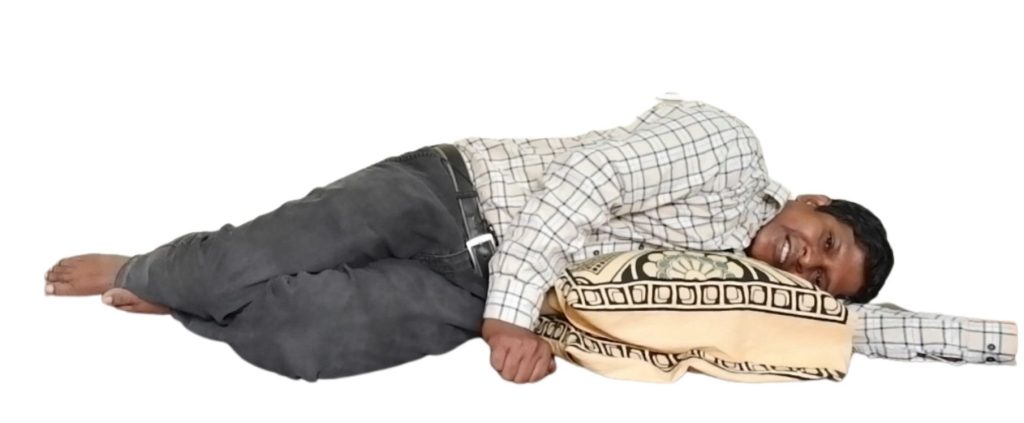
This is a temporary postural unloading strategy, not a cure for scoliosis. The idea is to place a bolster or folded pillows under the convex (protruding) side of the curve so gravity and the support help unload that part of the trunk for a short period. If you do not have a bolster, use two layers of pillows. For more options when low back pain affects sleep, see our guide to the best sleep positions for low back pain.
- Identify the convex (more protruding) side of your curve. Lie on that side so the pillow sits under the protruding part of the ribcage or trunk.
- The support may help temporarily unload the curve and can reduce discomfort for some people. It does not permanently straighten the spine.
- Aim for 15 to 20 minutes, once or twice a day. You can use the time to rest, watch TV, or listen to music. Overnight use is optional and should remain comfortable; stop if pain increases.
10. Scoliosis Stretching Routine for Flexibility & Pain Relief
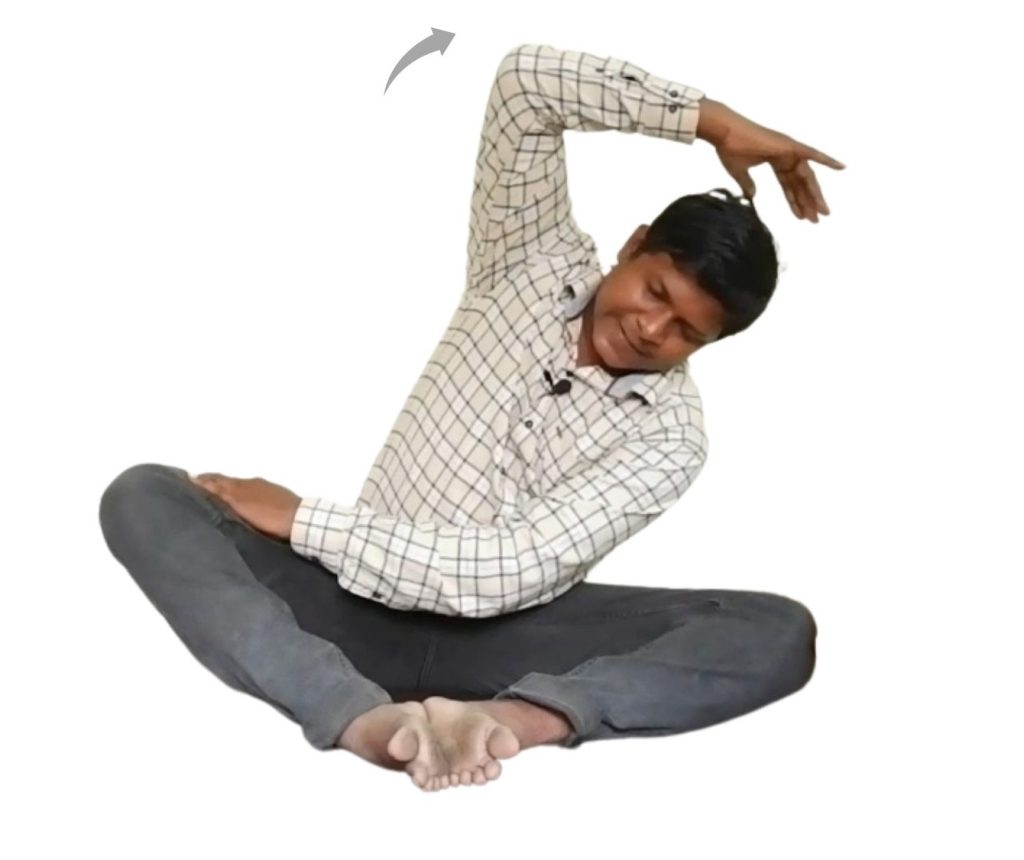
Stretching exercises are an essential component of maintaining good health and improving flexibility. One such exercise involves sitting with your knees folded and feet together.
- To begin, identify which side of your body is protruding (convex). In my case, it’s my left side.
- Next, bend your torso toward the convex side while simultaneously stretching your opposite arm overhead. This helps lengthen tighter structures on the concave side.
- Place your hand over the opposite thigh and hold the position for a few seconds.
- Then, slowly return to the normal position.
- It’s recommended that you repeat this exercise for a minimum of 10 repetitions in a single session. For best results, perform it twice a day – once in the morning and once in the evening.
Final Tips to Maximize Your Scoliosis Exercise Results
In addition to these exercises, you can also add spine-strengthening exercises to support recovery. Remember that general mobility work (bridging, cat-cow, quadruped) is a foundation; more curve-specific methods such as Schroth, SEAS, or side-shift are often more effective for measurable curve change and are best learned with a trained physiotherapist. In many cases, exercises alone are not enough; a scoliosis brace (for example the Milwaukee brace) may be recommended under professional guidance.
Follow these exercises twice daily for best effect. Results vary depending on age, curve type, and consistency.
Keep Reading: 5 Simple Exercises to Improve Posture at Home | How to Fix Forward Head Posture
FAQ on scoliosis

The author is a physiotherapist who has been practising for the last 17 years. He holds a Bachelor's in Physiotherapy (BPT) from SVNIRTAR (Swami Vivekananda National Institute of Rehabilitation and Research), one of the prestigious physiotherapy schools in India.
Whatever he learns dealing with his patient, he shares it with the world through blogs and e-books. He also owns a YouTube channel, "Sunit Physiotherapist" with over 8 lakh active subscribers. Here, he shares everything he gets to learn serving the patient.