Last Updated on January 23, 2026 by Sunit. S. Ekka
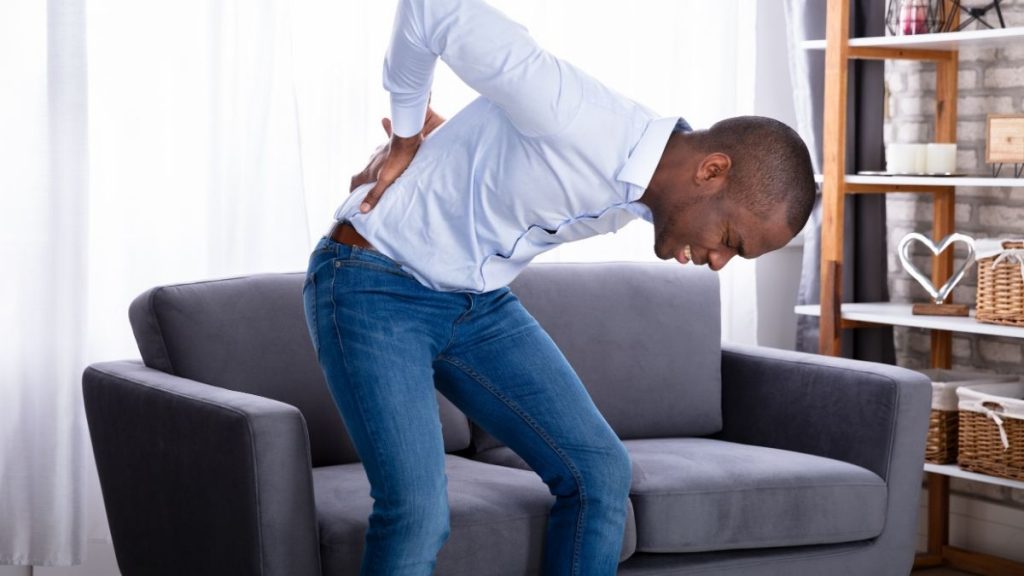
If you experience persistent back pain along with a pulling sensation on the back of the thigh down the leg, with a tingling sensation in one or both legs, you may be suffering from sciatica.
The most common and primary cause of sciatica is a slipped disc, also known as a prolapsed intervertebral disc (PIVD) or lumbar disc herniation.
However, it is essential to note that a slipped disc is not the only cause of sciatica. There are several other reasons why the sciatic nerve may become compressed, leading to this painful condition. How do slipped discs cause sciatica? What are other common causes? Let us find out in this article.
- 4 Most Common Causes of Sciatica (And How to Fix Them)
- Sciatica Mystery Solved: A Real Patient’s Story
- Key Takeaways: How to Beat Sciatica Pain
- FAQ
Sciatica is a painful lower back condition caused by compression and irritation of the sciatic nerve at the lower back (lumbar region). The nerve root of the sciatic nerve emerges from the lower back and travels down the leg through the back of the thigh and lower leg.
This is why sciatica sufferers complain of a pulling or tingling sensation along its course. So, any factor that causes interruption or compression of the sciatic nerve along its path becomes the cause of sciatica.
4 Most Common Causes of Sciatica (And How to Fix Them)
So, what are the different causes for this? I told you that Sciatica happens when the Sciatic nerve is compressed. What are the different causes of nerve compression?
1. Herniated Disc (PIVD): The #1 Cause of Sciatica

The most common cause of sciatica is a herniated disc. The other terms for the same condition are Prolapsed Intervertebral Disc (PIVD), a Lumbar Disc Herniation, a Lumbar Disc Bulge, or a Slipped Disc. In almost 90% of cases, sciatica is caused by a lumbar disc herniation1.
So, what is lumbar disc herniation?
To understand this, let’s review the anatomy of the lumbar spine. The spine consists of several vertebral bodies, from the neck to the lower back. In the lower back, we have the L1, L2, L3, L4, and S1 vertebral bodies. Intervertebral discs, which are soft, jelly-like discs, exist between two vertebral bodies.
That disc is very important for keeping our body flexible. It works as a shock absorber when we jump or twist.
If, for any reason, there is a crack in the Intervertebral Disc, the jelly material inside it bulges out, which then starts pressing on our Sciatic nerve. This causes irritation and inflammation of the sciatic nerve, which causes sciatica.
The severity of compression depends on the stage of disc bulging. There are 4 stages of disc bulge, stage 1 being the minor and stage 4 being the most severe.
Best Exercises for Lumbar Disc Herniation (Avoid Surgery!)
Fortunately, the lumbar disc bulge up to stage 3 can be managed conservatively by physiotherapy and exercises. In one of my previous articles, “5 Best L4 L5 Disc Herniation Exercises to Avoid Surgery“, I have discussed the most effective exercises that I often prescribe to my patient at our clinic.
These lumbar disc hernia exercises are very simple to learn, and anyone can perform them at home.
2. Lumbar Spinal Stenosis: Sciatica in Older Adults
The second major cause of sciatica is lumbar spinal stenosis. It is commonly seen in the elderly and is the most important indication of spinal surgery in patients older than 65 1.
Lumbar spinal stenosis is a narrowing of the spinal canal in the lower back. Nerves emerge from the spinal cord through the spinal root canals.
If, for any reason, there is a narrowing of the canal, it will apply pressure on the nerves emerging from the spinal cord, leading to irritation. This irritation will result in the appearance of symptoms, as discussed earlier.
5 Safe Exercises for Spinal Stenosis Sciatica
Physiotherapy and exercises are very effective in curing low-grade lumbar stenosis issues. I highly recommend you visit your physiotherapist, who will give you lumbar traction, which is essential for this type of condition.
Regarding exercises, I have created a video on it. The video is in Hindi but has English subtitles. Watch and learn these exercises and perform them twice daily.
3. Piriformis Syndrome: The Hidden Sciatica Culprit
The third most important and common reason is Piriformis Syndrome. This is important because sometimes, two conditions can be present simultaneously: a slipped disc and piriformis syndrome.
The treatment may be incomplete if we only address the slipped disc and ignore piriformis syndrome. As a result, while the pain might decrease, it may not fully resolve.
There is a flat muscle present on the outer sides of our buttock cheeks called the Piriformis Muscle. The sciatic nerve, which originates from the lumbar region, passes through this muscle.

In a normal condition, when our muscles are flexible, there is no issue with the sciatic nerve. But people whose work involves sitting for a long time, like truck drivers and other vehicle drivers, often experience severe strain in their piriformis muscle, which gradually tightens and becomes stiff.
When this muscle becomes stiff, it can press on the sciatic nerve, compressing it and leading to sciatica. This results in back pain, leg strain, and tingling sensations.
Piriformis Syndrome is often overlooked, and its symptoms can be missed among other conditions. That’s why it’s important to recognise that it can also cause sciatica. There are several other reasons as well.
4. Spondylolisthesis: When a Slipped Vertebra Causes Sciatica
Lumbar spondylolisthesis is another not-so-common cause of sciatica. In this condition, the vertebral bone at the lower back slips forward, causing mild to severe compression of the sciatic nerve.
Depending on the degree of slippage, it can be categorised from grade 1 to grade 4. The lower grade can be managed by physiotherapy and exercises for lumbar spondylolisthesis.
Sciatica Mystery Solved: A Real Patient’s Story
Let me discuss a case with you where the problem is a slipped disc. I treated the slipped disc thoroughly; the pain has reduced, but it has not gone completely. Then, I shifted my focus to Piriformis Syndrome. Again, the pain reduced, but it did not go completely.
Then, I referred the patient to a bigger hospital for further treatment. The patient went to Kolkata, where a different reason was diagnosed for sciatica, other than lumbar disc hernia.
The patient was diagnosed with an intrauterine tumour. That tumour was pressing the nerve, resulting in Sciatica pain. This could also be a reason.
So tumours can also cause sciatica, but this is a rare occurrence and generally not something we consider. There could be several reasons for the pain.
Exploring other reasons is essential if the pain persists after addressing the common causes. You may need to consult a specialist or seek advanced treatment to identify the underlying issue.
Key Takeaways: How to Beat Sciatica Pain
The three different reasons I shared have different treatments and exercises. I will bring videos on them in the future. In the next episode, I will tell you about the four stages of a slipped disc and the different symptoms of these four stages.
Did you find the video informative? If you have any questions or feedback, please comment below, and I’ll do my best to respond to as many as possible. If you enjoyed the video, please like it.
Keep Reading: 7 Easy Exercises for Sciatica Nerve Pain Relief
FAQ

The author is a physiotherapist who has been practising for the last 17 years. He holds a Bachelor's in Physiotherapy (BPT) from SVNIRTAR (Swami Vivekananda National Institute of Rehabilitation and Research), one of the prestigious physiotherapy schools in India.
Whatever he learns dealing with his patient, he shares it with the world through blogs and e-books. He also owns a YouTube channel, "Sunit Physiotherapist" with over 8 lakh active subscribers. Here, he shares everything he gets to learn serving the patient.