Last Updated on August 22, 2025 by Sunit. S. Ekka

Key Takeaway:
You can prevent and relieve study-related neck pain by taking a 2-minute break every 30 minutes to perform simple stretches and setting up your desk to keep your book at eye level.
How can I stop neck pain when studying? Students need to study for long hours, sitting in a single position. This gives rise to neck and upper back pain that not only makes them uncomfortable but also distracts them from studying. It makes it difficult to focus on study, affecting their career.
However, if you follow simple exercises and tips, you can easily prevent this.
In this article, I will show you the best position for studying and how, during studying, if you take care of a few small things, you can focus on your studies. But before proceeding, let us understand why my neck hurts while studying.
Table of Contents
Why Do Students Get Neck Pain? (The Real Cause)
One of the previous studies has found that neck pain (and shoulder pain) is common among elementary school students, and it is commonly associated with the improper height of desks and seats1.
When we study sitting at an improper height desk and seat, we may observe that we bend our necks forward.
We must keep our necks in one position to constantly focus on the book. To maintain a constant neck position, the neck muscle contracts constantly and as a result, it becomes stiff. With time, tightness develops in them, so we feel pain.
4 Best Exercises to Relieve Neck Pain From Studying
1. Lateral Neck Stretch: Release Tight Muscles

The first exercise is Neck Stretching. What you have to do is, every half an hour while studying, take just two two-minute breaks and do neck stretching. So, through stretching, we can ease the stiff muscles. We need to stretch muscles on both sides of the neck.
- So, to stretch the muscles on the left side, take your right hand, keep it over the temple area just above your ear, and keep the shoulder relaxed.
- In this position, pull the neck to the right side and pull it to a point where you will feel a comfortable stretch on the left side of the neck.
- Hold this stretched position for 30 seconds, then relax.
- Then, similarly, for the right side, take your left hand, keep it over the right temple area above the ear and pull it to the left side. Pull it to a point where you feel a comfortable stretch on the right neck muscle. Hold this for 30 seconds, and then relax.
- Repeat this five times on each side.
2. Chin-to-Shoulder Rotations: Improve Mobility

- The second exercise is Neck Rotation. For this exercise, sit straight and relax.
- Then, rotate the neck to the left slowly and smoothly.
- Then, rotate it to the right side slowly and smoothly.
When you study, your neck is constantly in one position. This will give movement to the neck and prevent stiffness.
3. Cross-Body Shoulder Stretch: Ease Upper Back Tension

The third exercise is also stretching, but it stretches our upper back muscles. It stretches the muscles between our shoulder blades. We have to stretch the left and right shoulder blade muscles individually.
- Hold the left elbow with your right hand in front of the chest to stretch the left shoulder blade muscle.
- Now, pull the elbow towards the chest. You will feel a stretch at the back on the left side.
- Hold this position for 30 seconds, and then relax.
- Similarly, repeat it on the right side, hold the right elbow with the left hand and pull it towards the chest. Hold for 30 seconds, and then relax.
- Repeat this 3 to 4 times on each side.
4. The Optimal Study Setup: Ergonomic Tips for Your Desk

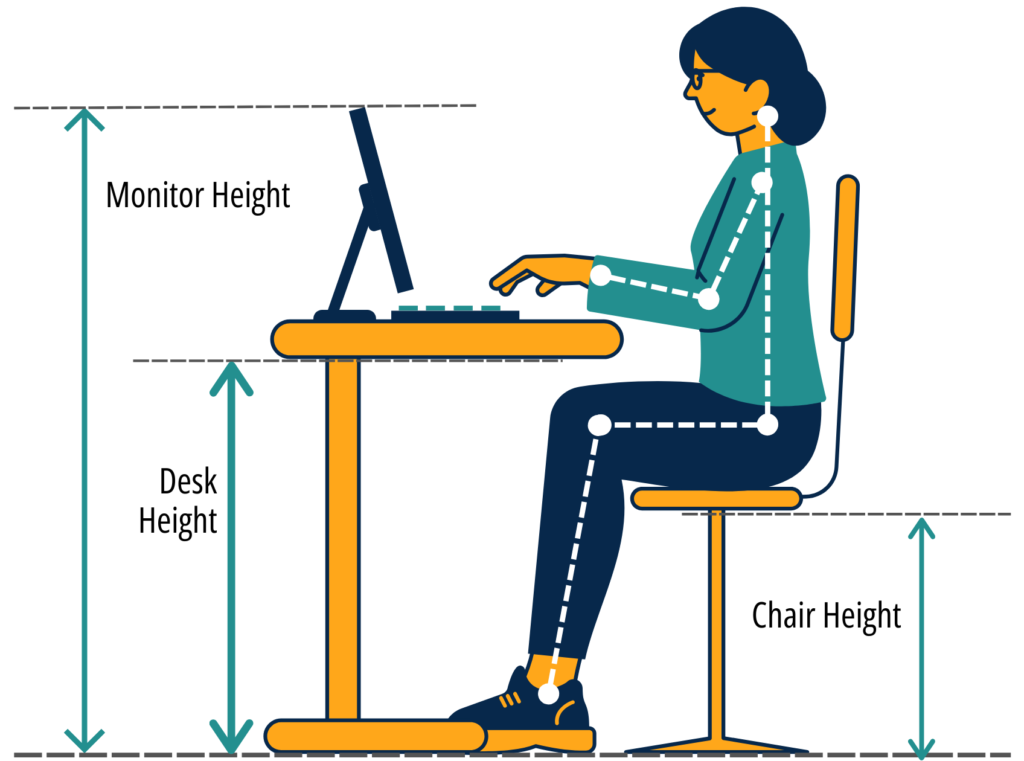
Along with the exercises, here are some final effective tips. Arrange your sitting position so you will not need to bend your neck forward. As we just learned that a constant neck-bending position creates this problem, why not avoid it in the first place?
For this, make a simple arrangement so that you can keep your book inclined so that it can come to a level of your vision. As you can see in the image, I have kept a stack of books and the reading book is inclined over it, so I don’t have to bend my neck here.
It’s a simple arrangement but quite effective. You can use something else and make a platform like this.
Upgrade Your Setup: While a stack of books works, a dedicated adjustable laptop stand is a more stable and versatile solution. It allows you to precisely set the perfect height for your screen or book, ensuring an ergonomic posture every time you study. This is one of the best investments you can make for your long-term comfort and focus.

- Create Instant Active Standing: Sitting too long is dangerous for your health, Tounee’s ergonomic laptop stand provides …
- Promote Healthy Sit-Stand Working Posture: This sit-to-stand laptop riser can elevate your laptop screen to a comfortabl…
- 360°Rotating Base: This standing computer stand not only offers an adjustable height range of 2.1″ to 21″, but also can …

Conclusion: Stay Pain-Free and Focused
All the exercises will take you 4 to 5 minutes. If you take a few precautions for 4-5 minutes, you can focus well on your studies and do better in your exams.
However, you should follow cervical spondylosis exercises if you are already in neck pain or cervical spondylosis. We also recommend using shiatsu massager for neck and back for a better result.
Keep Reading: Desktop Ergonomics, These 5 Adjustments You Need To Do
FAQ: Preventing Neck Pain When Studying

The author is a physiotherapist who has been practising for the last 17 years. He holds a Bachelor's in Physiotherapy (BPT) from SVNIRTAR (Swami Vivekananda National Institute of Rehabilitation and Research), one of the prestigious physiotherapy schools in India.
Whatever he learns dealing with his patient, he shares it with the world through blogs and e-books. He also owns a YouTube channel, "Sunit Physiotherapist" with over 8 lakh active subscribers. Here, he shares everything he gets to learn serving the patient.