
Last Updated on January 23, 2026 by Sunit. S. Ekka

Sciatica nerve pain can often be managed and cured with the right conservative care. This guide from a physiotherapist with over a decade of experience will show you how to find relief at home and through professional treatment, often without the need for surgery.
If you have low back pain with uncomfortable pulling, tingling sensation running down your thigh and leg, then chances are you have an issue of sciatica.
In my clinical setup, most of the cases I deal with are sciatica. In this guide, I’ll guide you through different aspects of sciatica, like what causes it, how it is diagnosed and how conservative management can help you get rid of it without surgery. You’ll learn how to find relief safely and get back to living your life without discomfort.
What is sciatica?
Sciatica is a condition where the sciatic nerve gets compressed due to some underlying pathological condition, resulting in pain, pulling sensation and tingling sensation on the lower back, the backside of the thigh and the leg.
The sciatic nerve is the nerve that originates from the lower back region and travels down the back of the leg to the great toe. This nerve is responsible for all the movement and sensation in the leg.

What causes sciatica
Now that we know it happens due to the compression of the sciatic nerve, there are a number of causes of sciatica. There could be a rare case of a uterine tumour, but two of the most common causes are:
And among these two, PIVD is the most common. It is a herniation of the intervertebral disc that compresses the nerve that passes by. In sciatica, a disc herniation occurs in the lumbar region (lower back area).
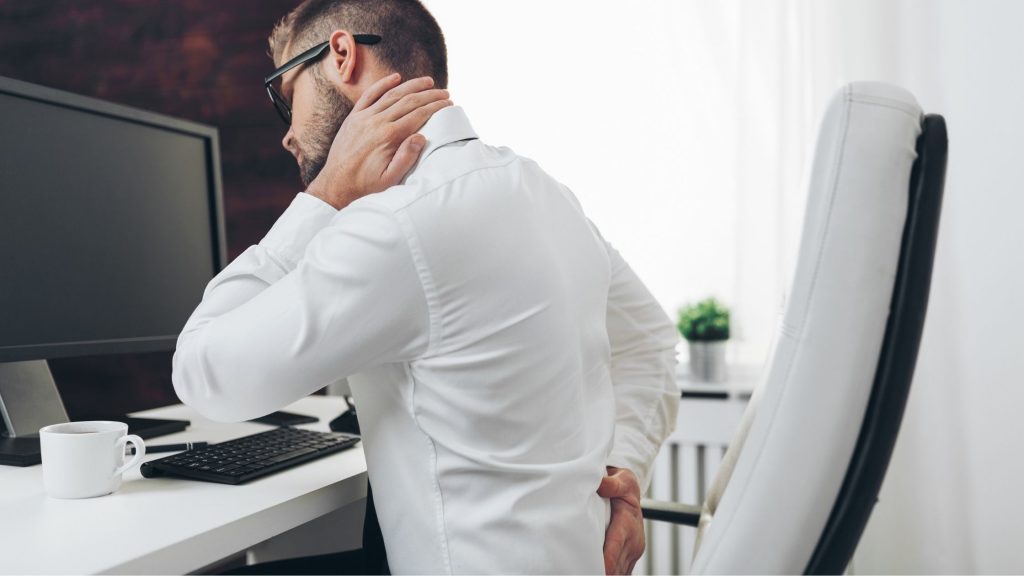
Though sciatica is always associated with lower back pain, not all back pain is the result of it. This is why we must know how to recognize whether back pain is sciatica or muscle pain.
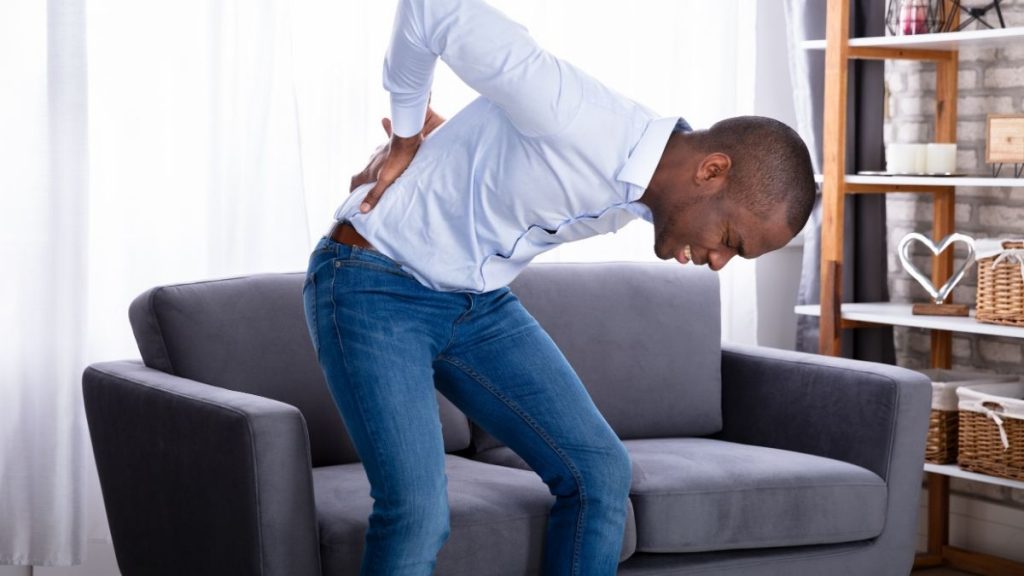
It starts with sudden sharp pain on the back when bending over, it has typical symptoms of pulling and tingling sensations in the back of the thigh and legs. It starts from the lower back, travels down the back of the thigh and leg till the calf or ankle joint.
What sciatica feels like
The irritation and inflammation of sciatica cause a tingling sensation in the area where the sciatic nerve passes through. The common complaints of sciatica sufferers are:
- Pulling sensation on the back of the leg and thigh.
- With a tingling sensation on the back of the leg and thigh that increases with standing and walking.
- Posture becomes tilted towards the sound side.
- In a severe case, the sufferer may become bedridden.
- Chronic sciatica may show the sign of numbness on the outer side of the foot and sole.
How sciatica is diagnosed?
In our clinical practice, we diagnose sciatica by taking a medical history of the pain and its associated symptoms. If the symptoms indicate sciatica, we confirm with a physical test.
This physical test is known as the SLR or Straight Leg Raise test to test the sciatica. In this test, we as the person to lye down flat and raise the affected leg. We look for the sign and confirm whether it is sciatica or not.
The doctor may refer for an MRI to investigate the underlying cause of sciatica.
Can sciatica be cured at home?
If the symptoms of sciatica are mild to moderate, they can be cured at home. For this, you need to follow certain dos and don’ts in addition to exercises. So, what are they?
- Avoid forward bending: The first and foremost precaution is to avoid forward bending. It is important because forward bending aggravates the sciatica pain and delays the healing process.
- Do not lift heavy objects: It is very important that a sciatica sufferer must not lift heavy objects. Lifting weights causes compression on the sciatica and increases the pain.
- Follow desktop ergonomics: If your profession demands you to sit long hours in front of a computer, you should follow the desktop ergonomics to minimise its negative impact on the lower back.
- Proper sleeping position: Your sleeping position does impact your lower back. So, follow a proper sleeping position for sciatica to help the healing process of sciatica.
- Proper way to get into and out of bed: Another important point during your sleep is the way you get out of and get into bed. We physiotherapists instruct our patients on a proven pain-free way to get out of and into bed.
- Adopting safe way of doing household chores: Making simple modifications in work can have a great impact on the recovery process. Like modification when washing dishes, clothes and cleaning house reduces sciatica irritation by decreasing the stress on your lower back.
These precautions are important as they stop any further aggravation of sciatica pain and help the therapeutic effect of exercises to cure it completely.
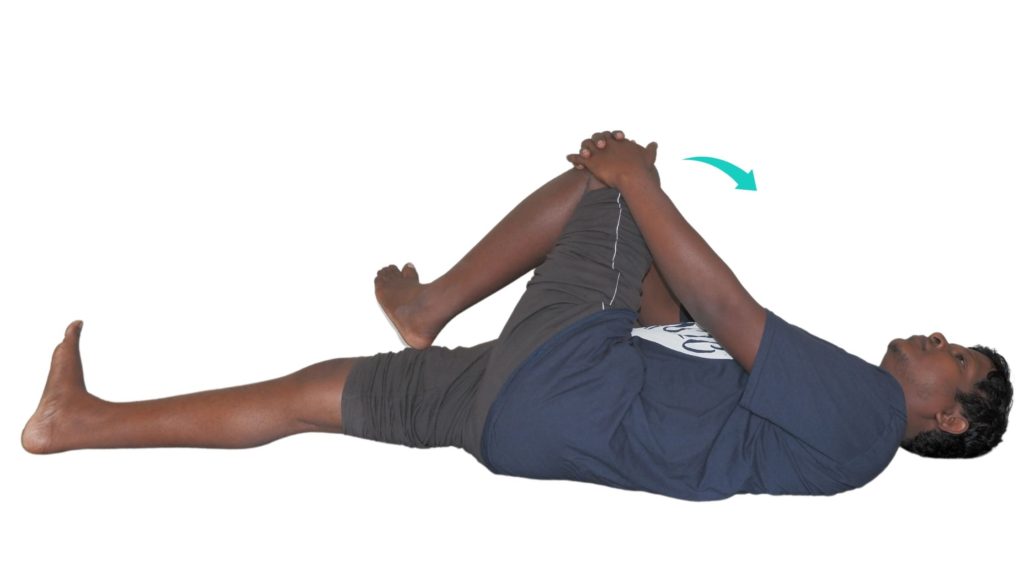
The exercises for sciatica depend upon the underlying cause. The most common cause is the lumbar slipped disc/ disc hernia. These exercises for lumbar slipped disc help to heal and decompress the pinched sciatica nerve.
However, there could be other causes and you should follow the exercises accordingly. These include exercises for piriformis syndrome, lumbar spondylolisthesis correction exercises and others.
How sciatica is treated by physiotherapist
The treatment process differs with the severity/acuteness. In an acute case, one may completely go bedridden. In a less severe condition, one can manage to walk but with difficulty.
The severity of suffering indicates the degree of internal injury. This is why the exercises that may be suitable for a less severe condition are not advisable for acute sciatica conditions. Rather, rest and resting position itself are sufficient in the acute phase.
If bed rest is necessary for the acute phase, a localised rest to the back has its own importance in the subacute phase. This we can achieve by the use of back pain belt, also known as a lumbar belt, LS belt or lumbar corset.
Conservative management, like physiotherapy for sciatica, is the first choice of treatment. It includes ultrasonic therapy, TENS therapy, and decompression of the sciatic nerve using lumbar traction.
Physiotherapy also includes manual therapy (mobilisation), which helps in decompression of the nerve.
The combination of these physiotherapeutic methods depends on the underlying cause. It should be highly personalised depending on the cause and severity of pain2. Your physiotherapist will be the best person to make a decision on this.
How “Sciatica Relieved” can help you in your journey to pain-free sciatica

- Ekka, Sunit Sanjay
- Quddus, Nishat
This book covers all the aspects of sciatica and its treatment. It will guide you through each phase you may pass through.
Think of this book as your personal physiotherapist keeping an eye on your journey to pain-free sciatica.
It will answer all the questions mentioned in this article. This book contains all the practical tips and exercises described with figures and diagrams for easy grasp and use. Think of this book as your personal physiotherapist keeping an eye on each and every step of pain recovery.
We wrote this book with all that valuable practical experience dealing with hundreds of thousands of sciatica patients.
I Dr. Sunit Sanjay Ekka (PT), author of the book, am a physiotherapist practising for 12 years. During this period, I saw many back pain diagnosed with sciatica. I got lots of practical experience talking with the patient, evaluating them, formulating a treatment plan for them, then re-formulating and modifying according to improvement.
After years of learning with them, I have come up with the most effective exercises and home tips that will work and yield results.
You will find tips for every sufferer regardless of the intensity of their discomfort and suffering. Like if you are suffering from very severe, unbearable pain, then we have categorised it under “Acute Phase.” Under the acute phase chapter, you will find everything related to precaution, sleeping posture, and pain management tips.
We have presented every exercise with diagrams and figures for easy understanding. We have also included the physiotherapy treatment process that you would possibly expect if you visit your physiotherapist.
Frequently Asked Question on sciatica

The author is a physiotherapist who has been practising for the last 17 years. He holds a Bachelor's in Physiotherapy (BPT) from SVNIRTAR (Swami Vivekananda National Institute of Rehabilitation and Research), one of the prestigious physiotherapy schools in India.
Whatever he learns dealing with his patient, he shares it with the world through blogs and e-books. He also owns a YouTube channel, "Sunit Physiotherapist" with over 8 lakh active subscribers. Here, he shares everything he gets to learn serving the patient.


Pingback: Fix Straightening of Lumbar Lordosis with 5 Top Exercises : Physiosunit
Pingback: Cause of Sudden sharp pain in lower back when bending over : Physiosunit
Pingback: Safe Way of Getting out of bed with back pain sciatica : Physiosunit
Pingback: 3 Best sleeping position for sciatica for quick relief : Physiosunit
Pingback: Back pain belt: How to use, select fit size for yourself : Physiosunit
Pingback: 4 Best exercise for back pain relief at home : Physiosunit