Last Updated on January 23, 2026 by Sunit. S. Ekka

The Straight Leg Raise (SLR) test is a key physical exam for diagnosing sciatica and nerve root irritation. A modern enhancement, the Extended SLR (ESLR), uses structural differentiation to accurately distinguish nerve pain from hamstring tightness. This guide covers the correct technique, interpretation, and clinical insights for both tests.
The Lasegue’s test, also known as the straight leg raise test (SLRT), is a physical examination manoeuvre used to assess nerve root irritation in the lower back, specifically the lumbosacral nerve roots.
It is a common test used in diagnosing lumbar radiculopathy, which causes pain, weakness, numbness, or tingling that radiates down the leg, often due to a herniated disc.
In this article, we will try to learn the correct step-by-step method to perform this manoeuvre and how to interpret the test.
What is lasegue maneuver? How to test for sciatica?
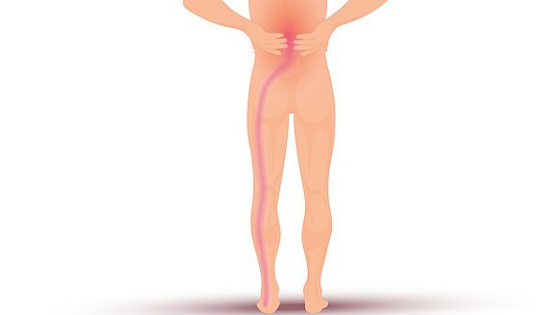
A straight leg raise test is aimed at determining any irritation or compression of the sciatic nerve around the lumbar region from where the sciatic nerve originates.
In my clinical practice, I usually go for this test when a patient complains of pain in the lower back with a pulling sensation in the back of the leg. It is also advisable to perform this test when a patient has a severe low backache with a history of falls.
Commonly, a straight leg raise test is done when there is a suspicion of:
Step-by-step method of Lasegue maneuvre
Generally, the straight leg test is performed on the leg on which the patient complains about the pulling sensation. But if in doubt, we can perform it on both legs.
So, here are the steps one needs to follow:
- Lie down straight, supine (on your back) and keep your hands by your side.
- Keep the legs straight and the hip medially rotated and adducted.
- The lower extremity is slowly raised with the knee wholly extended until the patient complains of pain or a pulling sensation over the back of the thigh and leg.
When is straight leg test positive?
The SLR is defined as “positive” based on two criteria:
- Reproduction of radicular pain (pain that radiates down the leg).
- The angle at which this pain occurs (typically between 30-70 degrees).
But there is a flaw in this test.
- Tight hamstrings can produce a sensation that feels like “radiating” pain in the posterior thigh, which can be easily mistaken for true nerve pain (sciatica).
- A tight hamstring can limit the SLR angle to below 70 degrees, mistakenly fulfilling the second “positive” criterion.
This can be solved by the Extended Straight Leg Raise or ESLR test. So, what is ESLR?
Making the Test More Specific: The Extended Straight Leg Raise (ESLR)
One of the research has refined the traditional SLR to better differentiate nerve-related pain from muscle tightness. They introduced the “Extended Straight Leg Raise” (ESLR), which adds a critical step called structural differentiation2.
Here’s how it works:

- First, perform the standard Straight Leg Raise until the patient feels their usual pain or pulling sensation. Note the location of the pain.
- Then, at that exact angle, add one of the following maneuvers:
- If pain is in the BUTTOCK or HAMSTRING (proximal): Gently dorsiflex the ankle (pull the toes towards the shin). This is known as the Bragard’s test.
- If pain is BELOW THE KNEE (distal): Gently internally rotate the hip (turn the whole leg inward).
Interpreting the ESLR:
- Positive ESLR: If the ankle dorsiflexion or hip internal rotation significantly increases the radiating pain, it strongly suggests neural irritation (e.g., sciatic nerve or nerve root involvement).
- Negative ESLR: If the pain remains the same or is simply a stretch in the hamstring, it is more likely due to musculoskeletal tightness.
This “extended” method helps clinicians be more precise, moving beyond the old rule of only considering a test positive below 70 degrees.
History of straight leg raise test
The Lasegue manoeuvre or straight leg test is attributed to Charles Lasegue, a French clinician who, in 1984, described two cases of sciatica aggravated by weight-bearing and hip and knee flexion in “Thoughts of Sciatica”1.
Nonetheless, Dr Lasegue did not describe the test as a provoked pain; instead, his student JJ Forst described the test in his doctoral thesis in 1881, and it was Forst who considered the pain to be produced by hamstring muscle compression to the sciatic nerve.
Nevertheless, it is believed that a Serbian neurologist, Dr Lazar Lazarevic, was the first to document the straight leg raise test as it is known today in the article “Ischiac postica cotunnii,” initially published in the Serbian Archives of Medicine (1880) and republished in Vienna (1884).
Dr Lazarevic described the straight-leg-raising test by explaining sciatic pain by stretching the sciatic nerve based on his experience with six patients.
Based on this misinterpretation of the original description, describing the manoeuvre as the straight leg raise test is recommended.
FAQ on SLR test

The author is a physiotherapist who has been practising for the last 17 years. He holds a Bachelor's in Physiotherapy (BPT) from SVNIRTAR (Swami Vivekananda National Institute of Rehabilitation and Research), one of the prestigious physiotherapy schools in India.
Whatever he learns dealing with his patient, he shares it with the world through blogs and e-books. He also owns a YouTube channel, "Sunit Physiotherapist" with over 8 lakh active subscribers. Here, he shares everything he gets to learn serving the patient.