Last Updated on January 23, 2026 by Sunit. S. Ekka
Key Takeaways:
- Why balance matters: Sitting balance is the foundation for standing, walking, and daily independence after a stroke.
- Core focus: Strengthening trunk and abdominal muscles is critical for stability.
- 4 key exercises: Bridging, double knee rotations, supine-to-sit transitions, and dynamic ball drills.
A stroke leads to Paralysis on one side of the body, causing significant loss of balance. To improve balance during walking, we need to work on improving sitting and standing balance. And obviously, you cannot get back to work without walking.
Even when an assistive device like a wheelchair or crutches is used for ambulation, it also demands at least sitting balance. In this article, we will focus on exercises to regain sitting balance.
How to Improve Sitting Balance After a Stroke: Core Strengthening Exercises
Recovery from stroke happens in stages. As soon as the stroke recovery transitions from Brunnstrom stage 2 to stage 3, we must focus on retraining the sitting balance. For this, the most important component is strengthening the core and trunk muscles.
Inadequate trunk and abdominal strength are strongly linked to poor sitting and standing balance, impacting daily activities such as dressing, toileting, and walking1. Working on these muscles through specific exercises can result in notable functional improvements.
Bridging Exercise for Stroke Recovery: Strengthen Core Muscles for Better Balance

Bridging exercise helps strengthen the core muscles. During the initial period of stroke rehabilitation, this simple exercise may look challenging. But you have to carry on with this exercise, whether with very little power in your lower back.
- So for this exercise, our starting position will be lying flat on your back and bending both knees with your feet flat on the floor and hands by your side.
- In this position, slowly lift your lower back to a point where you can lift it to a maximum.
- Now, hold this lift position for 5 seconds. The best way is to count 1 to 5 and then lower it down slowly to the normal position.
- Repeat this process 15 to 20 times.
Double Knee Rotation Exercise: Boost Lateral Trunk Strength for Stability

Double knee rotation exercise builds strength and flexibility in the core and lateral trunk muscles.
For double knee rotation, your starting position will be similar to the bridging exercise:
- Lie down flat on your back when your knees bent and feet flat on the bed.
- Now, in this position, swing your knees to the left side and then slowly swing them to the right side.
- You have to alternately swing your knee to the right side and left side slowly and smoothly.
- This will help you strengthen the muscles on the sides of your back.
- Repeat this 10 times on each side.
Supine-to-Sit Exercises: Regain Abdominal Strength for Sitting Balance

The next exercise is targeted to strengthen the abdominal muscles. A strong trunk and abdominal muscle is essential for improved balance and functional independence in stroke patients.
Research has demonstrated that weakness of the abdominal muscles adversely impacts the balance of patients with mild stroke as well as their ability to dress, use a toilet, transfer, and walk1.
For this exercise, our starting position will be the same:
- Start by lying flat on your back with both knees bent and feet remaining flat on the bed.
- In this position, clasp both hands together in front. You may find it difficult to clasp as one of your hands is weak. In such a condition, take the help of a second person to keep your hand grasped in front of you.
- So, from this starting position, you have to come to the sitting position. Here, there are two different variations when it comes to the sitting position from supine lying.
In the first variation, you have to come to sit straight up. This will help to strengthen the central part of the abnormal muscles.
In the second variation, you have to come to sit in a slightly oblique manner to the left and then to the right side. This will strengthen the oblique muscles of the abdomen on the left and right sides, respectively. Repeat each variation 10 times in a session.
You can increase the challenge of the supine sit-to-exercise by doing a slight modification. Just by keeping your legs straight, you will need to put a lot more effort into performing the same exercise.
So in this position, you have to repeat all two variations, that is, supine to sit straight up, then in two variations: obliquely to the left and right sides.
Advanced Sitting Balance Drills for Stroke Patients: Dynamic & Reactive Training
Once the person is able to sit, we can now train various activities that challenge the sitting balance. Throwing and catching a ball in different directions is one such activity that encourages dynamic trunk control and reactive balance.
Reactive balance is essential for fall prevention2, skills essential for adapting to real-world challenges.
For this exercise, you need help that will catch the ball when you throw it. Here is the step-by-step process to carry out this exercise
- Sit on the plinth with your legs hanging and foot flat on the ground.
- Now, catch hold of a ball (a football is enough) and throw it straight in front of you to someone who can catch it and throw it back to you.
- Similarly, throw into the left and then right to challenge yourself, simulating a real-life challenge.
How to progress
Once you have mastered this, you can progress to a more challenging task. For this, you need a therapy ball. You have to practice sitting on this therapy ball.
To sit on a therapy ball, you need to maintain a perfect balance of muscle contraction, posture to counter the effect of gravity. This can be achieved by choosing the right size therapy ball and following the principle of sitting.
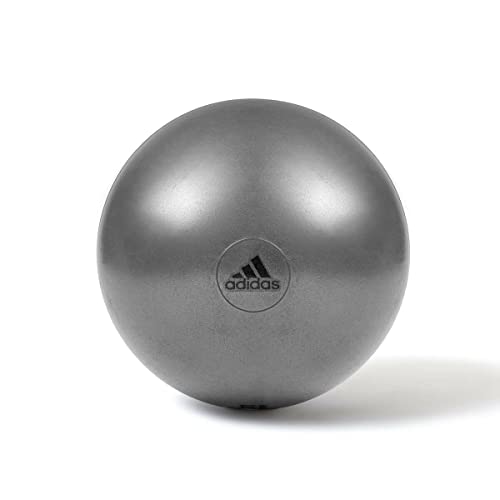
- EXERCISE BALL: A home gym essential, the adidas gym ball helps strengthen and tone your core with a range of stability e…
- ANTI-BURST DESIGN: Featuring anti-burst technology, the ball slowly deflates if punctured to help avoid injury. Complete…
- DUAL-TEXTURED SURFACE: Utilizing non-slip material, the ball supports you throughout your workout with two textures for …

All this activity has to be performed under the guidance of a qualified physiotherapist. For safety reasons, practice the therapy ball sitting balance over a soft cushion mat placed on the floor.
Further, you have to progress to improve the standing balance and walking. If you have already started walking, then follow the exercises to improve walking in hemiplegics.
FAQ

The author is a physiotherapist who has been practising for the last 17 years. He holds a Bachelor's in Physiotherapy (BPT) from SVNIRTAR (Swami Vivekananda National Institute of Rehabilitation and Research), one of the prestigious physiotherapy schools in India.
Whatever he learns dealing with his patient, he shares it with the world through blogs and e-books. He also owns a YouTube channel, "Sunit Physiotherapist" with over 8 lakh active subscribers. Here, he shares everything he gets to learn serving the patient.