
Last Updated on January 23, 2026 by Sunit. S. Ekka

Osteoarthritis (OA) knee pain is the most frequent cause of knee pain, disability, and loss of function in people 45 and older. According to a study, OA has become a major public health concern worldwide over the past decades.
Though osteoarthritis can affect other joints as well, like the hand and hip, it frequently affects the knee joint. The study also gives emphasis on the importance of exercise and lifestyle, as there is no nonsurgical intervention that can prevent, halt, or even delay the progression of this disorder.
Moreover, the available medications, such as nonsteroidal anti-inflammatory drugs, come with side effects like the risk of myocardial infarction or death from cardiovascular causes1. To minimise the acuteness of hydrocortisone knee injections might be administered during which exercises are encouraged.
In this article, we will discuss the simple yet effective exercises for knee with osteoarthritis, which can be very beneficial if you follow simple knee pain precautions along.. So, let us get started.
- Understanding Knee Osteoarthritis (OA)
- 7 Best Physiotherapy Exercises for Knee Osteoarthritis
- #1 Knee Press Exercise (Static Quadriceps Strengthening)
- #2 Ankle and Toe Movement for Improved Circulation
- #3 Straight Leg Raise for Quadriceps Activation
- #4 Side-Lying Leg Raise for Hip Stability
- #5 Inner Thigh Strengthening with Pillow Press
- #6 Hamstring Strengthening for Balanced Support
- #7 Additional Exercises & Lifestyle Modifications
- Physiotherapy Treatment for OA Knee: A Step-by-Step Protocol
- What to Avoid with Knee Osteoarthritis
- Frequently Asked Questions (FAQs) About Knee OA
Key Takeaways:
- Osteoarthritis (OA) is the leading cause of knee pain and disability in adults over 45
- Exercise is the only proven way to slow OA progression and avoid surgery
- This guide covers 7 evidence-based physiotherapy exercises with step-by-step instructions
- Learn the 3-stage physiotherapy protocol (acute, subacute, chronic) for optimal management
- Discover which daily activities to avoid and when to consider medical intervention
Backed by clinical studies and 15+ years of physiotherapy practice, these methods have helped thousands delay or avoid knee replacement surgery.
Understanding Knee Osteoarthritis (OA)
Let’s start this article with a case study. A 58-year-old lady is complaining of knee pain for since 5 months. She has trouble getting up from sitting, using stairs, walking for more than 10 min. She no longer goes out to market, visit outside or go out with family.
Her increasing knee pain and stiffness made her difficult to continue her daily activities for which she visited her family physician. Her knee X-Ray shows decreased joint space. She has been prescribed medication and referred to the Physiotherapy department for further management.
If you experience the same kind of knee pain with all the symptoms mentioned above then most probably it is due to the Osteoarthritis of the knee joint.
What Is Osteoarthritis of the Knee?
Osteoarthritis of the knee is a progressive degenerative disease in which there is the degradation of knee articular cartilage and subchondral bone with compensatory bony proliferation and capsular fibrosis.
Normally, the articular surface is smooth and the joint cavity is filled with synovial fluid, the synovial fluid acts as a lubricant. These two factors make knee motion smooth and frictionless.

In the knee with osteoarthritis knee, the articular cartilage and subchondral bone start degenerating & erosion occurs in the weight-bearing area. The bone surface becomes hard. The capsule surrounding the knee joint becomes tight and undergoes fibrous degeneration.
Osteophytes (extra bone formation) form at the margin of the articular surface. So, when a person with knee osteoarthritis tries to walk it produces painful friction between the joint surface.
Common Causes of Knee Osteoarthritis
No single factor is associated with OA knee.
- OA is associated with ageing, but it has to be noted that ageing itself does not cause OA.
- Repetitive microtrauma: Some jobs or profession requires numerous sitting and standing up. This may cause repetitive microtrauma, which can lead to OA knee over time.
- Sometimes it is also associated with obesity.
- Defective lubricating mechanism and uneven nutrition of the articular cartilage.
Symptoms of Knee Osteoarthritis: What to Watch For
- Pain: There is an insidious onset of pain with activities involving weight-bearing and knee flexion. Activities such as walking, stair climbing, squatting, sitting with knee bend, and getting up after sitting are painful.
- Swelling and inflammation: The patient develops low-grade inflammation.
- Stiffness: later on, one complains of morning pain and stiffness, which is relieved with movement and activities.
- Unable to bend the knee.
- Crepitus: it is a characteristic sound on the movement of the knee.
- Bony enlargement.
- Muscle wasting and weakness: due to the long period of unused joint muscles become weak and muscle bulk reduces (muscle wasting).
7 Best Physiotherapy Exercises for Knee Osteoarthritis
As we know that exercise is the only way we can prevent the progression of osteoarthritis knee, so here we are going to learn easy exercises that anyone can learn and perform at home. These exercises are aimed at strengthening the muscles around the knee joint.
Actually when we stand our body weight is distributed over both of the knee joints. In a normal joint, the muscles around the knee joint are strong enough to bear some of the body weight and distribute the weight equally on both the knee joints.
But in a knee with osteoarthritis due to the pain and inactivity, slowly with time the muscles become weak around the knee. The knee joint is already degraded and painful, the weak and insufficient muscles further increase the body load over the knee joint in a standing position.
This is why eye exercises are very important to regain the strength of these muscles. So let us first start with the quadriceps muscles strengthening exercise.
#1 Knee Press Exercise (Static Quadriceps Strengthening)

This exercise is aimed at strengthening the quadriceps muscles. Quadriceps muscles are present on the front of our thigh and their action brings the extension of the knee.
This exercise is very easy and our starting position would be a long sitting position:
- So sit comfortably in a long sitting position over a couch or on the floor with a mat, and then place a pillow under the knee. If you have pain in both knees, then put both knees over the pillow.
- Then press the pillow slowly and gently. By pressing the pillow downward, we are actually contacting our quadriceps muscles.
- So press and hold for 5 seconds and then release it, you can do it simultaneously and on both knees.
- Press the pillow again and hold it for 5 seconds; the best way is to count from 1 to 5 and then release it slowly.
- While doing it you can observe we are contracting the muscles but there is no actual Movement in the joint, this is why we also call it a static quadriceps exercise.
- Repeat this process a minimum of 15 to 20 times in a single session, however, the more you do the better it is.
#2 Ankle and Toe Movement for Improved Circulation

For this exercise, our starting position would be the same as the previous exercise.
- Sit in a long sitting position.
- Then simply move our ankle, foot and toe into flexion and extension motion.
- You have to bend it and straighten it as a number of times as possible, which will cause the action of the muscles in the lower leg.
#3 Straight Leg Raise for Quadriceps Activation

Our next exercise for the knee with osteoarthritis is the straight leg raise. For this exercise:
- You have to lie down flat on your back with your hand by your side.
- Now, in this position, slowly raise your one leg, raise it to not more than 30 degrees of angle and hold this position for 5 seconds.
- Then lower it down slowly.
- Then again, repeat this process on the other leg, raise it up to 30 30-degree angle, hold his position for 5 seconds and then lower it slowly back to the position.
- Repeat this exercise for ten to fifteen repetitions on a single leg. This exercise is also aimed at strengthening the quadriceps muscles.
#4 Side-Lying Leg Raise for Hip Stability

So this is also a straight leg raise, but it is performed in the side-lying position, and this exercise is aimed at strengthening the muscles on the outer side of our thigh, that is, the abductor group of muscles.
- So, come to the side-lying position, keep both of your legs straight.
- Then raise your leg up to 30 degrees without bending the knee.
- Hold this position for 5 seconds, then lower it to the normal position.
- Repeat this process a minimum of 10 to 15 times in one leg.
- Then change your position to the other side lying position and then repeat the same process on the other leg.
- Raise it and hold it for 5 seconds and then lower it down.
- Repeat 10 to 15 times in a single session.
#5 Inner Thigh Strengthening with Pillow Press

Now we have to also strengthen the muscles on the inner side of our thigh, so to do this, you have to come to the lying position on your back.
- In this position, bend both of your knees and place a layer of two pillows between your thighs.
- Now simply press the pillow between the thigh and hold it for 5 seconds, and then relax it.
- Repeat this process a minimum of 20 to 25 times; however, the more you do, the better it is.
- As I said, this muscle is aimed at strengthening the hip adductor muscles.
#6 Hamstring Strengthening for Balanced Support
Now lie down flat on your tummy, keep your hand by your side and then slowly bend one of your knees; you don’t have to bend the knee more than 90 degrees as it can cause an increase in pain.
So bend it to 90 degrees and then straighten it, again bend it to 90 degrees and then straighten it. Repeat this process 15 to 20 times in a single leg. This exercise is meant to strengthen the muscles on the back of our thigh.
For progressive resistance, these latex-free bands are perfect for safely increasing strength. Start with light resistance (yellow) and gradually progress.

- LIGHT RESISTANCE FOR FULL-BODY TRAINING: Designed for upper and lower body workouts; ideal for strength building, flexib…
- CUT TO ANY LENGTH FOR CUSTOM FIT: 50-yard latex roll lets you trim precise lengths for individual workouts, body sizes, …
- PORTABLE & EASY TO USE ANYWHERE: Lightweight and compact for workouts at home, gym, office, or while traveling; perfect …

#7 Additional Exercises & Lifestyle Modifications
A recent study proved that a small change in walking pattern can reduce knee pain. Not only this, it also found to reduce cartilage erosion of the knee.
There are a few other exercises, and there are so many Lifestyle modifications you can adopt, you can perform exercises inside the swimming pool, all of this I have discussed in one of my books, “Combat Knee Pain Naturally”.
You can get this book and get details of all the exercises I have discussed here and other exercises and Lifestyle modifications that will help you to avoid operation for total knee replacement surgeries for at least you can delay these surgeries until later in your life
Physiotherapy Treatment for OA Knee: A Step-by-Step Protocol
When you visit your physiotherapist, they will thoroughly examine the knee. They will go through the X-Ray report and all the previous treatment history. According to the severity of pain and disability, OA knee is subcategorised into three stages/phases. These are the acute stage, sub-acute stage, and chronic stage. The treatment plan is based on these stages.
But, before we proceed, let me make it clear that there is no permanent cure for OA knee. Since it is a progressive degenerative disease, we can slow the process of degeneration, but we can never stop it permanently.
But there’s nothing to get demotivated, as with physiotherapy and some home tips, you can manage your knee pain for your whole life. So, without delay, let us start.
Stage#1 Acute Stage: Pain Relief & Inflammation Control
The acute stage is characterised by severe and acute pain and inflammation/swelling around the joint. During this stage, one becomes almost bedridden, they become disabled out of pain, and walking becomes near impossible.
So the goal for knee physical therapy in the acute stage would be pain reduction, reducing inflammation, and maintaining strength and endurance. But how could we meet these three treatment goals of acute stage knee OA?
For acute pain and inflammation:
- Rest
- Shortwave Diathermy (SWD)
- Paraffin wax bath.
- IFT (InterFerential Therapy).
For maintaining strength and endurance we suggest static strengthening exercises. Let us discuss it one by one and try to understand its importance and implications.
Rest
Rest is very important during the acute stage as movement can further increase the pain and inflammations of the knee. Rest could be general bed rest, which we recommend during this stage.
Or if a person can somehow manage to walk, local knee rest using a hinged knee cap can work like a miracle.
Shortwave diathermy (SWD)
This is a heating device you can find in any well-equipped physiotherapy centre. It uses electromagnetic radiation to produce heat inside the joint. It has a benefit over other heating devices as it can produce a heating effect deep inside our joint/ body.
If you want to learn more about SWD in physiotherapy you can click here for more.
Paraffin wax therapy for knee pain
In this technique wax (mixed with glycerin) is heated /melted to a comfortable temperature of 30-40 degrees Celsius. Everything is done on a special apparatus specially designed for physiotherapy.
The molten wax is applied over the painful knee. Several layers of wax are applied and kept for 15 to 30 minutes so that the knee absorbs the heat. The benefit of this therapy is its ability to maintain the heat for a longer period.
The way of application differs from therapist to therapist. Some prefer to directly pour the molten wax over the knee and some prefer to use cloth strips. But, it is not advisable at home.
Interferential therapy (IFT)

It is also a very effective pain-relieving technique where a modified direct current is applied over the knee. It is applied through the electrodes. You can read about it further here.
Static quadriceps exercise for strength and endurance
Since you are in a period of rest or simply you can not move your legs, with time there is a high chance of developing muscle weakness around the knees. But how can you perform exercise when you are told not to move the knee?
This problem can be solved by doing static quadriceps exercises as shown in the figure below. We also call it knee press exercise. Take a bed-sheet roll or a pillow and place it below the knee. Now press the roll and hold it for 5 seconds and then release it. Repeat it as many times as you can but for a minimum of 40 times.
As you can observe that it’s an exercise where there is practically no movement and this is why it is called a static quadriceps exercise.

Stage#2 Subacute Stage: Restoring Mobility & Strength
In the subacute stage, acute pain is subsided. Following are the main aim of knee physical therapy during this stage. You can refer to 6 Best Exercises for Arthritis in knee Pain Relief for a more detailed description of the exercises to follow in this stage.
- Increase range of motion.
- Increase the intensity of strengthening exercises.
- Treating joint laxity by using proper orthosis (Hinged knee-cap) and regularly practising strengthening exercises.
Stage#3 Chronic Stage: Long-Term Management Strategies
For flat foot and/or limb length discrepancy we recommend foot-wear modification.
Research suggests glucosamine/chondroitin supplements like this USP-verified option may support joint health when combined with exercise.
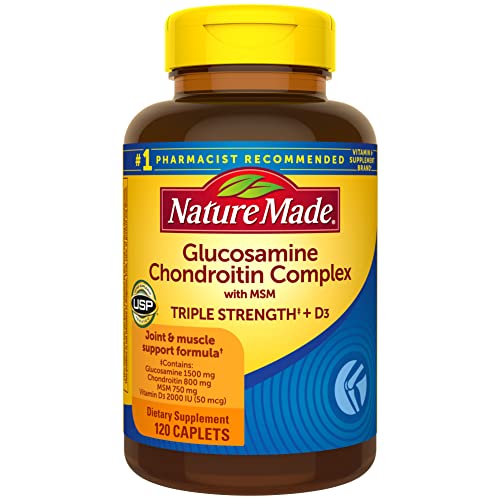
- Joint support supplement: contains one 120 count bottle of Nature Made Glucosamine Chondroitin Complex with MSM caplets …
- These Glucosamine Chondroitin MSM supplements help support joint cartilage
- Glucosamine with Chondroitin is a dietary supplement that helps keep your joints moving smoothly by helping support join…
What to Avoid with Knee Osteoarthritis
- Avoid precipitating activities at all stages.
- Avoid exercises that can increase knee pain.
- Decrease the use of the Indian mode of toilet.
- Reduce stair climbing.
- Avoid floor sitting.
- Activities modification, such as the use of the western toilet, while sitting on the floor, use long sitting position.
If conservative management does not respond and the patient continues to complain of severe pain, then surgical knee replacement is the only option left. If you are planning for total knee replacement surgery, prior preparation is a must for the best outcome..
For added stability during daily activities, consider a hinged knee brace like this medically-approved support that reduces pressure on joints while allowing full movement.

- PROTECTION / PREVENTION: This hinged knee brace for men and women is designed as our most advanced hinged knee brace wit…
- COMFORT: This ACL knee brace strategically combines rigid and soft materials to ensure unique comfortable support, the k…
- BIO-LOGIX: A philosophy of sports medicine. Bio-Logix is an approach fully focused on the realities of the human form, a…
Frequently Asked Questions (FAQs) About Knee OA
Yes, moderate walking helps lubricate joints and maintain mobility. However:
- Use supportive shoes
- Limit duration (10-15 mins initially)
- Avoid uneven surfaces or stairs
- Stop if pain increases
Combine walking with strengthening exercises for best results.
Avoid these OA knee triggers:
- High-impact activities (running, jumping)
- Squatting or sitting cross-legged
- Carrying heavy weights
- Cold weather (wear knee warmers)
- Ignoring early pain signals
Surgery (like knee replacement) is recommended if:
- Pain persists despite 6+ months of physiotherapy
- You struggle with daily tasks (walking, climbing stairs)
- X-rays show severe joint damage
Always explore conservative treatments first.
While cartilage damage can’t be fully reversed, recent research shows promising potential for joint tissue regeneration. Focus on:
- Slowing progression through exercise
- Maintaining healthy weight
- Using joint-protecting supplements (glucosamine, chondroitin)
- Early intervention with physiotherapy




Pingback: 4 Exercises to Avoid in Knee Pain Arthritis - Physiosunit
Pingback: 6 Best Exercises for Arthritis in knee Pain Relief - Physiosunit
HERE IS MY STORY…
I am very happy to announce that the cannabis oil is for real. Two years ago I was diagnosed with cancer and it was already in stage 4 before I got to hear of the cannabis oil. I had no hope what so ever because the doctors had told me I have few Months left. I ordered online from Dr. Paul cannabis oil and it was delivered to me in 3 days of request along with the prescription, immediately I started applying for 6 weeks and the results was wonderful. Don’t die when you have the cure right beside you. You can create your own cannabis oil but it would be best to contact the right source to get the right quality cannabis oil. In my case I contacted simpsonrick95@gmail.com they helped me and I am for ever indebted to them just save your life by ordering for the cannabis oil, contact: Dr. Paul and get the oil treatment from him, try it and you will not regret it because it truly works and here is his email: simpsonrick95@gmail.com
I wish you all quick recovery…
My Father was diagnosed of Brain Cancer June 2016 and ever since then we have been searching for cure. About Few months ago i heard about Rick Simpson and its healing effect with cannabis oil and i sourced this treatment from USA i discussed with him on email at Ricksimpsonmedicaloil@outlook.com we ordered the cannabis oil medication for my father, delivery was made within three days. As i write now my father Has been cured of BRAIN CANCER .
Thanks to Rick Simpson and his good works.
Best Regards,
Patricia Fortune.