If you’re suffering from severe osteoarthritis pain in your knees, you might be considering knee replacement surgery. Maybe your operation is already scheduled, and you find yourself with a head full of questions—How will you manage at home after surgery?
What will daily life look like? How will you handle simple activities like going to the toilet?
It’s perfectly natural to feel anxious about the road ahead. But there’s no need to worry. Your doctor will guide you at every step, but let me offer a brief overview of how you can arrange your home to support your healing journey after knee replacement surgery.
With a bit of preparation, you’ll be able to settle into your routines more easily, especially during the early stage of recovery.
If you’re not at this stage yet and still weighing up whether knee replacement is even on the cards for you, it can help to first check your knee osteoarthritis risk here before reading on.
            <div class="wp-block-uagb-table-of-contents uagb-toc__align-left uagb-toc__columns-1  uagb-block-7fe2e23c      "
                data-scroll= "1"
                data-offset= "30"
                style=""
            >
            <div class="uagb-toc__wrap">
                    <div class="uagb-toc__title">
                        Table Of Contents                       </div>
                                                        <div class="uagb-toc__list-wrap ">
                    <ol class="uagb-toc__list"><li class="uagb-toc__list"><a href="#understanding-knee-replacement-surgery" class="uagb-toc-link__trigger">Understanding Knee Replacement Surgery</a><li class="uagb-toc__list"><a href="#make-your-home-a-recovery-zone-do-these-preparations" class="uagb-toc-link__trigger">Make your home a recovery zone: Do these preparations</a><ul class="uagb-toc__list"><li class="uagb-toc__list"><a href="#1-how-to-modify-the-bathroom-to-prevent-falls-after-tkr" class="uagb-toc-link__trigger">1. How to modify the bathroom to prevent falls after TKR</a><li class="uagb-toc__list"><li class="uagb-toc__list"><a href="#2-arranging-the-bedroom" class="uagb-toc-link__trigger">2. Arranging the bedroom</a><li class="uagb-toc__list"><li class="uagb-toc__list"><a href="#3-living-room-modifications" class="uagb-toc-link__trigger">3. Living Room Modifications</a></li></ul></li><li class="uagb-toc__list"><a href="#caring-for-your-leg-after-surgery" class="uagb-toc-link__trigger">Caring for Your Leg After Surgery</a><li class="uagb-toc__list"><a href="#mobility-getting-up-safely" class="uagb-toc-link__trigger">Mobility: Getting Up Safely</a><li class="uagb-toc__list"><a href="#stay-on-top-of-your-medications-and-exercises" class="uagb-toc-link__trigger">Stay on Top of Your Medications and Exercises</a><li class="uagb-toc__list"><a href="#focus-on-nutrition-and-hydration" class="uagb-toc-link__trigger">Focus on Nutrition and Hydration</a><li class="uagb-toc__list"><a href="#the-road-ahead" class="uagb-toc-link__trigger">The Road Ahead</a></ul></ol>                    </div>
                                    </div>
            </div>
Understanding Knee Replacement Surgery
Let’s start with what happens during a knee replacement.
In this procedure, your damaged knee joint is removed and replaced with an artificial joint called a prosthesis.
If your knee is severely affected by osteoarthritis and even physiotherapy, exercises don’t provide relief—the next step is to replace the knee. This removes the source of pain and allows you to regain mobility.
Make your home a recovery zone: Do these preparations
When you return home, your living space should become your recovery zone. Accessibility is the key: anything you need should be within easy reach, and it should be safe for you to move around.
Home modification is important to prevent falls after TKR. A study 4 examined the risk of falls in 120 TKR patients within two weeks of discharge from the hospital. They found these most common spots in the house that have an increased risk of falls:
- Home entrance (29.09%),
- Living room (23.64%), and
- Bathroom (18.18%).

The study also found that about 38.5% of the TKR patients needed home modifications. In most cases, falls were associated with inefficient grab bars and lighting.
This makes home modification so important. So, let’s start with toilet modification.
1. How to modify the bathroom to prevent falls after TKR
Most modern homes have Western-style toilets, which are exactly what you’ll need after a knee replacement. If your bathroom still has an Indian squat toilet, it’s crucial to switch to a Western commode to avoid squatting, which is unsafe after surgery.
Often, a Western commode becomes necessary for daily use even in the long term.
Next, consider installing a grab bar or railing on the bathroom wall, especially if the space is tight and you can’t bring a walker or wheelchair inside.
Simple railings along the path to the commode offer valuable support and prevent falls.
Finally, make sure your bathroom floor isn’t slippery. Lay down a dry mat or anti-slip rug to reduce the risk of accidental slips. Check these safety measures before your operation to set yourself up for a safe, comfortable recovery.
2. Arranging the bedroom
As I mentioned in the introduction, accessibility is the key. So, organise your bedroom so that all essential items—medicines, snacks, water—are easily accessible from your bed.
A small stool or table next to your bed can store everything you need, minimising the need to call for help or move around unnecessarily.
Set up your bed so it’s easy to get in and out, especially if you need to make your way to the toilet.
Clear the path between your bed and the door to avoid obstacles, making it safe whether you’re using a walker or simply walking.
3. Living Room Modifications
If you spend time in the living room, keep water, snacks, or medicines within reach—on a tea table or side table next to your seat. This way, you won’t need to get up and move often.
Make sure the route between your bedroom and living room is clutter-free, keeping furniture positioned so your walker can easily pass through without risk of getting stuck or causing a fall.
Caring for Your Leg After Surgery
Alongside your home arrangements, post-surgical leg care is vital. Most people experience swelling in the operated leg—a condition called oedema. This is common, so don’t panic.
The RICE protocol is very effective in managing leg swelling and is an important part of the rehabilitation routine post-surgery1. Not only for swelling, it is equally beneficial in improving blood circulation in the lower leg and thus prevents joint stiffness
- R: Rest as much as possible.
- I: Ice the operated area every 2–3 hours to reduce inflammation and swelling.
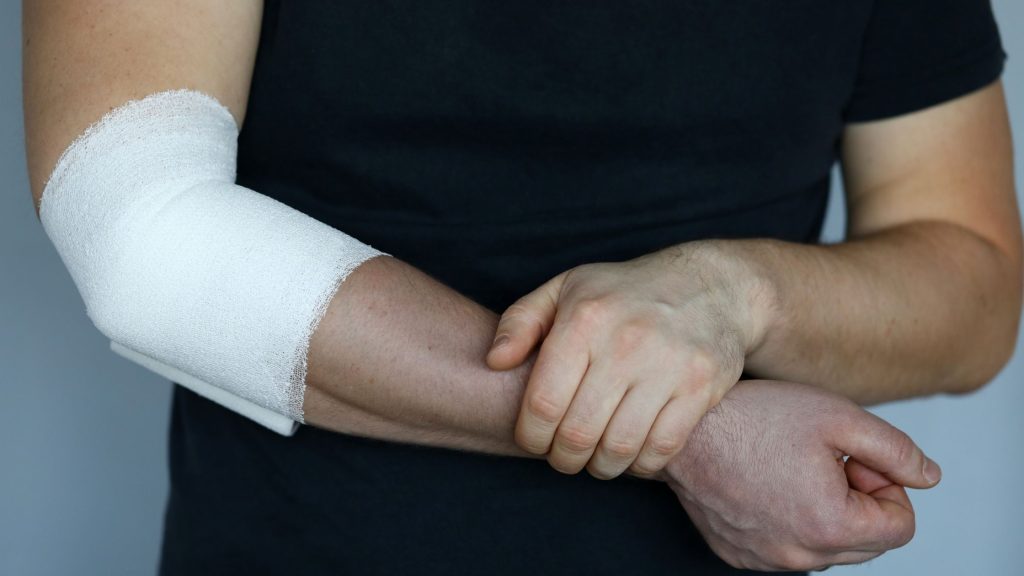
- C: Compression, ideally with a knee cap or brace as recommended by your doctor.
- E: Elevation; keep your leg propped up on pillows to decrease swelling.
Further, gently wiggle your feet while lying down to promote circulation and minimise stiffness.
Your doctor may also recommend basic exercises like the Straight Leg Raise: lift your leg straight up to about 30 degrees, hold for 5 seconds, then gently lower. Repeat this 10 times daily to help restore muscle strength and flexibility.
Mobility: Getting Up Safely
After surgery, there’s a special technique for getting up from lying or sitting:
Keep your operated leg at the edge of the bed.
When you need to get up, turn slightly to your side, lower your legs carefully, then sit up slowly—never sit straight up abruptly. This method protects your knee and reduces injury risk.
Stay on Top of Your Medications and Exercises
Always take your medicines on schedule and follow your physiotherapist’s exercise recommendations consistently. These will speed up recovery and help you regain strength.
Focus on Nutrition and Hydration
Diet and nutrition play a very important role in healing and pain relief after the surgery. A study conducted at a hospital in Japan has found that better nutritional status had significantly better pain relief and symptom improvement at 12 and 36 months post-surgery2.
Not only this, but it also improves knee function during exercises. The study recommends increasing your intake of protein-rich foods, as protein aids muscle building and tissue healing.
In another interesting study, the knee functional outcome was found to be better in non-vegetarian individuals as compared to vegetarians, as the former has more dietary protein intake3.
Drink plenty of water to avoid constipation and promote healthy blood circulation—both important for your recovery.
The Road Ahead
If you follow these tips sincerely, your surgery outcome will be positive, and you’ll be able to enjoy life with greater comfort and mobility.
Every modification—from room arrangement to daily routines—can make a big difference in your comfort and safety.
If you’d like more guidance, let me know in the comments, and I’ll share more about exercise routines and recovery tips for life after knee replacement surgery.
Take care—and wishing you a healthy, happy recovery!

The author is a physiotherapist who has been practising for the last 17 years. He holds a Bachelor's in Physiotherapy (BPT) from SVNIRTAR (Swami Vivekananda National Institute of Rehabilitation and Research), one of the prestigious physiotherapy schools in India.
Whatever he learns dealing with his patient, he shares it with the world through blogs and e-books. He also owns a YouTube channel, "Sunit Physiotherapist" with over 8 lakh active subscribers. Here, he shares everything he gets to learn serving the patient.