Last Updated on January 23, 2026 by Sunit. S. Ekka
Key Takeaways:
- Use a temporary knee gaiter to prevent knee buckling.
- A leaf spring AFO or toe pick-up splint manages foot drop.
- Train standing balance with a hemiplegic walker, not a wall.
- Use temporary shoe compensation on the sound side to aid walking.
- Consistently perform bridging and knee extension exercises.
Regaining the ability to stand and walk after a stroke is the most challenging part of stroke rehabilitation. It becomes hard to achieve due to knee buckling and a weak ankle. I have prepared this guide from a lecture by senior physiotherapist Dr B.K. Nanda (Physiotherapist), senior lecturer, SVNIRTAR, Cuttack, Odisha, India, provides a clear, step-by-step approach to retrain standing and walking.
We will follow the case of a 50-year-old male patient with left side hemiplegia at Brunnstrom Stage 3. He can sit but cannot yet stand independently due to these exact issues. The lecture was delivered at Rourekla, Odisha on 7th September 2025, on the occasion of World Physiotherapy Day.
- The Core Challenge: Knee Buckling and Plantar Flexion
- Step 1: Promote Early Weight Bearing and Bed Mobility
- Step 2: Retraining Standing Balance with a Hemiplegic Walker
- Step 3: Retraining Walking and Overcoming Ground Clearance
- Advanced Technique: Achieving Full Knee Extension
- Conclusion: A Proven Path to Walking Again
- FAQ on standing, walking retraining for stroke recovery
The Core Challenge: Knee Buckling and Plantar Flexion
You can watch the demonstration video by visiting here. The instructor is helping the model patient to stand with the help of his attendant. Here is how it proceeds:
When we try to make this patient stand, he is unable to stand independently as his:
- Knee is buckling, knee is getting flexed on standing.
- The ankle also gets plantar flexed (foot drop), which makes him incapable able to taking a load on the leg and makes standing a challenge.
For such conditions, first of all, we should promote weight-bearing as early as possible. It is followed by teaching them the stepping. All these require a well-coordinated use of splint, orthosis, faradic stimulation and exercises. So, let’s start with promoting early weight-bearing.
Step 1: Promote Early Weight Bearing and Bed Mobility
Earlier, physicians were referring patients late. Like one we have now, where the patient has developed a significant abnormality. He has developed an abnormal spastic pattern, a synergy pattern.
I should first make him stand. Besides this, I will work on bed mobility. I should:
- Make him roll on the bed.
- Come to sit from supine lying independently.
- Exercises to improve sitting balance, without support.
- Able to perform high sitting.
There are Many patients who we make stand, but they are not able to roll on the bed and cannot sit independently. When making them sit, they become restless, they want something to hold on to, shouting Somebody please come and help me.
So, before going to weight-bearing, he must be able to sit independently.
So we should work on rolling, supine to sitting, we should work on sitting balance at the same time, also concurrently, not one after another, we should make him stand.
BUT, for standing, something is required. He should have strong posterior chain muscles.
Strengthening the Key Muscle Groups
You should focus on strengthening:
- Trunk extensors,
- Hip extensor,
- Hip abductor,
- Quadriceps
- Plantarflexor,
- Dorsiflexor.
In one or two days, he’ll not be able to stand independently. So, along with strengthening and facilitation, you have to go for an appropriate orthosis.
What orthosis should we give?
Using Temporary Orthosis for Support
In this case, we should go for a therapeutic orthosis, not a permanent orthosis. For the knee, we should go for a knee gaiter, that’s it. However, there are conditions when one needs to continue to use an orthosis.

Suppose somebody will need to use an orthosis for 2 years, 5 years, then go for KFO. KFO is heavy, and in our case we only need it till we achieve standing balance. So I want to go for a light-weight orthosis that is temporary, a knee immobiliser, knee gaiter.
Case study:
A young lady, she was a teacher, and she was from Assam. She had not gained the standing balance, knee was buckling. So, we made a strategy, how to make her stand. So, I simply gave her a knee gaiter, first with minimal support, I made her stand.
And after a few days, she could stand without a knee gaiter, without manual support, without mechanical support, and she went happily. She went and joined her school as a teacher. So, for this also, I give orthosis temporarily; I won’t give KFO, it’s permanent.
So, after the knee gaiter, what will happen to the ankle?
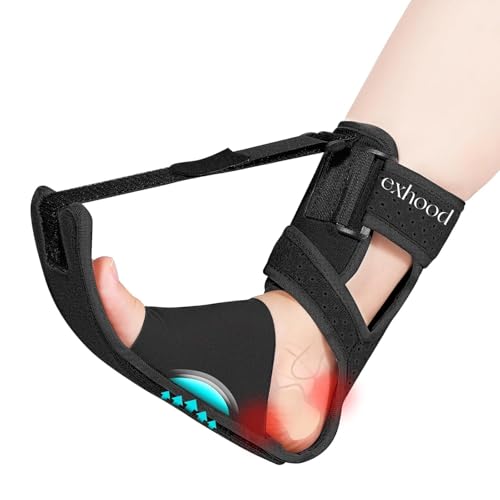
The ankle will go into plantar flexion (foot drop). For the ankle, I can go for a very lightweight functional orthosis. So, I go for a leaf spring AFO, or the best is the toe pick up splint. Both the knee gaiter and the toe pick up splint are made of cloth.
Simultaneously, a physiotherapist should also give a galvanic current for foot drop.

Step 2: Retraining Standing Balance with a Hemiplegic Walker
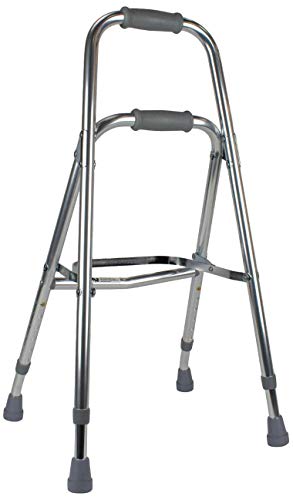
With the knee gaiter and ankle splint, next we will make him stand. For standing, he may need some support. The best thing to do is to use a hemiplegic walker and hold it on one side while standing by it, but avoid holding it. I have seen therapists make the Patient stand leaning on a wall.

The problem with this is that the patient will always seek for wall.
If you give the patient a wall to stand on, he will think the wall is right. We want him should have some support. Which is not very stable, and he should manipulate to hold that support. Nowadays, a hemiplegic walker is available to train them to stand.
You may say that a tripod or a tetrapod stick will also work, but they don’t have a wide base and are unstable. Hemiplegics often experience significant weakness and fear.
When I make a patient stand and walk, I pat his back. Why tapping? to make them confident that I am with you. Being with you means there is no risk of falling.


Step 3: Retraining Walking and Overcoming Ground Clearance
Once he can stand confidently, then you go to stepping. When teaching them to take steps, it is possible that you may find difficulty as you have fixed one side knee into extension. When you get the knee extension, you have difficulty clearing the ground.
How can you overcome this?
So, you fixed the knee with a knee gaiter, knee is now stable. We also have a leaf spring AFO or toe pickup splint for the ankle. But while walking, he’ll have difficulty clearing the ground because his knee is not flexing.
So what to be done?
The best solution for this is to prescribe them a temporary shoe compensation on the sound (right in our case) side.
By lifting the right leg, now left leg will now have increased room for the ground clearance. This will promote the swing phase on the left side.
By temporary compensation on the right side, make him walk. And instruct the patient and caregivers that this hemi walker is temporary.
Case study:
Friends, we have seen a female patient. She’s around 55 to 60 years old. So she purchased a knee gaiter, she purchased a hemi walker, and after 2 months, she could walk independently. She was happy and told us to donate the orthosis and walker to anyone who needs.
Advanced Technique: Achieving Full Knee Extension
After selecting and starting to use the temporary orthosis and a hemi walker, at the same time, we should also work on the quadriceps and glute muscles. You can work on:
- Bridging exercises, which will facilitate your gluteus maximus, gluteus medius and quadriceps.
- In a sitting position, work on knee extension.
While teaching knee extension in the sitting position, instruct him to perform the exercise on the sound side first. This is to make them learn and understand the movement. He should understand what exactly I want him to do.
If he has understood and is still unable to do the knee extension on the affected leg, that means he has significant weakness.
There’s an issue in our case; he’s initiating the knee extension on the affected leg, but he’s leaning backwards.
Why leaning backwards?
This can be explained by passive insufficiency. By leaning backwards, the patient is cleverly using their strong hip muscles to create a mechanical pull that helps their weak knee muscle straighten the leg.
So, how can we manage this?
How to overcome passive insufficiency?
So to overcome this issue, make him sit and go for Faradic re-education, not isometric contraction of the quadriceps.
- Make him sit on a high plinth or chair.
- Apply two electrodes.
- A big electrode, one covering all four muscles.
- Other proximal femoral triangle,
- Set the faradic stimulation with enough surge interval and a little lesser surge duration.
- With each stimulation, instruct the patient to contract and relax the quadriceps muscle.
You use this guide for faradic electrode placement for stroke patients to strengthen other weak muscles. And I am sure within 30 days, they will be able to do the extension. But, in many cases, there is still a slight lag in full knee extension. What to do about it?
How to achieve terminal knee extension
Now, once the knee could be extended sufficiently, but terminal knee extension is not coming. How can you stimulate? For this there is a principle called the principle of specificity.
So if terminal knee extension is a problem, instead of going for quadriceps stimulation in high sitting, I should have gone in half lying with a pillow under the knee.
Why half lying?
The patient should see the movement. They should see the movement re-education.
So, half lying with a pillow under the knee when there’s a terminal lack of extension. The principle of Specificity says that the range at which the muscle is not working stimulates the muscle at that range.
Suppose the patient is having a 15-degree extension lag.
Keep the knee flexed at 15 degrees and stimulate. You’ll find that after two to three weeks, he’ll be able to extend. And you know faradic re-education is an assisted exercise. Tell the patient, along with the stimulation, he should try movement, and he’s having good cognitive understanding.
Conclusion: A Proven Path to Walking Again

So for this particular case, arrange for him a hemi walker, a knee immobiliser and make him stand. For safety, make him stand in front of the wall, but not leaning on the wall. In front, her wife will be standing, no chance of falling backwards, as there is a wall.
Then go for gradual stepping with shoe compensation on the right side. But with the leaf spring AFO, the shoe has to be worn on the left side.
As you progress and he is able to walk, you should teach them more advanced exercises to improve walking in hemiplegia.
Keep Reading: How to Assess Upper Limb Spasticity After Stroke? NDT Treatment simplified
FAQ on standing, walking retraining for stroke recovery

The author is a physiotherapist who has been practising for the last 17 years. He holds a Bachelor's in Physiotherapy (BPT) from SVNIRTAR (Swami Vivekananda National Institute of Rehabilitation and Research), one of the prestigious physiotherapy schools in India.
Whatever he learns dealing with his patient, he shares it with the world through blogs and e-books. He also owns a YouTube channel, "Sunit Physiotherapist" with over 8 lakh active subscribers. Here, he shares everything he gets to learn serving the patient.