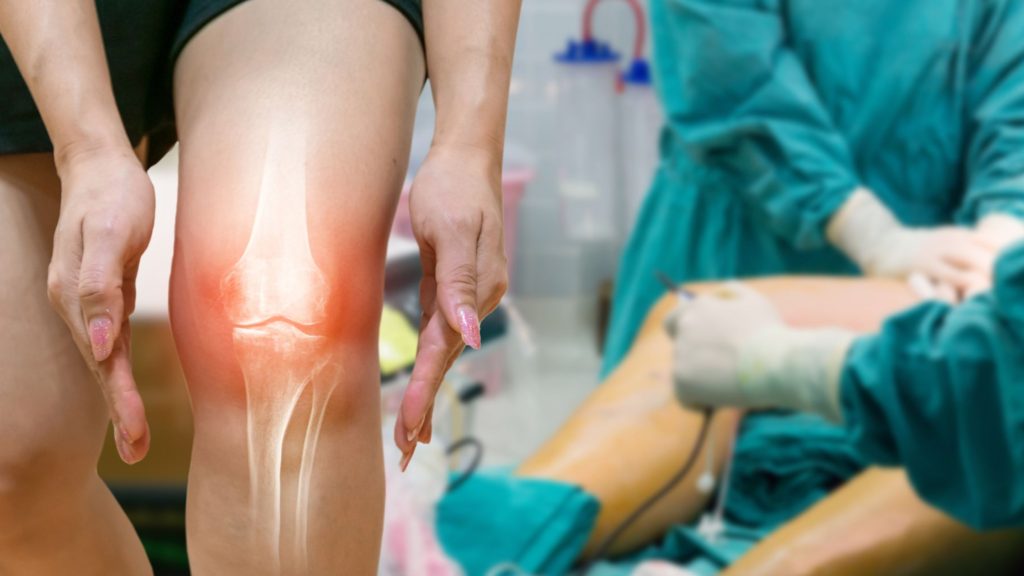
ACL repair is not the same as reconstruction. Repair stitches your own torn ligament back together and preserves its natural blood supply and nerves. Reconstruction removes the damaged ligament and replaces it with a tendon graft (usually from the hamstring). The right choice depends on tear type, location, timing, tissue quality, and your activity goals.
This guide compares both procedures side-by-side so you can understand the differences in surgical technique, potential arthritis risk, success rates with modern FiberTape Internal Brace, recovery timelines, and who is a good candidate for each option.
The ACL (Anterior Cruciate Ligament) is one of the most commonly injured knee ligaments in athletes. Highest rates of recurrent ACL ruptures occur among male football players, female gymnasts, and female soccer players1.
ACL Repair vs. Reconstruction: Key Differences Explained
When your ACL is torn, surgeons generally consider three related approaches rather than just two:
- Pure primary repair — the original ligament is sutured back to its attachment without using a graft.
- Repair with augmentation — part of the native ACL is repaired and a graft (often hamstring) is added for extra strength.
- Reconstruction — the torn ACL is removed and completely replaced with a tendon graft. A structured ACL reconstruction rehabilitation protocol is essential after this surgery.
Modern techniques frequently add a FiberTape Internal Brace (a high-strength polyethylene tape) to protect the repair or the graft during early healing. The choice depends mainly on tear location, tissue quality, time since injury, patient age, and activity level.
1. How ACL repair works: sutures vs. reconstruction’s graft technique
Primary ACL repair reattaches the torn ends of the native ligament, usually with sutures and often reinforced by a FiberTape Internal Brace. It is most suitable when:
- The tear is proximal (near the femoral attachment) or a high-grade partial tear (Sherman type 1–2).2
- Tissue quality is still good (the ligament has not retracted or become scarred).
- Surgery can be performed relatively early (ideally within a few weeks of injury).
- The patient is typically younger and highly motivated for a structured rehabilitation programme.
ACL reconstruction is a different procedure. The damaged ACL is removed and a new ligament is created from a graft — most commonly a portion of the hamstring tendons. Reconstruction is generally preferred for:
- Complete midsubstance tears with poor tissue quality.
- Chronic tears (months after injury) where the ligament has retracted.
- Patients who have already failed a previous repair attempt.
- High-demand athletes in whom long-term durability is the priority.
In selected intermediate cases, surgeons may perform repair plus augmentation: they repair whatever viable native tissue remains and add a graft plus FiberTape Internal Brace for additional support.
2. ACL surgery & arthritis risk: Why reconstruction may increase long-term concern
ACL injury itself markedly increases the long-term risk of knee osteoarthritis — roughly a 7-fold increase in odds compared with an uninjured knee.3 Some evidence also suggests that reconstruction may be associated with a higher long-term osteoarthritis prevalence than non-operative care in certain series, although findings are mixed and many factors (especially concomitant meniscus injury) influence risk.
4 You can also review the main risk factors of knee osteoarthritis that apply regardless of surgery type.
Native ligaments contain nerve fibres and blood vessels that help nourish the joint cartilage and provide proprioception (joint-position sense). When the torn ACL is completely removed during reconstruction, these structures are lost and must regenerate slowly, if at all.
In primary repair the native ligament (and its neurovascular supply) is preserved, which theoretically may reduce the risk of later cartilage degeneration.
This theoretical advantage is most relevant when the tear is proximal (on the femoral side) and surgery is performed early. Even then, other factors — concomitant meniscus or cartilage injury, activity level, body weight, and rehabilitation quality — often play a larger role in whether arthritis develops.
3. ACL Repair Success Rates: Role of FiberTape Internal Brace
Historically, isolated ACL repair had relatively high failure rates. Modern arthroscopic primary repair techniques (especially for proximal tears) have shown improved results. Systematic reviews of recent literature report failure rates in the range of roughly 7–11% for primary repair with or without static augmentation at short- to mid-term follow-up.5
Suture-augmented primary repair with internal brace has shown pooled re-rupture rates around 10–11% in carefully selected patients, with favourable patient-reported outcomes and return-to-sport rates.6
Results still depend heavily on proper patient selection (proximal tears, good tissue quality, appropriate timing) and careful rehabilitation. After reconstruction, the graft undergoes a process called ligamentisation that typically takes many months.
Most surgeons advise waiting until at least 6 months (and often longer) and meeting objective criteria before returning to running or pivoting sports. Five criteria are commonly used to decide when running can safely begin.
When a complete tear is not fully repairable, surgeons may choose repair plus augmentation: they reattach viable native tissue and add a hamstring graft plus FiberTape Internal Brace for additional strength.
Biomechanical studies support that suture-tape augmentation can increase construct strength and stiffness, although clinical superiority over standard techniques is still being clarified.7
When Is FiberTape Internal Brace Used? (Three Common Scenarios)
Depending on the degree of injury, tear location, tissue quality, and time since injury, three main options are used:
- Partial or proximal tear with good tissue quality (early case) — pure primary repair protected by FiberTape Internal Brace.
- High-grade partial tear or borderline tissue quality — primary repair plus augmentation with a hamstring graft and FiberTape Internal Brace.
- Complete midsubstance or chronic tear — ACL reconstruction, often with FiberTape Internal Brace for additional early protection.
In carefully selected patients, primary repair with FiberTape Internal Brace can allow return to sport on a timeline similar to reconstruction. The decision should always be individualised after MRI review and discussion with an experienced orthopaedic surgeon.
Note that younger patients and those with high-grade pivot shift may have higher failure rates after repair in some mid-term series, so reconstruction often remains preferred for high-risk athletes.
ACL repair vs. reconstruction: pros, cons, and which surgery is right for you
Both approaches can restore knee stability when performed for the right indications. Potential advantages of primary repair (when suitable) include:
- Preservation of the native ligament and its neurovascular supply.
- No need to harvest a graft, which may reduce donor-site morbidity.
- Possibility of somewhat faster early recovery in selected cases.
- Ability to address concomitant meniscus or cartilage injuries in the same procedure.
Important limitations remain. Primary repair is not appropriate for every patient. Re-tear risk, while reduced by modern techniques and FiberTape Internal Brace in selected series, is still present — especially if patient selection or rehabilitation is suboptimal. Reconstruction continues to have the longest track record of success for complete tears and high-demand athletes.
Previous knee surgery, poor tissue quality, chronic tears, and very high-demand cutting sports generally favour reconstruction. For milder or partial injuries, structured knee ligament injury exercises and physiotherapy may also play an important role in recovery.
| Aspect | ACL Repair | ACL Reconstruction |
| Surgical Procedure | Ligament is surgically rejoined with sutures | Damaged ACL is removed and replaced with graft |
| Repairability of ACL | Partial tears or high-grade partial tears | Complete ACL tears |
| Risk of Future Knee Arthritis | Lower risk, as natural ligament is preserved | Higher risk due to the loss of nerve fibers and blood vessels |
| Success and Failure Rates | Historically higher failure rate | Improved success rate with Fiber Tape Internal Bracing |
| Recovery Time | Faster recovery | Prolonged recovery due to ligamentization process |
| Use of Fiber Tape Internal Bracing | Yes, to protect the repaired ACL | Yes, especially in ACL repair to enhance success rates |
| Indications for Fiber Tape Internal Bracing | - Partial ligament tear: ACL repair with Fiber Tape Internal Bracing - High-grade partial tear: ACL repair with ACL augmentation using the hamstring tendon and Fiber Tape Internal Bracing - Late case and complete ACL tear: ACL reconstruction with Fiber Tape Internal Bracing | - Partial ligament tear: ACL repair with Fiber Tape Internal Bracing - High-grade partial tear: ACL repair with ACL augmentation using the hamstring tendon and Fiber Tape Internal Bracing - Late case and complete ACL tear: ACL reconstruction with Fiber Tape Internal Bracing |
| Pros and Cons | ACL Repair: - Faster recovery - Option for additional procedures - Cost-effective - Reduced re-tear risk with Fiber Tape Internal Bracing ACL Reconstruction: - Longer recovery - Increased risk of arthritis - Suitable for complete ACL tears | ACL Repair: - Faster recovery - Option for additional procedures - Cost-effective - Reduced re-tear risk with Fiber Tape Internal Bracing ACL Reconstruction: - Longer recovery - Increased risk of arthritis - Suitable for complete ACL tears |
ACL surgery FAQs:

The author is a physiotherapist who has been practising for the last 17 years. He holds a Bachelor's in Physiotherapy (BPT) from SVNIRTAR (Swami Vivekananda National Institute of Rehabilitation and Research), one of the prestigious physiotherapy schools in India.
Whatever he learns dealing with his patient, he shares it with the world through blogs and e-books. He also owns a YouTube channel, "Sunit Physiotherapist" with over 8 lakh active subscribers. Here, he shares everything he gets to learn serving the patient.

Dr Manu Bora
An expert in arthroscopic surgeries of knee, shoulder, ankle, and sports medicine, Dr. Manu Bora is one of the few surgeons in Delhi NCR India who practices all Inside ACL and PCL reconstruction with fibre Tape internal bracing.
Dr. Bora uses the most highly advanced and latest technology in ACL surgery that ensures instant recovery wherein the patient can walk pain-free without the support and bend the knee just a day after the surgery as opposed to the conventional technique that is painful and results in slow recovery.
With countless successful surgeries to his credit, Dr. Bora has mastered Total and Partial knee Replacement, Total Hip and shoulder Replacement, and cartilage transplant. He also has commendable expertise in knee multiple ligaments and complex shoulder surgeries. Various awards and appreciation for excellence bestowed upon him stand proof of Dr Bora’soutstanding performance in orthopedic and sports medicine.
In the wake of serving the society selflessly, Dr. Bora regularly engages in taking free sessions on injury prevention and increasing endurance in sports for athletes, CRPF, BSF, and police and dedicates ample time at sports clubs and government sports authorities for the same. He also takes free office ergonomics sessions in various companies.
Education & Qualifications
Top Asthroscopic Doctor in Gurgaon, Mumbai, Jodhpur, Bangalore
Dr. Manu Bora’s expertise and experience in orthopedic and sports medicine are an extension of his wide range of qualifications that include:
- MBBS – S.N Medical College, Jodhpur, Rajasthan
- M.S (Orthopedics) – Grant Medical College, Mumbai, Maharashtra
- Senior Residency – Sports Injury Center, Safdurjung Hospital, New Delhi
- Fellowship in Shoulder surgery from Istituto Clinico Humanitas, Milan, Italy
- Fellowship in Sports Medicine and Arthroplasty from Hospital Ambroise Pare, Paris
- Fellowship (Sports Medicine)- Hospital for Special Surgery, New York. Senior Residency from Sports Injury Centre, Safdurjung.
Expertise :
Procedures:
- ALL INSIDE ACL/PCL RECONSTRUCTION WITH FIBER TAPE INTERNAL BRACE
- PERCUTANEOUS CARTILAGE, LIGAMENT, TENDON REGENERATION
- Shoulder Arthroscopy ROTATOR CUFF AND BANKART REPAIR
- Knee Arthroscopy and Ligament Reconstruction
- Ankle Arthroscopy
- Cartilage Transplantation
- Fracture and Musculoskeletal Trauma Surgery
- Total and Partial Knee Replacement Surgery
- Hip Replacement Surgery
Memberships:
- International Society of Arthroscopy, Knee Surgery, and Orthopedics Sports Medicine (ISAKOS)
- Asian Arthroscopy Society
- Indian Orthopedic Association
- Indian Arthroscopy Society
- Indian Association of Sports Medicine
- Indian Federation of Sports Medicine
- Delhi Orthopaedics Association
Awards and Recognitions
- Dissertation completed, “Comparison between different procedures for internal fixation of fracture Metacarpal”.
- Best Sports Injury Expert in Delhi NCR – 2018.
- Innovative Orthopaedics and Sports Injury Surgeon of the Year – 2019
- Indian Healthcare Excellence Award – 2019
- Nations Pride Award – 2020
- Most Inspiring and Successful Sports Injury Surgeon – 2020