
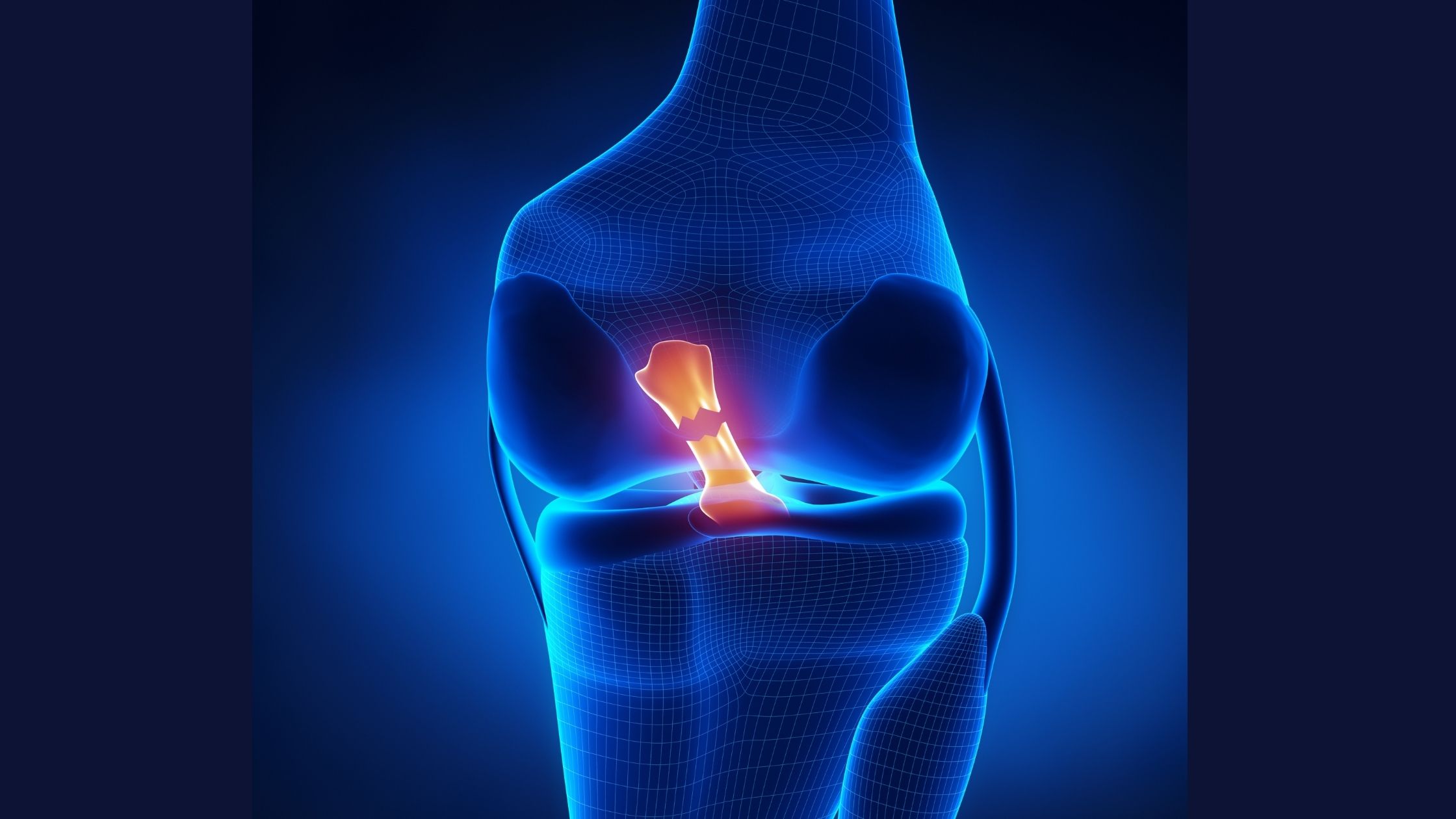
An ACL injury is a serious knee problem that causes instability during walking, stair climbing, and other daily activities. It is common in sports, especially among athletes, but it can happen to anyone during jumping, twisting, or sudden changes in direction.
Recognising the early symptoms of a torn ACL helps you seek medical attention quickly and start the right care.
In this article, you will learn the common symptoms of an ACL tear, what you can do immediately at home, and when to seek professional help.
How do you know if your ACL is damaged?
To recognise an ACL injury, you need to understand its common symptoms. Before that, let’s briefly look at the ligament itself and the frequent causes of this injury.
The ACL (Anterior Cruciate Ligament) is a key ligament inside the knee that plays a crucial role in maintaining joint stability. When it is injured, the knee becomes unstable and normal walking or stair climbing becomes difficult.
ACL stands for Anterior Cruciate Ligament. There is also a Posterior Cruciate Ligament (PCL). Together, these strong ligaments stabilise the knee joint. They must be strong enough to support the weight of the upper body while still allowing the knee to move freely during running, standing, and changing direction.
They are called cruciate ligaments because they cross each other, forming an X shape inside the knee.
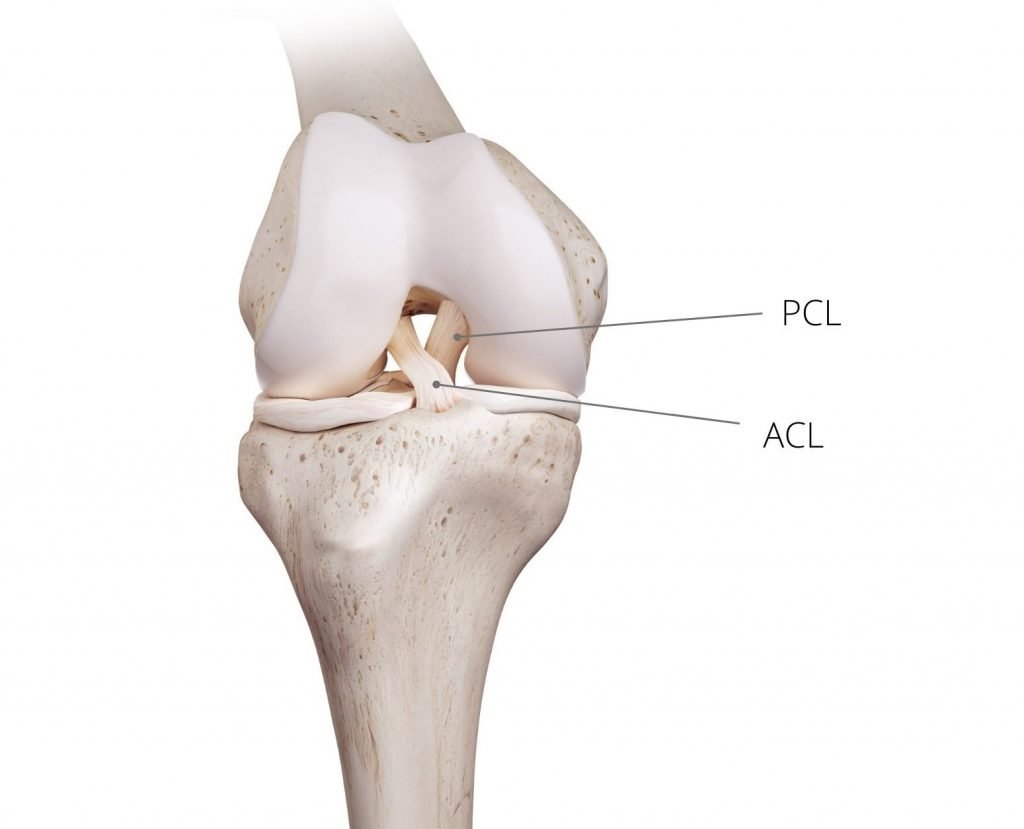
The cruciate ligaments connect the femur (thigh bone) above to the tibia (shin bone) below. The ACL and PCL cross each other as shown in the figure.
The ACL attaches to the front of the tibial plateau and runs upwards and backwards to attach to the back of the femur in the intercondylar notch.
One of its most important roles is to prevent the tibia from sliding too far forward relative to the femur (or the femur from displacing backwards).
Symptoms of ACL injury
In high-intensity sports such as football, people with an ACL injury often describe hearing or feeling a loud “pop” from the knee. This is usually followed by intense pain. Walking becomes painful and limping starts. Within a few hours, swelling develops around the knee. Weight-bearing activities such as walking and climbing stairs become difficult because of the pain.
After a few days, many people notice knee instability, especially when walking on uneven ground or going up and down stairs. Pain and swelling may come and go.
These classic features — a non-contact pivoting or twisting mechanism, an audible or felt pop, rapid swelling (hemarthrosis), and a feeling of the knee “giving way” — are strongly associated with ACL rupture in clinical studies.12
ACL injuries are very common among young athletes who play football, hockey, or sports involving jumping. However, they are not limited to athletes. A simple twist of the knee while climbing stairs can be enough to cause an ACL injury in everyday life.
Let’s look at a real-life example of how an ACL injury can occur during a football game.
Case study of ACL injury
A 21-year-old young man was playing football when he sustained a serious knee injury and his knee locked. “Crying out in severe pain, I fell to the ground holding my left knee. My knee got locked,” said the young student, who is an occasional player.
His friends unlocked the knee and rushed him to the hospital with ice packs applied. He later said, “By the time I reached the hospital my pain had reduced. The doctor prescribed some medicine and advised an MRI investigation.”
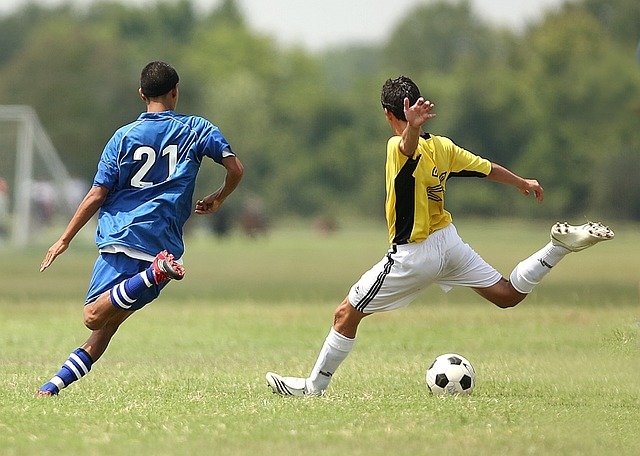
When the knee is forced into full extension combined with medial rotation of the femur, it can lock. This movement is known as the “screw-home mechanism.” A sudden and violent version of the screw-home mechanism can lead to an ACL injury.
This explains how the young man injured his ACL while trying to kick the ball with his right leg while standing only on his left leg. The momentum forced the left knee into excessive extension, and the rotational force from the kick added further stress to the ACL — a typical non-contact mechanism described in the literature.1
What to do immediately at home
If you notice the symptoms described above, apply ice to the knee and rest straight away. Follow the well-known RICE protocol.
This simple protocol can significantly reduce pain and swelling when applied correctly at home.
RICE stands for Rest, Ice, Compression, and Elevation. Follow it for 3–4 days, or up to a week if needed. Here is what each step means:
- Rest: Avoid physical activity immediately after the injury and rest for at least several days. Continue the other RICE steps during this period.
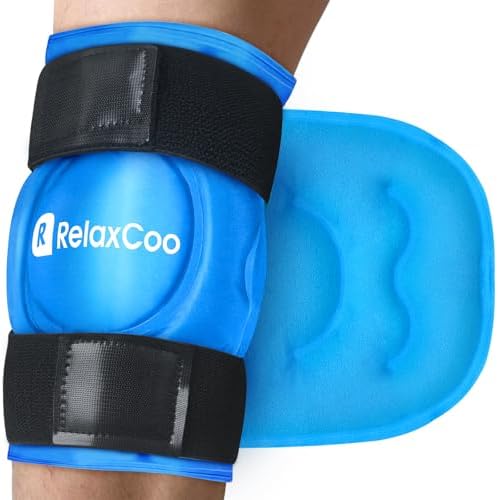
- Ice: Apply ice packs to the knee for about 10 minutes, 3–4 times a day. Ice cubes, gel packs, or ice bags all work well to reduce swelling.
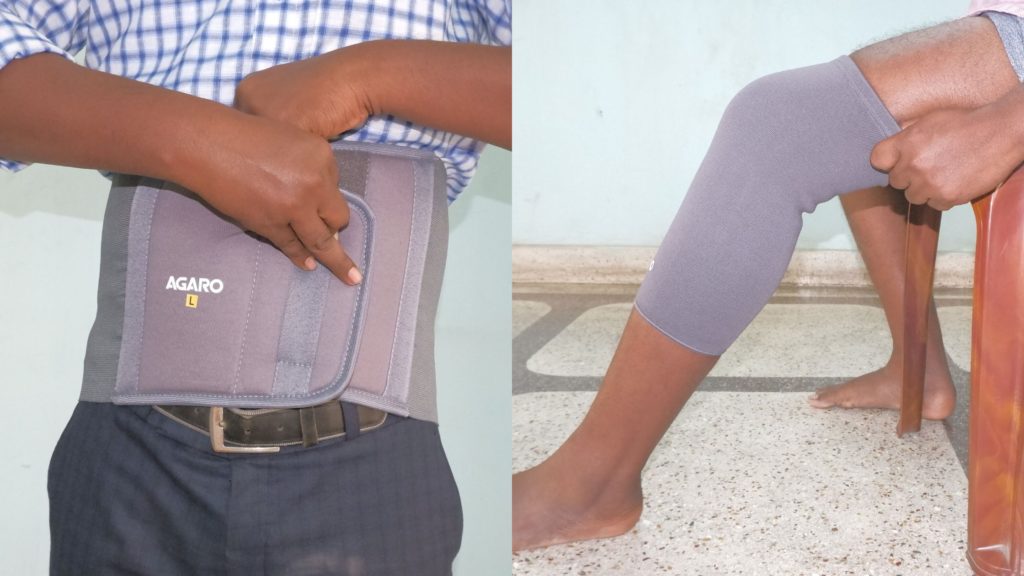
- Compression: Use a crepe bandage or a knee brace. Compression helps control swelling.
- Elevation: Keep the leg elevated on one or two pillows during rest. This helps drain fluid from around the knee and lower leg.


Exercises after ACL injury
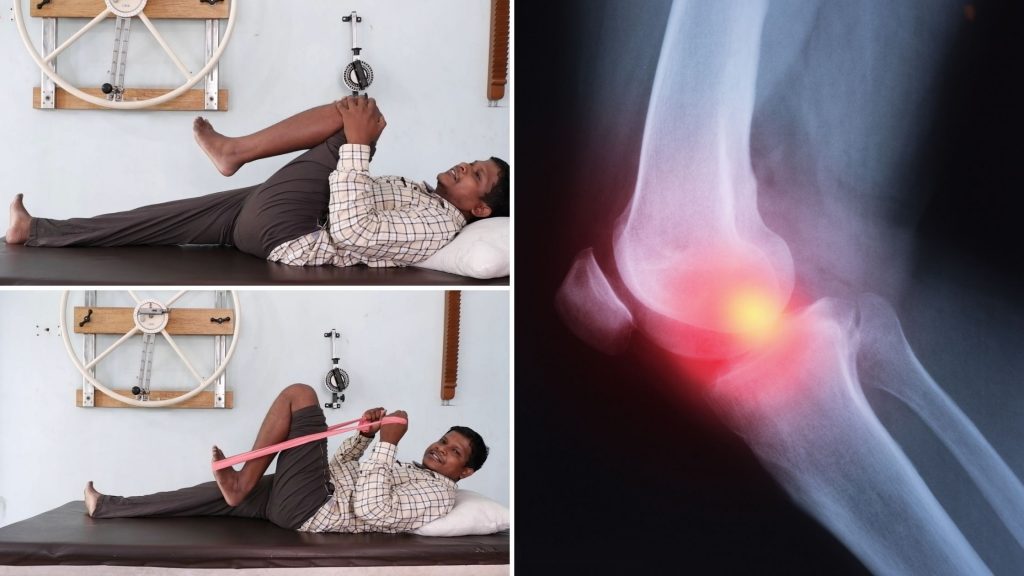
Once swelling starts to reduce after following the RICE protocol, begin gentle knee exercises. Exercises help maintain muscle tone around the knee, which is important for joint stability.
We have covered these exercises in detail in a previous article: “7 Best Knee Ligament Injury Treatment Exercises”. We recommend you go through that guide.
Other treatments for ACL tear
If conservative management does not resolve the problem and the person continues to experience knee instability, ACL reconstruction surgery is often the preferred treatment. The procedure reconstructs the damaged ligament.
Recovery time depends heavily on the grade of the tear. See our full breakdown of ligament tear healing time by grade.
After surgery, post-operative physiotherapy is essential for a good recovery. A structured rehabilitation programme with progressive exercises is needed to return safely to work or sport.
For a detailed post-surgical plan, read: ACL reconstruction protocol: Step-by-step guide.
Note: This article provides general information only. Always consult a qualified physiotherapist or doctor for proper diagnosis and personalised treatment.

The author is a physiotherapist who has been practising for the last 17 years. He holds a Bachelor's in Physiotherapy (BPT) from SVNIRTAR (Swami Vivekananda National Institute of Rehabilitation and Research), one of the prestigious physiotherapy schools in India.
Whatever he learns dealing with his patient, he shares it with the world through blogs and e-books. He also owns a YouTube channel, "Sunit Physiotherapist" with over 8 lakh active subscribers. Here, he shares everything he gets to learn serving the patient.



Pingback: ACL reconstruction protocol Step-by-step guide - Physiosunit