- Ganglion cysts are non-cancerous and often painless.
- 3 simple exercises (massage, flexion-extension, and radial-ulnar deviation) may help reduce swelling and improve comfort.
- Many cysts improve on their own; surgery is usually considered only when symptoms persist.
Important: These exercises are commonly recommended for symptom management and may help some people. Results vary. Always consult a doctor or physiotherapist for proper diagnosis before starting any self-treatment. Do not attempt to rupture or “pop” the cyst.
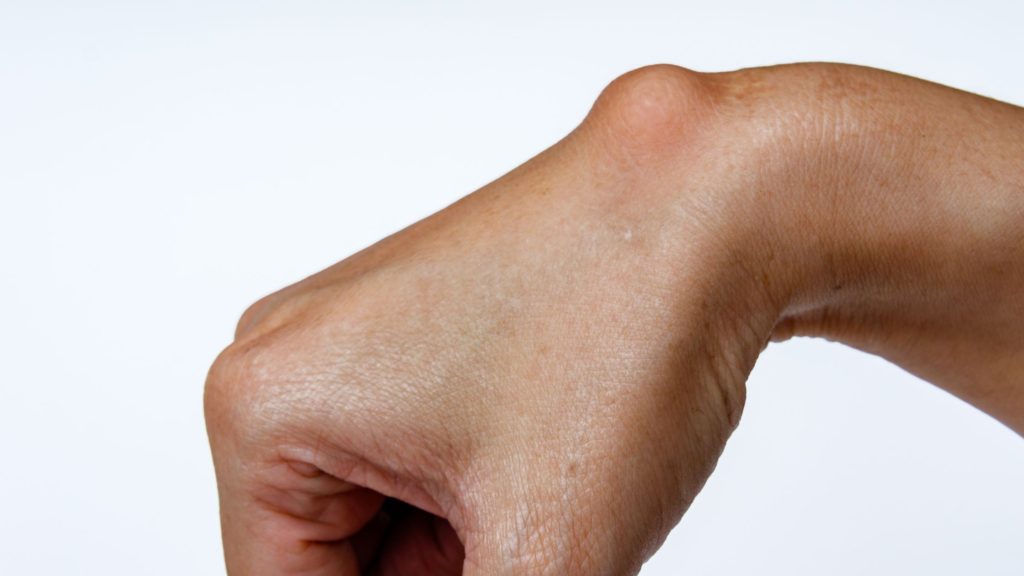
If you notice a small lump-like swelling on the dorsal aspect of the wrist, chances are it is a ganglion cyst. Most wrist ganglion cyst cases are not painful, and the person is usually concerned about their cosmetic appearance.
Some sufferers complain of wrist pain, which may also be due to wrist movement, and pain may even radiate to the arm. However, wrist pain can also be due to carpal tunnel syndrome.
In the early stage, simple ganglion cyst wrist exercises and observation are often the first approach.
In this article, we will learn easy exercises for ganglion cysts in the wrist. We will also cover the signs and symptoms of wrist ganglion cysts. So, let us get started.
What Is a Ganglion Cyst Wrist? Causes & Risk Factors
Ganglia are actually benign soft tissue tumours, most commonly seen in the wrist joint. Although they can also be found in other joints, 60% to 70% of wrist ganglia are found on the dorsal aspect of the wrist1.
These cysts are connected to the underlying joint through a pedicle and filled with fluid, mainly hyaluronic acid.
But what causes it?
Although the exact cause of fluid filling this cyst is unknown, two proposed mechanisms exist.
- The first mechanism proposes that it may originate from within the joint, pumped into the cyst by the wrist’s motion through the pedicle.
- The second mechanism suggests that fluid from an extra-articular degenerative process may form cysts and then communicate with the joint.
- Any of the mechanisms could be the possible cause, or a combination of these mechanisms could contribute 1.
- It is believed that acute or chronic joint stress may cause ganglion cysts in the wrist.
Ganglion Cyst Symptoms: Signs You Shouldn’t Ignore
The symptoms of ganglion cysts include:
- A noticeable lump that is typically round or oval and filled with a jelly-like fluid. On palpation, it will feel like a soft rubber ball and is painful if you put overpressure on it.
- Most wrist ganglion cysts do not have symptoms besides swelling2. For others, pain in the wrist is the most common symptom and is more annoying than debilitating.
- In more advanced cases, pain may also radiate up the patient’s arm, decreasing range of motion and grip strength.
- While ganglion cysts are generally harmless and often don’t require treatment, they can cause pain or limit movement, in which case, medical attention may be necessary.
3 Best Ganglion Cyst Wrist Exercises (No Surgery Needed)
Most cases are asymptomatic; reassurance and observation are the treatment of choice for them. Recent reviews indicate that over 50% of ganglion cysts may resolve spontaneously without intervention2.
The exercises below are commonly used for symptom relief and to maintain wrist mobility. They can also be followed safely during recovery after ganglion cyst surgery (except the self-massage technique, which should be avoided until cleared by your clinician). For a more structured post-surgery or post-immobilisation programme, see our guide on wrist fracture rehabilitation exercises.
1. Ganglion Cyst Massage Technique (Step-by-Step Guide)
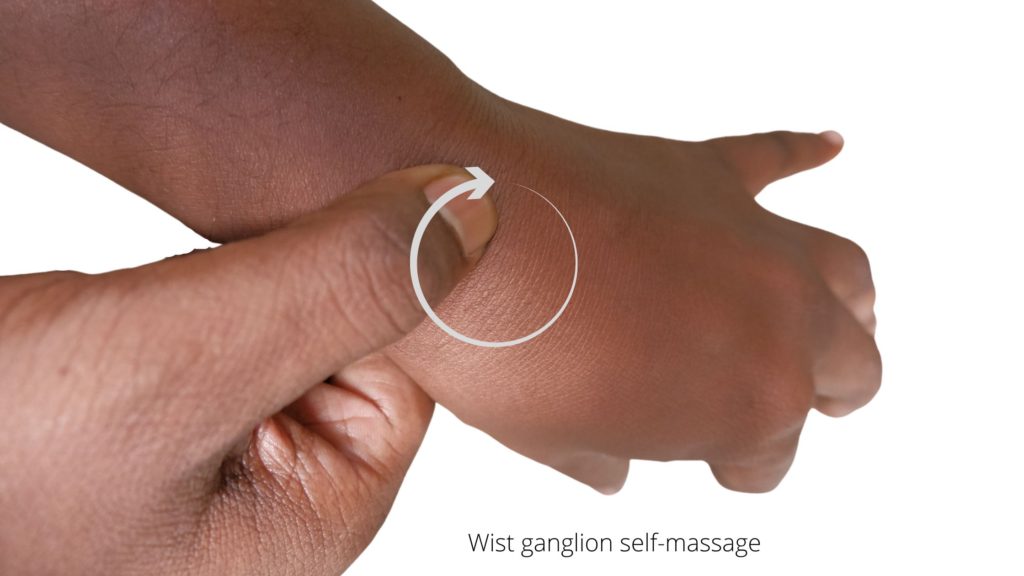
The first technique on the list of ganglion cyst wrist exercises is a gentle self-massage. Some people find that regular, light pressure helps reduce discomfort or the perceived size of the lump over time. Results are individual and not guaranteed.
To perform this self-massage technique, you need to use your thumb. Use only comfortable pressure — never force or try to rupture the cyst.
- Start by placing your thumb over the lump and applying light pressure.
- Gradually increase the pressure only to a comfortable level, then rotate your thumb in a circular motion, as demonstrated in the figure.
- As you rotate your thumb, continue to apply gentle pressure to the lump.
- It’s recommended that you perform this self-massage for a few minutes every morning or whenever you have free time, provided it does not increase pain.
2. Wrist Flexion & Extension Exercises for Ganglion Cysts
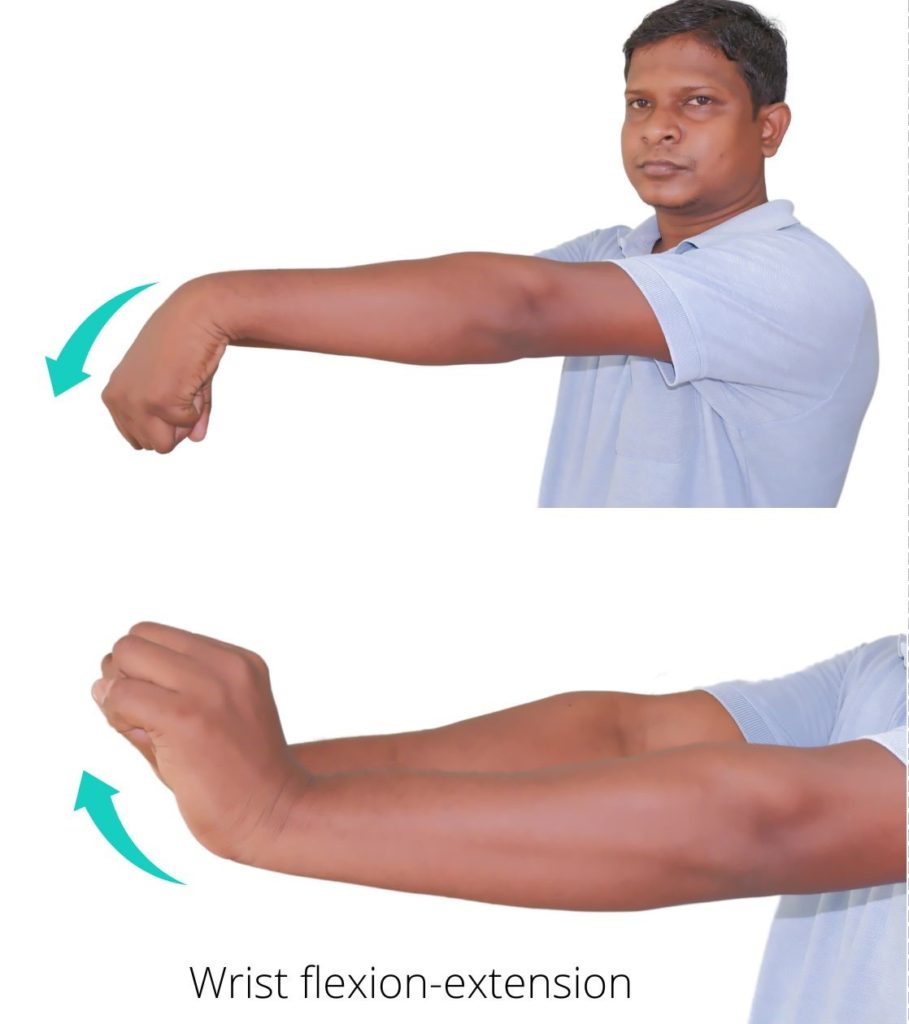
This straightforward exercise helps maintain or improve wrist mobility. It can be done while sitting or standing.
- First, sit or stand up straight and extend your arm at shoulder level, with your palm facing down.
- Then, slowly and smoothly bend your wrist up and down.
- Repeat this motion of bending and straightening your wrist 15 to 20 times in one session, staying within a comfortable range.
3. Radial & Ulnar Deviation: Gentle Motion for Wrist Mobility
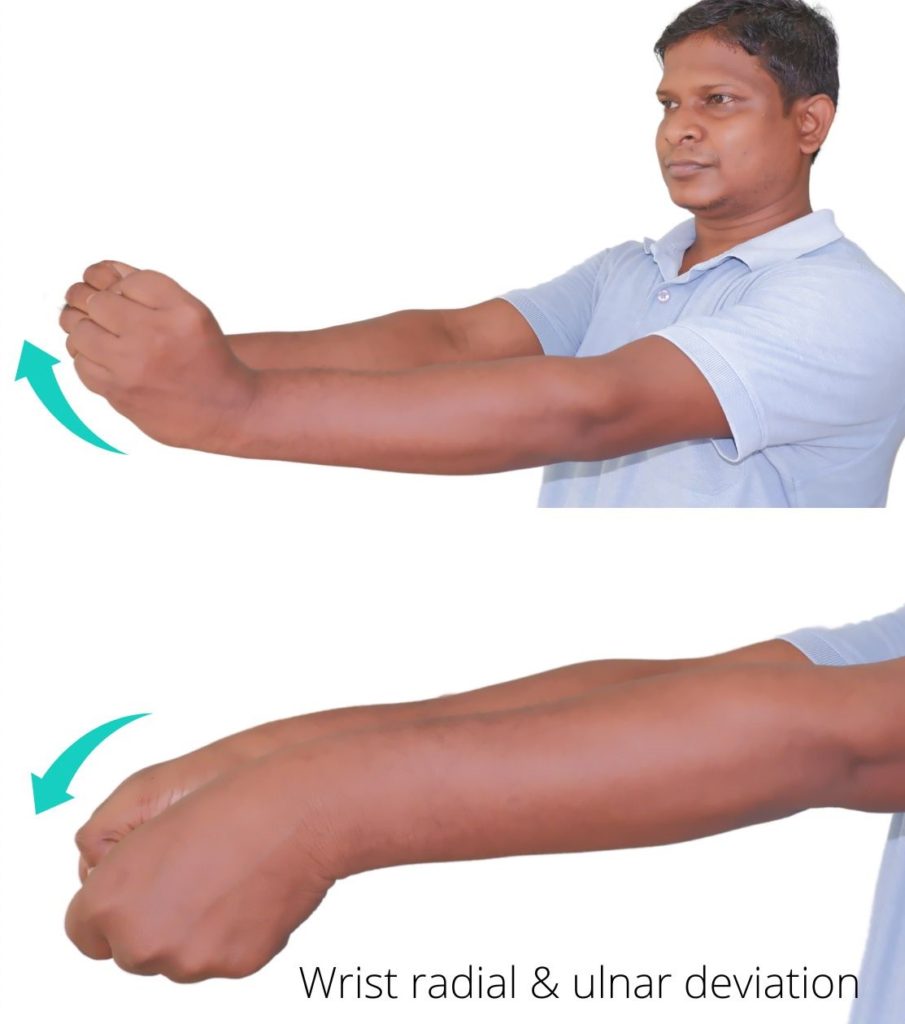
The next set of exercises for a ganglion cyst in the wrist involves radial and ulnar deviation. Radial deviation refers to bending the wrist towards the thumb, while ulnar deviation involves bending the wrist towards the little finger.
- Start by positioning your hand with the palm facing inwards, similar to the previous exercise.
- From this position, slowly and smoothly move your wrist into radial and ulnar deviation, trying to reach a comfortable full range of motion.
- Aim to perform this motion 15 to 20 times in a session.
Upgrade Your Routine: Once pain subsides, you may strengthen your wrist further with TheraBand resistance bands (start with extra-light resistance). Check with your clinician first if you have had recent surgery or significant pain.
When Is Surgery Needed for Ganglion Cysts? (Other Options First)
In some cases, surgery is necessary to remove the cyst. However, other less invasive procedures may also be used. Aspiration (with or without steroid or other additives) shows highly variable results and high recurrence rates in recent systematic reviews4.
Aspiration is the simplest method in which a syringe is used to remove fluid from the nodule. However, it has a high recurrence rate (often reported above 50%). Many clinicians prefer brace immobilisation after aspiration2.
Surgical removal of a ganglion cyst with its pedicle (open or arthroscopic) remains the most reliable option when symptoms significantly affect function or quality of life, with lower recurrence rates than aspiration in most series5. Discuss the benefits and risks with your doctor. After surgery or prolonged immobilisation, structured mobility work such as the exercises in our wrist fracture rehabilitation guide can be helpful (once cleared by your clinician).
Recommended Product: For added support during recovery or while doing exercises, try the ComfyBrace Wrist Brace. Its adjustable strap helps stabilise the joint while allowing gentle movement.
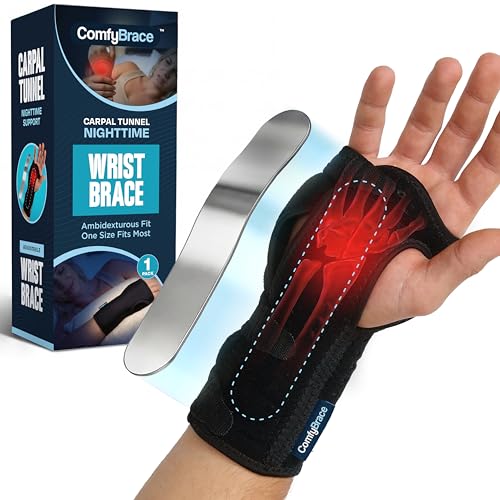
- 𝐖𝐑𝐈𝐒𝐓 𝐏𝐀𝐈𝐍 𝐊𝐄𝐄𝐏𝐈𝐍𝐆 𝐘𝐎𝐔 𝐀𝐖𝐀𝐊𝐄?| After Years of Suffering, Relief Has Finally Arrived | Sleep in Peace with the Cradling S…
- 𝐖𝐄 𝐊𝐍𝐎𝐖 𝐘𝐎𝐔𝐑 𝐏𝐀𝐋𝐌 𝐇𝐔𝐑𝐓𝐒 𝐌𝐎𝐒𝐓 | That’s Why We Built In a Therapeutic Pad Features Ergonomic Sack of Cushioning Beads to T…
- 𝐅𝐈𝐓𝐒 𝐄𝐈𝐓𝐇𝐄𝐑 𝐇𝐀𝐍𝐃, 𝐖𝐇𝐄𝐑𝐄𝐕𝐄𝐑 𝐓𝐇𝐄 𝐏𝐀𝐈𝐍 | Our “Either Hand” Ambidexturous, Adjustable Design Fits Male and Female Hands of M…
Keep Reading: Wrist rest for mouse pad| Will this VRIST give you wrist pain relief
Ganglion Cyst Wrist: FAQs & Expert Answers

The author is a physiotherapist who has been practising for the last 17 years. He holds a Bachelor's in Physiotherapy (BPT) from SVNIRTAR (Swami Vivekananda National Institute of Rehabilitation and Research), one of the prestigious physiotherapy schools in India.
Whatever he learns dealing with his patient, he shares it with the world through blogs and e-books. He also owns a YouTube channel, "Sunit Physiotherapist" with over 8 lakh active subscribers. Here, he shares everything he gets to learn serving the patient.