
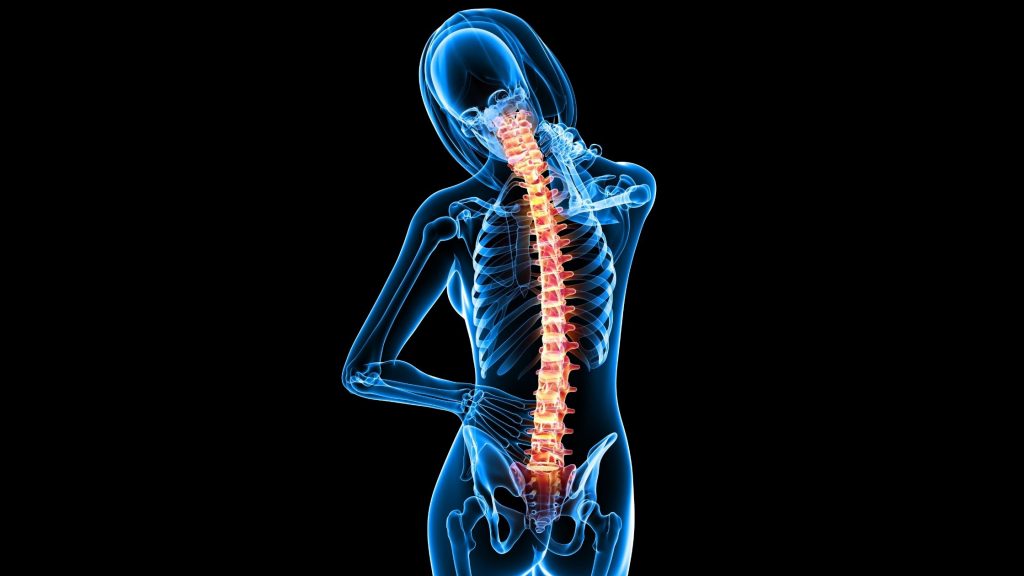
- Ankylosing Spondylitis (AS) is a chronic inflammatory condition primarily affecting the spine and joints.
- Exercise is critical for managing AS—improving flexibility, mobility, and quality of life.
- Effective exercises include stretching, strengthening, and low-impact aerobics.
- Consult a healthcare professional to tailor a safe, personalized plan.
Ankylosing spondylitis sufferers typically develop pain and stiffness of the spine, including axial joints such as the shoulder and hip joints.
While medications are essential for managing pain and inflammation, exercises for ankylosing spondylitis are crucial in managing joint stiffness and pain.
This article will teach the practices and a few home tips to prevent joint stiffness and deformity associated with Ankylosing Spondylitis.
11 Best Ankylosing Spondylitis Exercises to Reduce Pain & Improve Mobility
Individuals with ankylosing spondylitis (AS) experience pain and stiffness, mainly affecting the axial skeleton (spine, hips, and shoulders).
Since the condition is inflammatory arthritis, fatigue can also be a prominent symptom1. Ankylosing spondylitis typically affects the spine; it starts with low back pain that slowly affects the whole spine.
The primary pathology of ankylosing spondylitis includes enthesitis, or inflammation of the anatomical region of the bony attachment of tendons, ligaments or joint capsules.
Typically, this occurs in the spine; if unchecked, new bone formation may result in ankylosis or spinal fusion1.
So, the exercises we will learn aim to prevent joint stiffness and tightness of the muscles. It is achieved through mobility exercises and, secondly, stretching exercises. Let’s start with mobility exercises.
Important safety note: Always consult your rheumatologist or physiotherapist before starting a new exercise program. Start gently, move within a pain-free range, and stop if you experience sharp or increasing pain. During a flare, reduce intensity and focus on gentle mobility and breathing exercises only.
What does the latest research say? Recent large meta-analyses of randomized controlled trials (2025–2026) confirm that regular exercise significantly reduces disease activity, improves spinal mobility and physical function, and decreases fatigue in people with axial spondyloarthritis / ankylosing spondylitis. Programs combining mobility, stretching, and aerobic activity appear particularly beneficial2.
Spinal Mobility Exercises for Ankylosing Spondylitis Relief
As I just mentioned, these are the group of exercises that are aimed at improving and maintaining the mobility of affected joints. Stiffness of the spine is the major problem in Ankylosing Spondylitis, so taking care of it should be our priority. For additional ideas on managing lower back stiffness at home, see our dedicated guide.
We will discuss exercises that specifically mobilise the lower back’s spine rather than activities to mobilise the cervical and upper back. We will also learn movements that mobilise the spine as a whole.
#1 Chest Lift Exercise to Mobilize the Spine
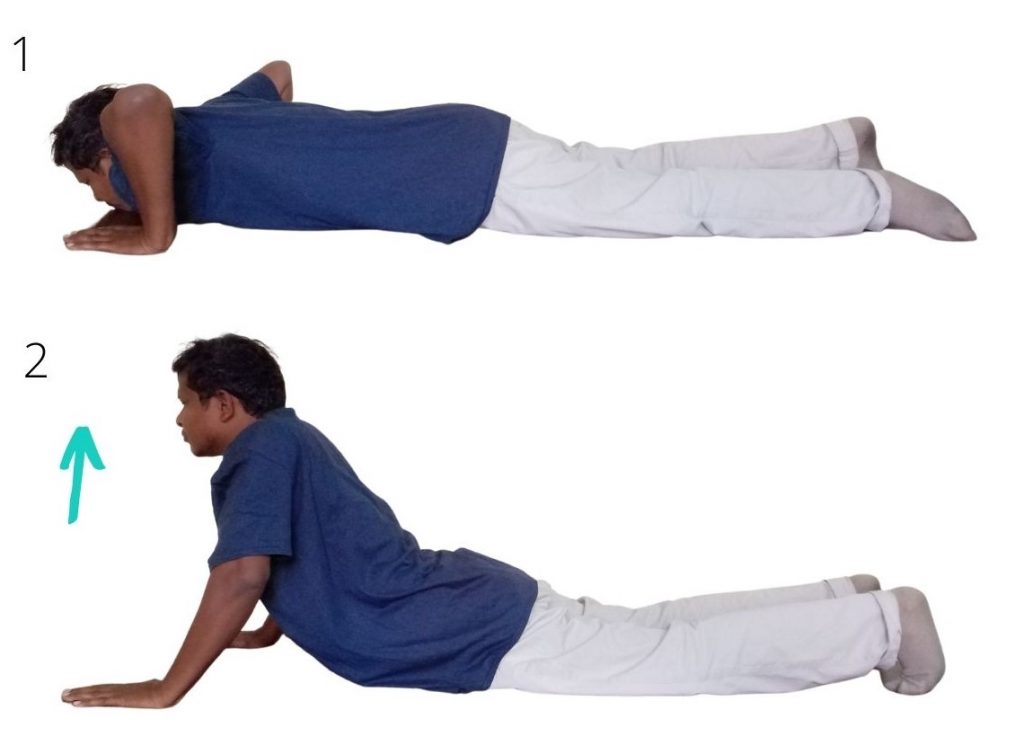
The first exercise in the list of 11 exercises for ankylosing spondylitis is called raising the chest in the supine position.
This exercise is designed to mobilise the spine as a whole, from the neck to the lower back. It is a simple exercise that can be performed easily at home.
- To do this exercise, you need to lie down on your tummy with both your hands placed beside your shoulders.
- Slowly raise your chest to the point where you feel a little uncomfortable.
- Hold this position for a few seconds and then lower it down.
- Repeat the process a minimum of 10 times in a single session. This exercise helps to improve your posture, increase flexibility, and reduce stiffness in the spine. It is recommended that you perform this exercise regularly to achieve maximum benefits.
#2 Supine Knee Twist for Lower Back Stiffness
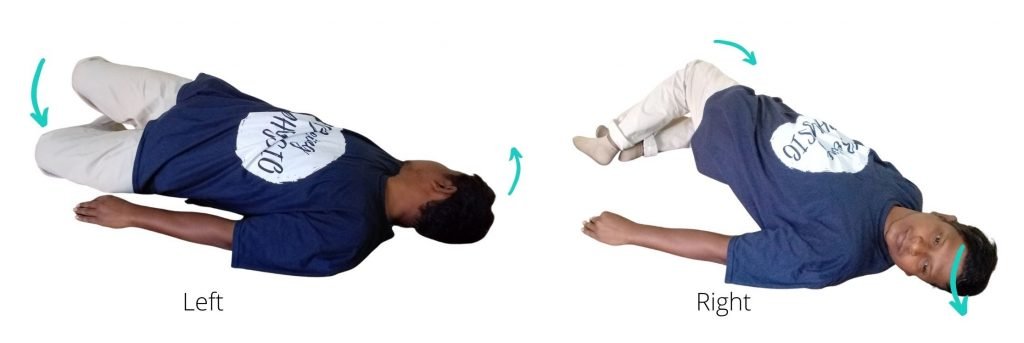
Lower back mobility exercise helps to mobilise the lower back and stretch the muscles in the hips, glutes, and thighs. It also helps to release tension in the lower back and relieve pain. It is important to perform this exercise slowly and gently, without forcing the movement beyond your range of motion.
- To perform the supine lying knee twist, start by lying on your back with your knees bent and your feet flat on the floor.
- Keep your arms by your sides with your palms facing down.
- Take a deep breath in and as you exhale, slowly lower both your knees to one side of your body while keeping your shoulders flat on the floor.
- At the same time, turn your head to the opposite side of your knees.
- Hold this position for a few seconds, then inhale and return to the starting position. Repeat this movement on the other side.
When performing the supine lying knee twist, it is important to keep the following tips in mind:
- Keep both shoulders firmly pressed into the floor throughout the movement — only the lower body rotates.
- Move slowly and stop at the first comfortable stretch; never force the knees down.
- If one side feels tighter, spend a little extra time there but stay within a pain-free range.
- Breathe steadily — inhale to prepare and exhale as you twist.
- Perform 8–12 controlled repetitions per side, once or twice daily.
#3 Neck Rotation & Side Bend Exercises
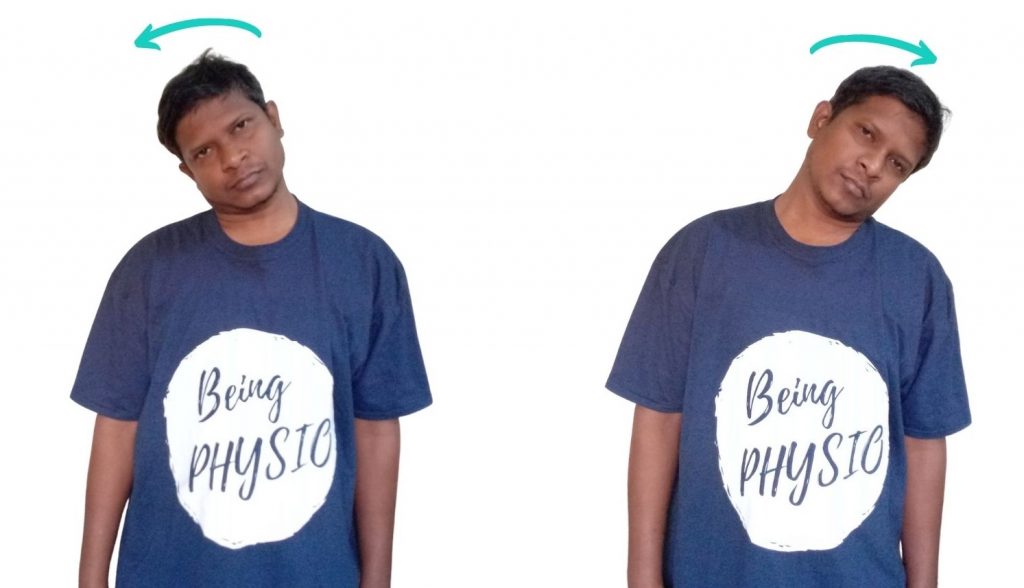
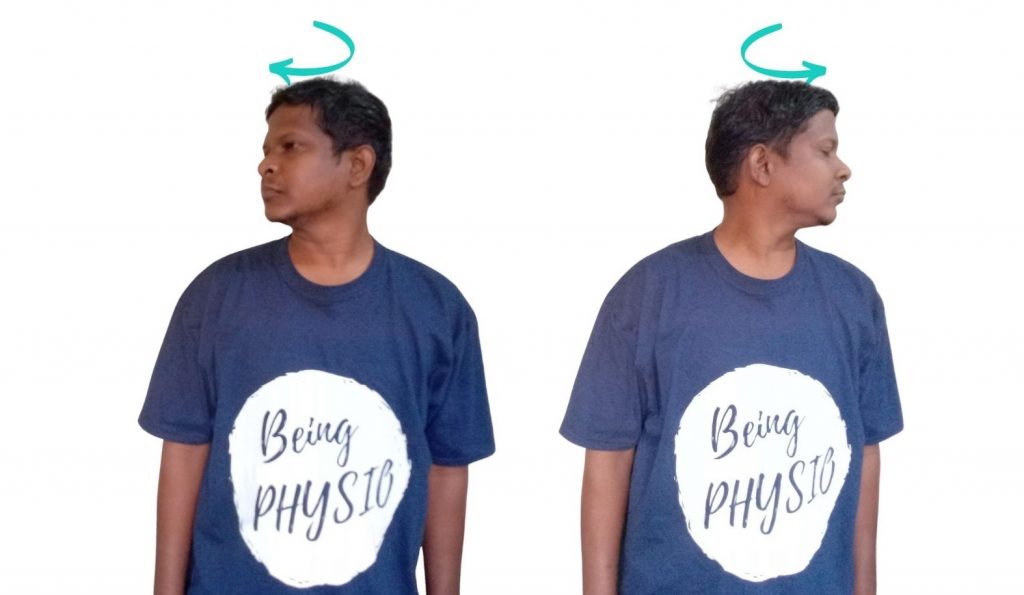
The starting position for this exercise is the sitting position.
- First, sit comfortably with your back straight.
- Then, slowly bend your neck to the left side and hold for a few seconds before bringing it back to the centre.
- Next, bend your neck to the right side and hold for a few seconds before bringing it back to the center again. This exercise is known as the neck-bending exercise.
Apart from the neck-bending exercise, there is also a neck rotation exercise that you can perform.
- To do this, simply rotate your neck to the left side and hold for a few seconds before bringing it back to the centre.
- Then, rotate your neck to the right side and hold for a few seconds before bringing it back to the centre again.
It is important to alternate between both exercises, repeating each 10 to 15 times in a single session. Begin with the neck bending exercise and repeat it 10 to 15 times before moving on to the neck rotation exercise.
This exercise routine can help alleviate the symptoms of ankylosing spondylitis and improve your overall neck flexibility.
#4 Shoulder Exercises to Prevent Stiffness
Shoulder stiffness is common in ankylosing spondylitis. These simple mobility drills help maintain range of motion and reduce tightness around the shoulder girdle. Perform them slowly and within a comfortable range.
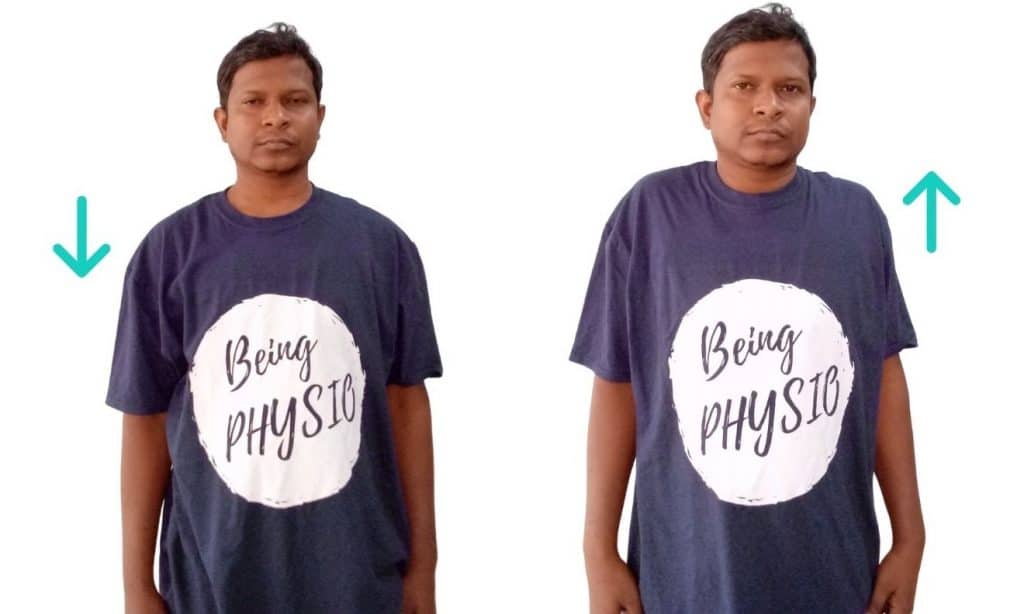

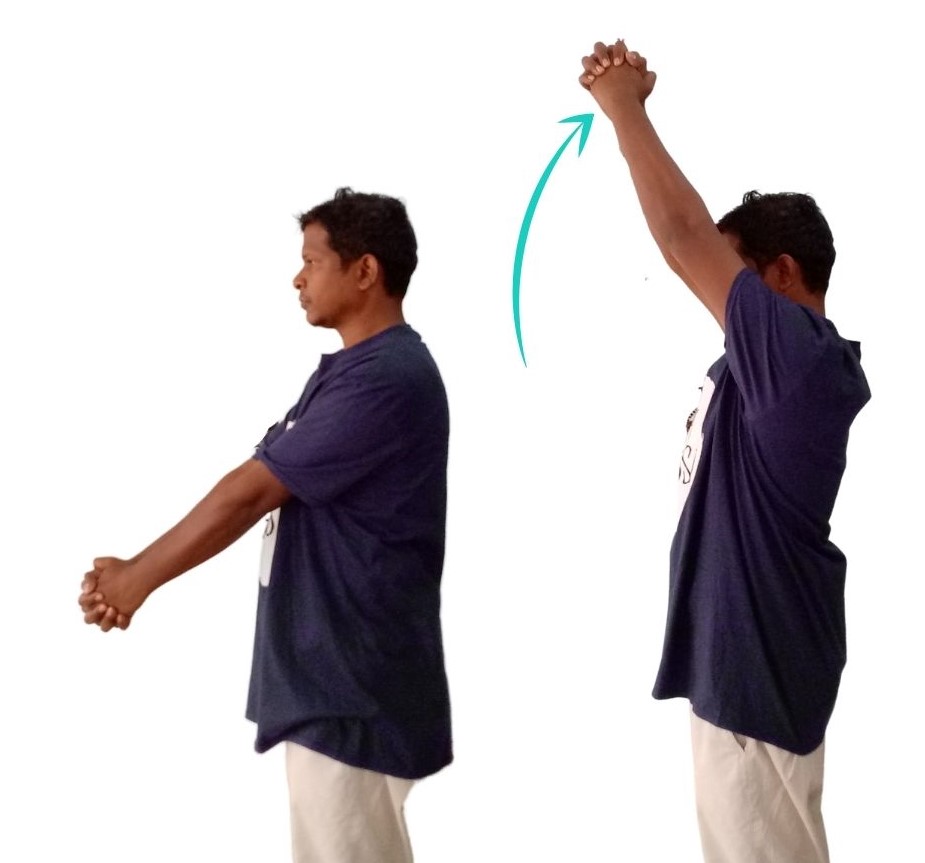
How to perform the three shoulder mobility exercises:
- Shoulder shrugs: Sit or stand tall with arms relaxed by your sides. Slowly lift both shoulders up toward your ears, hold for 2–3 seconds, then lower them fully. Repeat 10–15 times.
- Shoulder rotations: Keep your arms relaxed or place fingertips lightly on your shoulders. Make slow, controlled circles forward (clockwise) for 10 repetitions, then reverse direction (anti-clockwise) for another 10. Keep the circles within a comfortable range.
- Shoulder elevation (arm raises): Raise one or both arms forward and upward as high as comfortable, then slowly lower. You can also raise them out to the sides. Perform 8–12 controlled repetitions. Avoid forcing the movement if you feel pinching or sharp pain.
These drills can be done daily. Focus on smooth, pain-free motion rather than large ranges.
Essential Stretches for Ankylosing Spondylitis (Step-by-Step Guide)
Stretching exercises are a very important component of ankylosing spondylitis exercises. When there is less motion at the joint due to the stiffness, the development of muscle tightness is obviously secondary to this joint stiffness.
Stretching exercise is equally important to keep these muscles flexible and mobile. Let us first start with stretching the muscles around the hip for ankylosing spondylitis exercises.
#5 Piriformis Stretch for Hip Pain Relief
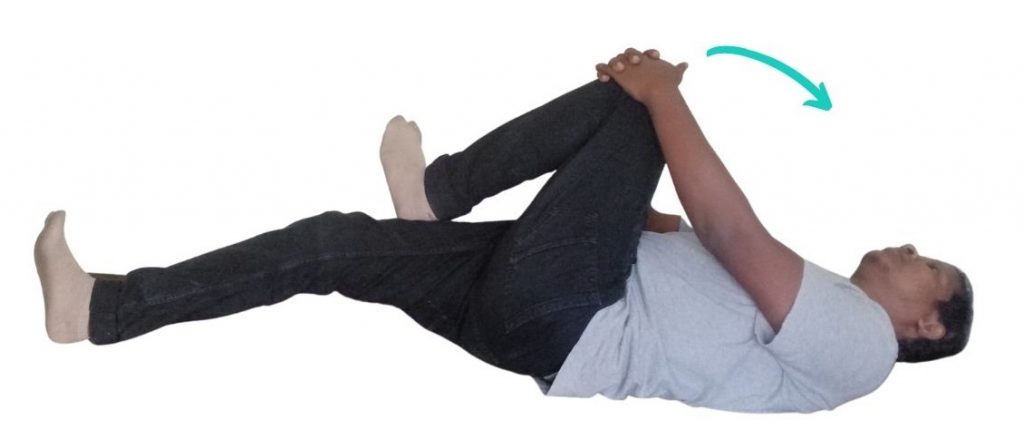
Tightness in the hip muscles is a common problem, and one of the most common muscles to get tight is the piriformis muscle. These muscles are located on either side of the buttocks and are often stiff. Related stretches for sciatic-type pain can also be found in our sciatica exercises guide.
- To stretch these muscles, begin by lying flat on your back.
- Next, try one piriformis muscle at a time by pulling the knee towards the chest slightly obliquely.
- If you’re stretching your right piriformis muscle, bend your right knee and hold it with both hands cupped together.
- Pull your knee towards the chest in the direction of your left shoulder until you feel a comfortable stretch on the outer side of your right buttock.
- Hold the stretched position for one minute, and then release it slowly.
- Repeat the same process on the left side to pull the left piriformis muscle. In a single session, repeat this exercise two to three times.
#6 Bed-Assisted Hip Flexor Stretch (Easy Modification)
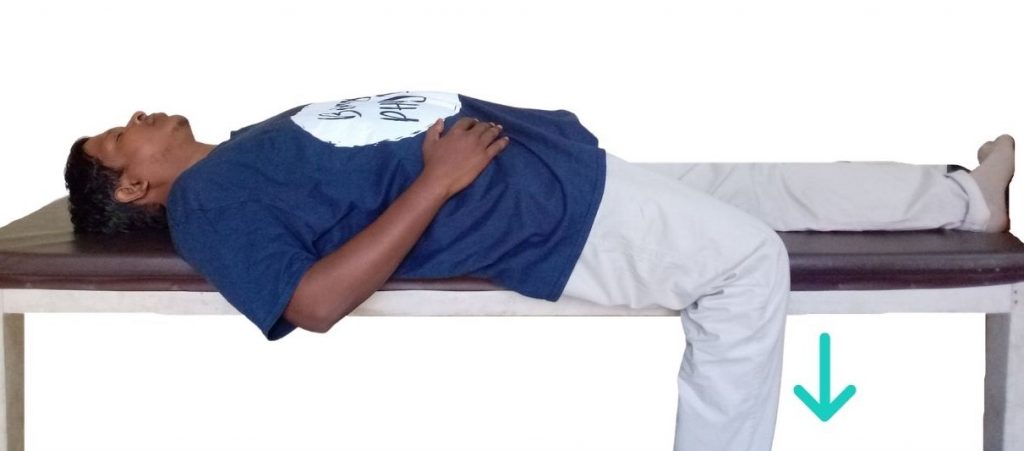
The hip flexors are a group of muscles located at the front of the thigh that are responsible for flexing the hip joint. Tightness in the hip flexor muscles is common in the advanced stages of Ankylosing Spondylitis, and therefore, it is crucial to stretch them properly.
When the hip flexors are tight, it can be difficult to maintain a fully straight position, and one may compensate by bending the knee joint.
- To stretch these muscles, start by lying flat on your back.
- Move to the edge of the bed, making sure you maintain your balance.
- Let one of your legs hang off the bed, allowing the weight of your leg to stretch the hip flexors.
- Hold this position for a minute, then switch sides and repeat the process.
- You can do this exercise 2 to 3 times on each side during a single session.
#7 Seated Neck Stretch to Improve Posture
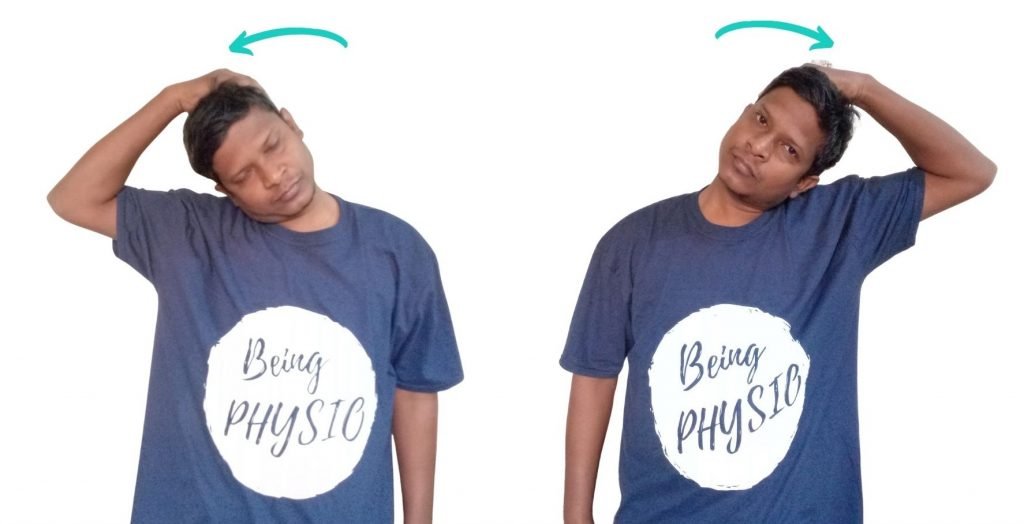
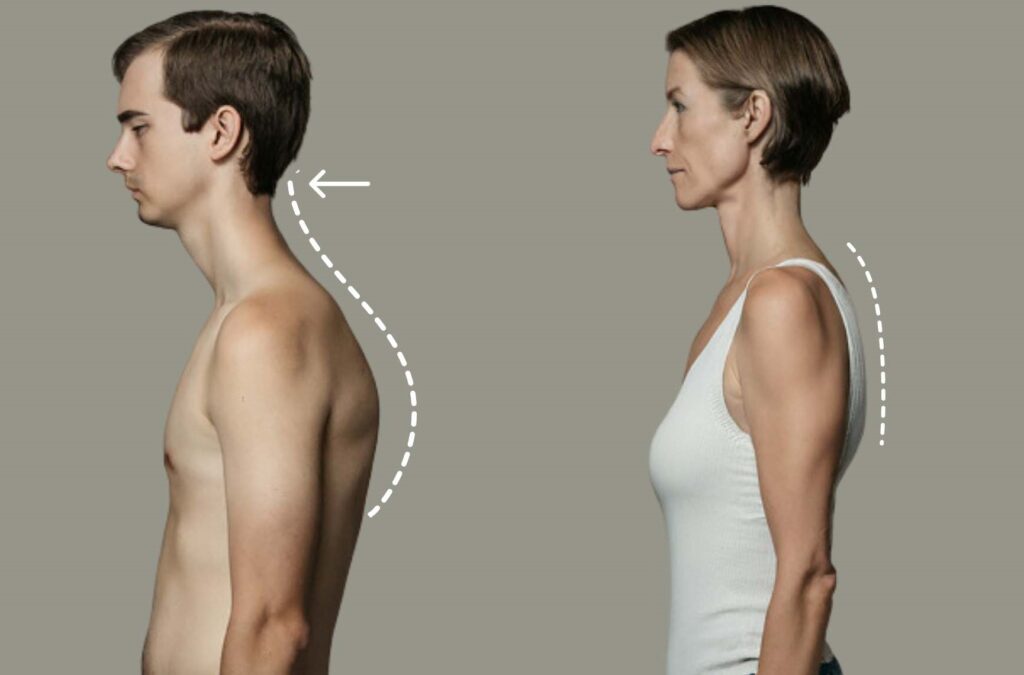
The tightness of the neck muscles becomes visible with time as Ankylosing Spondylitis disease progresses, and the neck comes to a poor posture known as forward head posture. For a broader set of posture exercises you can also explore our guide on simple exercises to improve posture at home.
That’s why the stretching of neck muscles is equally very important. We need to stretch both the right side muscles and the left side of the neck.
- To begin with, find a comfortable and straight sitting position, or you can stand to do this exercise.
- In order to stretch the muscles on the left side of your neck, place your right hand on the right temple area, just above your ear, and pull your head towards the left side.
- Stretch until you feel comfortable on the right side of your neck and hold this position for at least 1 minute or 60 seconds, then slowly release it.
- Repeat the same stretch for the left side of your neck. Since this is a stretching exercise, it is recommended to repeat it two to three times during a single session, twice daily.
#8 Chin Tucks to Strengthen Neck Muscles
This is also a kind of neck stretching exercise in which we are actually stretching the sternocleidomastoid muscles. I will not go into the deeper anatomy of the sternocleidomastoid muscle; just visit this link to learn more about this muscle.
- To perform the exercise, start by sitting or standing up straight with your shoulders relaxed.
- Next, gently tuck your chin in towards your chest, as though you are trying to make a double chin.
- Hold this position for 10 seconds, then slowly release and repeat. It’s important to make sure that you are not tilting your head forward or backwards, but rather keeping it in line with your spine.
#9 Doorway Shoulder Stretch for Anterior Tightness
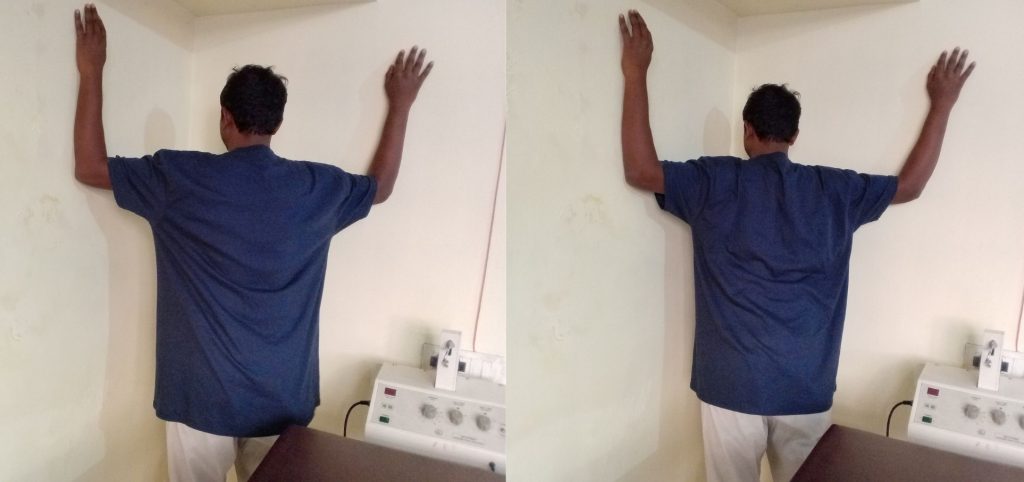
It is important to take care of the shoulder muscles when correcting bad forward head posture, as tightness in these muscles can reinforce the problem.
The anterior capsule and the muscles on the front of the shoulder are commonly affected and need to be stretched. My favourite exercise for stretching these structures is very easy to perform.
- For this exercise, simply find a corner in your house and stand at a distance of one hand facing the corner.
- Raise both shoulders and place your forearm flat on the wall, keeping the shoulder and elbow at a 90-degree angle.
- Place both hands on the adjacent walls and then lean your body and chest towards the corner. You should feel a nice stretch in the anterior part of your shoulder joint.
- Hold this position for at least one minute and then return to the normal position.
- Repeat this exercise two to three times in a single session.
Daily Habits to Manage Ankylosing Spondylitis Symptoms
Why Movement is Key for Ankylosing Spondylitis
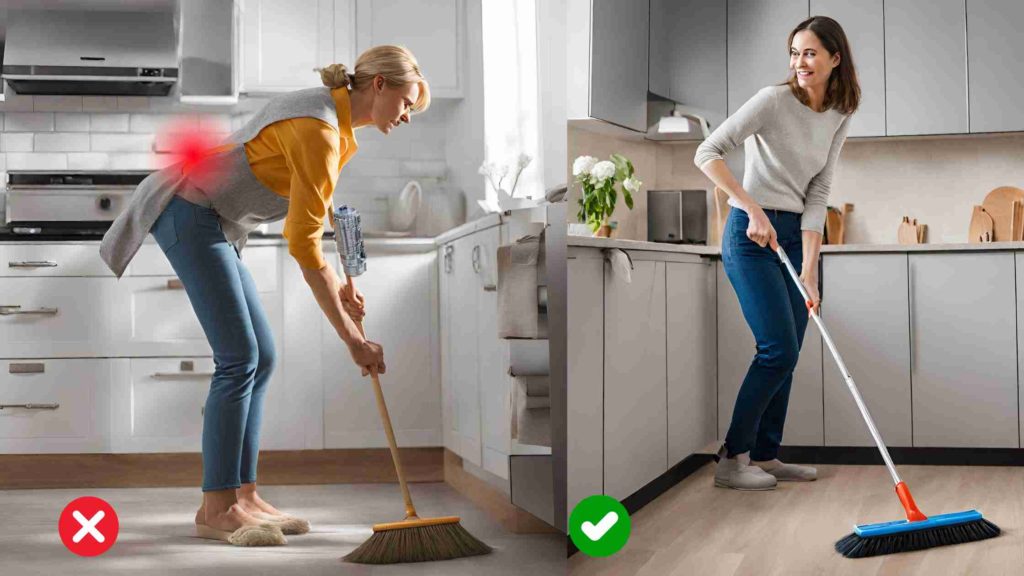
In addition to these exercises, I would strongly recommend that an Ankylosing Spondylitis sufferer adopt an active lifestyle. Strengthening the muscles that support the spine is also valuable — see our article on the best exercises to strengthen your spine.
Do not remain in your bed, engage yourself in the daily chores of your house, this will help the movement of your joints and it will prevent any developing stiffness of the joints and muscles together.
Low-Impact Cardio, Breathing Exercises & Safe Aerobic Options
Regular low-impact aerobic activity is highly recommended for people with ankylosing spondylitis. It helps maintain cardiovascular fitness, supports chest expansion, reduces stiffness, and improves overall energy levels.
Preferred low-impact options include:
- Walking – Start with 10–20 minutes on level ground and gradually build up. Supportive shoes are important.
- Swimming or water-based exercise – Excellent because the water supports your body weight and allows gentle movement of the spine and joints.
- Stationary cycling – A joint-friendly way to raise your heart rate while maintaining a relatively upright posture.
- Gentle yoga or tai chi – Useful for combining mobility, balance, and controlled breathing when adapted to your ability.
Breathing exercises are especially valuable because AS can reduce chest expansion over time. Practice deep diaphragmatic breathing daily: sit or lie comfortably, place one hand on your abdomen, inhale slowly through the nose so the belly rises, then exhale fully through the mouth. Aim for 5–10 slow breaths several times a day. This helps maintain rib mobility and lung function. Understanding the pump-handle movement of the ribs can also help you appreciate why chest mobility matters.
About jogging or running: Jogging can be beneficial for some people with well-controlled AS who already have good joint tolerance and have built a solid base of walking and mobility work. However, it is higher-impact and may aggravate symptoms in others, especially during flares or if spinal or lower-limb joints are irritable.
If you wish to try jogging, start very gradually (e.g., short intervals of light jogging mixed with walking), use supportive footwear, and stop if pain increases. Many people do better long-term with walking, swimming, or cycling as their main aerobic activities. Always check with your physiotherapist or doctor before adding higher-impact exercise.
Winter Pain Relief Strategies for Ankylosing Spondylitis
Joint pain and muscle pain become very severe during the winter for these kinds of sufferers, so managing this kind of pain is very important without taking analgesics. For more ideas on this topic, read our full guide on how to stop joint pain in winter.
One of my favourite ways that I often recommend to my patients is the use of an infrared lamp.
Infrared lamps are very easy to use and very handy, just plug in and switch on the device, and the warm red light emitted from the lamp will ease your pain almost instantly.
You can apply over your painful region; the most common painful areas are the upper back and the lower back.
Apply it gently over your upper back and lower back area for 5 to 10 minutes, and you will feel instant relief from your pain.
Keep Reading: Biologics for Ankylosing Spondylitis: Everything you should know
FAQ

The author is a physiotherapist who has been practising for the last 17 years. He holds a Bachelor's in Physiotherapy (BPT) from SVNIRTAR (Swami Vivekananda National Institute of Rehabilitation and Research), one of the prestigious physiotherapy schools in India.
Whatever he learns dealing with his patient, he shares it with the world through blogs and e-books. He also owns a YouTube channel, "Sunit Physiotherapist" with over 8 lakh active subscribers. Here, he shares everything he gets to learn serving the patient.



Happy that you find it helpful 😊
Thank You So Much for this. It’s time I got back to working out. This article is a HUGE help.
Pingback: Rheumatoid arthritis vs osteoarthritis: which arthritis is worse? - Physiosunit
Pingback: Biologics for Ankylosing Spondylitis: Everything you should know : Physiosunit