

A flat foot is a medical condition in which the arch of the foot becomes fallen or flattened. This leads to foot pain that can make walking and running difficult. Flat feet can lead to a range of symptoms, including pain in the foot, ankle, knee, hip, and lower back regions.
Shoe inserts, also known as insoles or orthotics, can be a game-changer for people with flat feet. They provide much-needed support, improve posture, and help distribute weight more evenly across the foot.
Understanding flat feet
Flat feet, also known as fallen arches or pes planus, are a condition in which the arches of the feet are flattened, causing the entire sole of the foot to contact the ground.
This can occur in one or both feet and can be present from birth or can develop over time due to various factors such as injury, ageing, obesity, or prolonged standing.
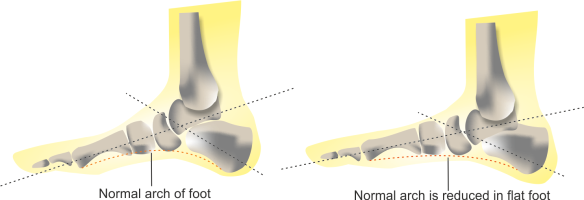
People with flat feet may experience pain, swelling, or stiffness in their feet, ankles, or legs, and may have difficulty standing or walking for long periods.
Treatment options for flat feet include wearing supportive shoes, using orthotic inserts, doing specific exercises to strengthen the muscles and improve flexibility, and in some cases, surgery.
Types of Shoe Inserts for Flat Feet
There are several types of shoe inserts that can benefit people with flat feet:
- Arch Supports: These are the most common type of insert for flat feet. They come in various arch heights:
- Low arch: Ideal for mild flat feet or those who haven’t used inserts before.
- Medium arch: Provides moderate support for most flat feet.
- High arch: May be suitable for some people with flexible flat feet, but consult a podiatrist first.
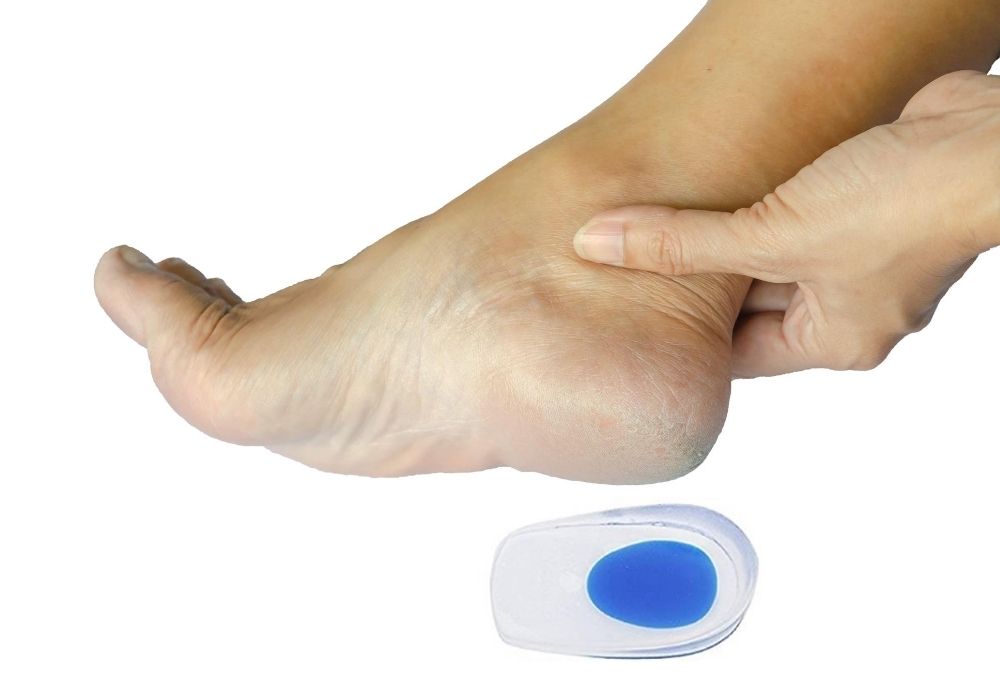
- Heel Cups: These inserts focus on supporting the heel and absorbing shock, which can be especially helpful for pain in the heel or arch.
- Gel Inserts: Gel inserts prioritize comfort and cushioning, making them a good choice for people who stand or walk for extended periods.
- Custom Orthotics: For the most personalized support, consider custom orthotics made by a podiatrist. These are molded to your specific foot shape and needs.
How Shoe Inserts Work for Flat Feet

In a flat foot, the medial longitudinal arch falls, and the height of the arch decreases. Medial arch support is soft padding inserted into the inner side of the shoe to support the arch. It is sometimes also known as a scaphoid pad.
Shoe inserts with arch support work by creating an artificial arch, mimicking the natural arch function. This helps to:
- Improve alignment: Proper alignment promotes better posture and reduces stress on joints throughout the body.
- Distribute weight evenly: Inserts help distribute your weight more evenly across the entire foot, reducing pressure on specific areas.
- Absorb shock: Inserts with cushioning materials can absorb shock from walking or running, reducing impact on the feet and joints.
It’s worth mentioning the 2021 systematic review here. The review included 110 studies on use of foot orthoses for adults with flatfoot. What they found is contradictory.
Out of 110 studies, they found only 12 that met basic quality criteria. These were the only 12 studies that included the effect of prefabricated and custom-made foot orthoses on plantar (heel) pressure during gait (walking) in their study. Concluding that the study quality was low and too limited to say precisely how much orthoses change outcomes in adults1.
Does that mean inserts don’t help?
No. Most people report real symptom relief — just that they’re best used as one supportive tool alongside exercises, not a guaranteed fix on their own.
How to choose the right insert for your situation
Not every flat foot needs the same insert. The right choice depends on how flexible your arch is, what you use your feet for, and how much support your shoe already gives you.
- Flexible flat foot (an arch appears when your foot is off the ground but flattens on standing): a medium-density arch support usually gives enough correction without feeling rigid.
- Rigid flat foot (the arch stays flat even when your foot is off the ground): off-the-shelf inserts are often not enough on their own; get a podiatry assessment before buying.
- Runners and walkers: a firmer arch support with cushioning under the heel copes better with repeated loading than a purely gel-based insert.
- All-day standing (retail, nursing, factory work): gel or dual-density inserts with heel cushioning reduce fatigue better than a rigid arch support alone.
- Diabetic feet: skip over-the-counter inserts and get a custom orthotic fitted by a podiatrist, since reduced sensation raises the risk of pressure areas going unnoticed.
Off-the-shelf vs custom orthotics: off-the-shelf inserts are cheaper and available immediately, and work well for mild-to-moderate flexible flat feet. Custom orthotics cost more and take one to two weeks to make, and are moulded to your exact foot shape.
Clinical reviews generally haven’t found custom orthotics to relieve pain better than prefabricated ones on average2. The custom orthoses is more about structural fit than proven extra pain relief.
So it’s usually reserved for rigid flat feet, marked leg-length differences, or when an off-the-shelf insert hasn’t helped after 4–6 weeks of consistent use.
When to see a podiatrist
Shoe inserts help most cases of flat feet, but see a podiatrist or physiotherapist rather than self-treating if you notice:
- Pain that doesn’t ease within 2–3 weeks of using an insert
- Sudden or rapidly progressing flattening of the arch, especially in one foot only
- Numbness, tingling, or skin changes on the foot — particularly important if you have diabetes
- Pain radiating up into the shin, knee, or hip alongside the foot symptoms
How to measure flat foot
However, the arch support you need to buy depends on the size of your foot. It would be interesting to learn how flat your feet are.
There are two ways to measure the flat foot: footprints and the Feiss line test. The latter is technical, so let’s use the footprint method.
For this, take a piece of cardboard or a carton and a tub of normal water (coloured water would be good). Place your feet on the tub and wet them. Next, place your feet over the cardboard and stand over it.
If you stand firmly for a few seconds, you will see a footprint like the one in the picture below. Notice the curve on the inner side of the footprint. The shallower the curve, the more flat the foot.

Note the inner side of foot print.
Final word
Shoe inserts can significantly improve the comfort and health of your feet if you have flat feet. By providing support, evenly distributing weight, and absorbing shock, inserts can help alleviate pain, improve posture, and enhance overall well-being.
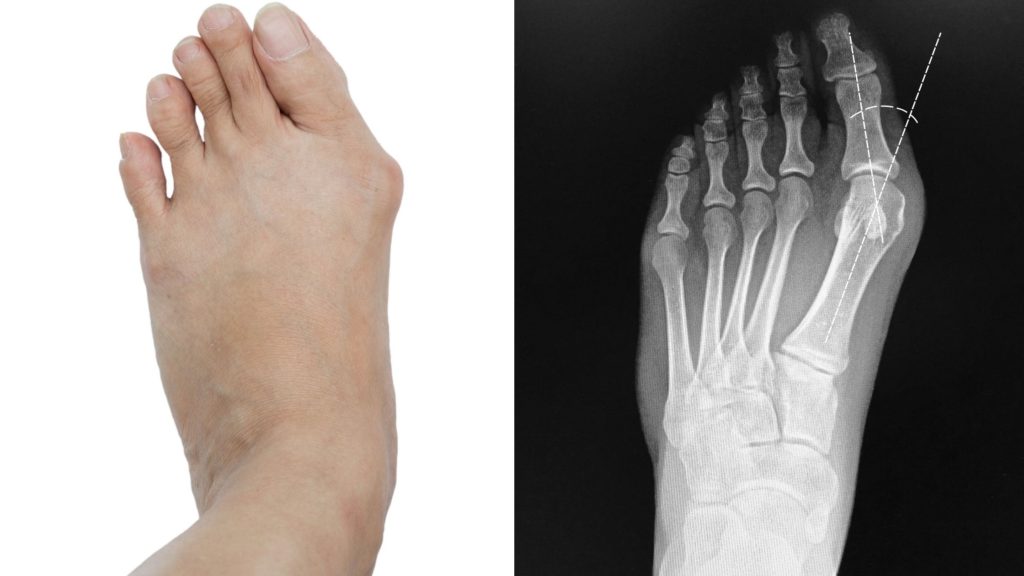
No doubt, our foot takes the weight of the whole body, and a slight change in the normal foot alignment, if ignored for a more extended period, may result in foot pain. A flat foot is one of these conditions, but secondary to it, one may also develop “Plantar fascitis” or bunion (hallux valgus), or Achilles tendon calcification.
The aim of the treatment is pain relief and improving and maintaining the medial arch of the foot. We have already discussed pain-relieving techniques and exercises to improve the arch of the foot in our previous article. You may read it here “What Causes Sharp Heel Pains? 11 Easy Exercises To Fix It Permanently”. For the full step-by-step stretches and strengthening routine, see our 6 Best Heel Pain Exercises guide.
If heel pain from plantar fasciitis is part of what’s driving you to look at inserts, our Plantar Fasciitis Exercise Handout PDF pairs well with a good insert — it’s a 6-page illustrated stretching and strengthening routine you can start alongside it.
Keep Reading: How to use silicone heel cup for pain-free heel

The author is a physiotherapist who has been practising for the last 17 years. He holds a Bachelor's in Physiotherapy (BPT) from SVNIRTAR (Swami Vivekananda National Institute of Rehabilitation and Research), one of the prestigious physiotherapy schools in India.
Whatever he learns dealing with his patient, he shares it with the world through blogs and e-books. He also owns a YouTube channel, "Sunit Physiotherapist" with over 8 lakh active subscribers. Here, he shares everything he gets to learn serving the patient.



Pingback: What Causes Sharp Heel Pains? 11 Easy Exercises to Fix it Permanently
Pingback: Feiss Line: Test Process for Flat Foot Measurement, Analysis - Physiosunit
Pingback: How to use silicone heel cup for pain-free heel : Physiosunit
Also, inaccuracy of these measurements arise depending on how your body is at the time you measure them what is the best appetite suppressant
Normal foot has very good medial arch.
If you've been sweating or swimming, remember to replace your sunscreen on a regular basis Sara's blog
Having a massager in your home is one of the most convenient and beneficial perks you can have. Your feet will have more frequent treatment, unlike massage therapy which must be scheduled and it also eliminates the need to travel. check out here Foot Massagers
Nice post, Thank you for sharing valuable information. I enjoyed reading this post. The whole blog is very nice found some good stuff and good information here Thanks for sharing…Also visit my page.
Premium Folding Wheelchair
Heyy..!!!
I have used Shoe insert modification for foot pain.
It is the best massage chair in comparison to others.I like this massage chair..!!!!
It offers foot massages that can give great therapeutic massage which helps to relax the joints and muscles.
The heated nodes vibrate, knead and turn with attention to heel, arch and ball of the feet. It provides full coverage of the feet, treating any individual needs that you may have. The controls are easy to use, as there’s only the toe touch power on and off button. best foot massager 2017
Hey, very nice site. I came across this on Google, and I am stoked that I did. I will definitely be coming back here more often. Wish I could add to the conversation and bring a bit more to the table, but am just taking in as much info as I can at the moment. Thanks for sharing.
Lightweight Walker
Keep Posting:)
Tottally agree, foot massagers are very important. If you want to keep them healthy as long as possible, it's time to consider purchasing a foot massager.
Mother always said me about foot massager for my foot pain. She always said me it definitely help to feel comfortable. Then i started to use best foot massager reviews. It's machine just great.
Making good shoe choices can prevent problems, but for many of those who are already suffering, orthotics – shoe inserts designed to ease foot pain and correct structural issues – may provide much-needed relief.
Foot massager is very helpful for our foot. The best foot massager will help you to ease your foot pain, relieve stress & regulate the blood flow on your foot. I have some best foot best foot massager reviews, hope this will helpful for you.
best foot massager reviews are for all.For babies,men,women,girls and guys.Not only one section in society needs this massage but every section in our society needs this.Babies need this to get active cells and for growing up properly,men and women need this to be fit and relaxed and guys and girls need this to grow up well and for a good health.
Hey, very nice site. I came across this on Google, and I am stoked that I did. I will definitely be coming back here more often. Wish I could add to the conversation and bring a bit more to the table, but am just taking in as much info as I can at the moment. Thanks for sharing.
Tynor Insole Full Silicon
Keep Posting:)