
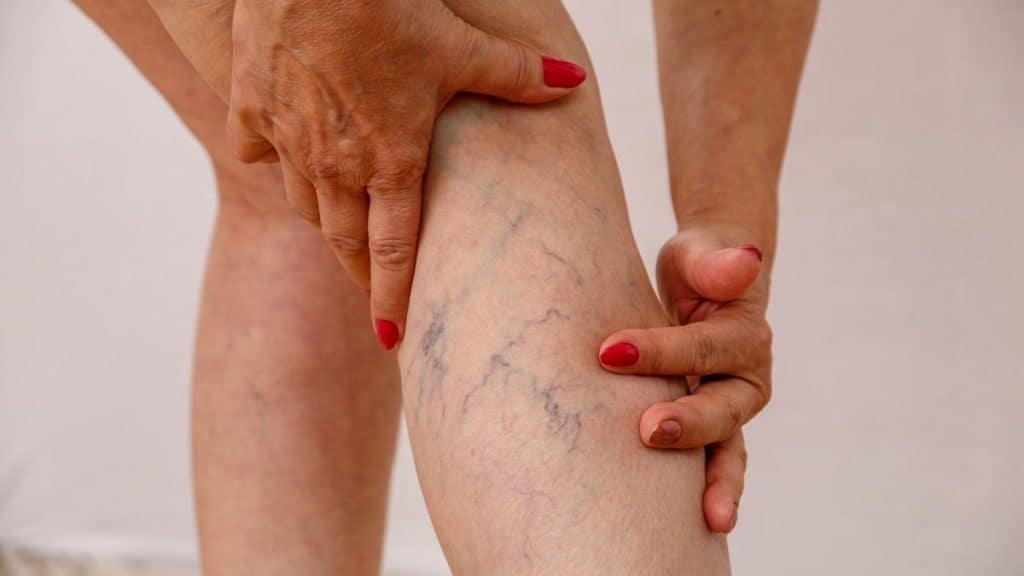
- Varicose veins are a common medical condition characterized by swollen, widened veins in the legs.
- While they are not usually harmful to overall health, they can cause discomfort and be cosmetically unappealing.
- Conservative treatment options, including exercise, can effectively manage varicose veins.
- This article will discuss the anatomy behind varicose veins, the causes of venous swelling, practical lifestyle tips, and the best exercises for varicose veins to help alleviate symptoms and prevent further complications.
The blue-coloured tortuous swelling of veins around your calf muscle and thighs is a medical condition known as varicose veins. Though it is less harmful to your overall health, cosmetically it is not good to look at, it resembles a spider web and this is why it is also known as spider veins.
In this article, we will discuss practical lifestyle tips and the best exercises for varicose veins to help you manage symptoms and improve circulation.
Understanding Varicose Veins
Varicose veins are tortuous, widened veins in the subcutaneous tissues of the legs and are often easily visible. It is blueish in colour and looks cosmetically bad.
There are very few chances for people with varicose veins to ever be harmed by them. However, there are a few discomforts they commonly complain of:
- Heaviness of the leg
- Leg swelling
- Legs easily get tired while walking.
- Aching of the leg and calf muscle.
- In late cases, there could be bleeding, skin changes, and ulcers.
So, why does swelling of veins occur in varicose veins? To understand this, we first need to understand a little related anatomy.
Why do veins swell in varicose veins?
The human body has two types of blood vessels: arteries and veins. Arteries carry pure oxygenated blood, and veins carry impure blood. We all know that in order to function, our tissues and organs need a continuous supply of oxygen and other nutrients.
The supply of pure oxygenated blood meets this demand through a network of arteries.
Actually, the purification of blood takes place in the lungs, where the oxygen we inhale is loaded into the blood. This oxygenated blood is then pumped by the heart to all the tissues, organs and muscles of the body. This is to supply oxygen and other nutrients through the arteries.
After supplying oxygen to tissues, the blood becomes deoxygenated and impure, which needs to flow back to the lungs for purification. Now, it’s the turn of veins to carry the impure blood.
This deoxygenated blood travels through veins back to the heart, and the heart, in turn, pumps out impure blood to the lungs for further purification. So, this forms a circle of the flow of blood, which is known as the circulatory system.
How your calf muscles act as a ‘second heart’
The muscle pump mechanism further assists the flow of impure blood through the veins in our legs. This mechanism is present in the calf muscles of the lower leg.
But what is this muscle pump mechanism?
During our daily activities, when we walk, run, and exercise, our calf muscle is continuously subjected to contraction and relaxation like a pump. This pumping action helps to pump the venous blood towards the heart.
And you know, this is why the calf muscle is also termed the second heart of the human body.2
But, since veins carry blood against gravity, there is a high chance of it backflowing. Our body has a unique mechanism to check this backflow; it’s the valve system that allows venous blood to flow in a single direction.
The internal wall of veins has valves that open when blood flows in the direction of the heart but close immediately when blood tries to come back in the opposite direction.
These valves are present all over the internal wall of veins and are an essential part of the circulatory system.
The root cause: weak valves and poor circulation

In varicose veins, the valve system becomes weak. As a result, blood flow through the veins becomes ineffective, and blood starts collecting around the legs and thighs, especially the calf muscles.
Due to the blood collection, the veins become swollen, and the venous wall becomes weak with time. Due to the swelling, the wall gets stretched, making it even more swollen. This is closely related to swollen feet and ankles, which often accompany varicose veins.
This might make you question why and how the venous valve system becomes weak.
Varicose veins are commonly seen in people related to professions that demand long hours of standing, sitting jobs with legs hanging, because of which there is insufficient muscle pump action of the calf muscles.
All these factors collectively cause a sluggish flow of venous blood, and slowly the blood starts to collect in the leg.
Blood collection in the leg causes veins to swell, with constant long-term swelling and stretching of the venous valve, leading to weak venous valves. This is also seen during pregnancy when there are hormonal changes in the body.
Lifestyle Tips & Prevention
The conservative management of varicose veins aims at preventing blood from pooling in the leg veins. Alongside targeted exercises, simple daily habits make a big difference. Here are the most effective lifestyle tips:
Tip #1: Leg elevation for immediate relief
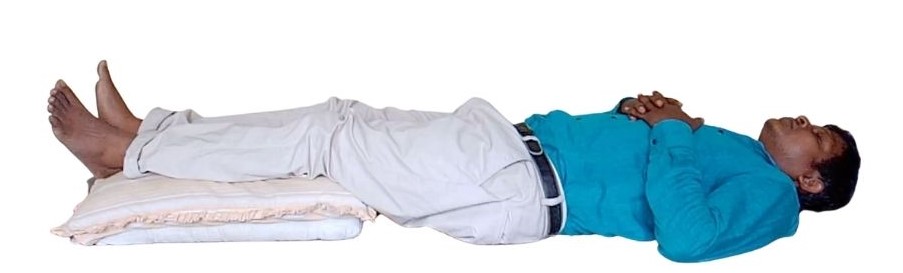
One of the simplest and most effective ways to reduce swelling is leg elevation. This technique is also highly useful for relieving swollen feet and ankles at home.
- Lie down on a bed or couch.
- Use two or three pillows (or an orthopaedic bed wedge) to elevate your legs at about a 30-degree angle.
- Keep this position for 15–20 minutes at a time, several times a day if possible.
- Gravity helps blood and fluid drain back toward the heart, reducing swelling and heaviness.

- Height-Adjustable Leg Wedge Pillow: We designed the legs pillow to be adjustable so that you can choose the suitable ele…
- CertiPUR-US Certified Memory Foam: The top layer of the wedge pillow is filled with gel memory foam, keeping cool and dr…
- Multipurpose Ergonomic Leg Rest Pillow: The both legs pillow is designed with a perfect incline to fit the contour of th…
Tip #2: Use compression garments
Compression garments are specialised clothing made from stretchable material that provides graduated pressure to the legs. They come in knee-high socks, thigh-high stockings, or full-length styles.
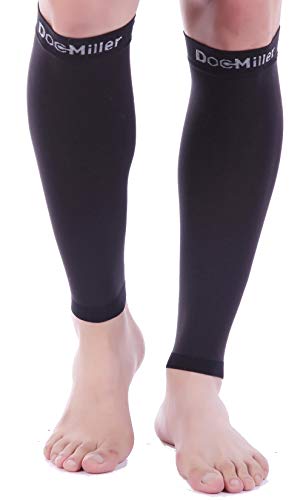
By gently compressing the veins, these garments improve blood flow back to the heart, reduce pooling, and decrease swelling and fatigue. Medical-grade options (15–20 mmHg) are especially useful for daily wear during work or activity.4
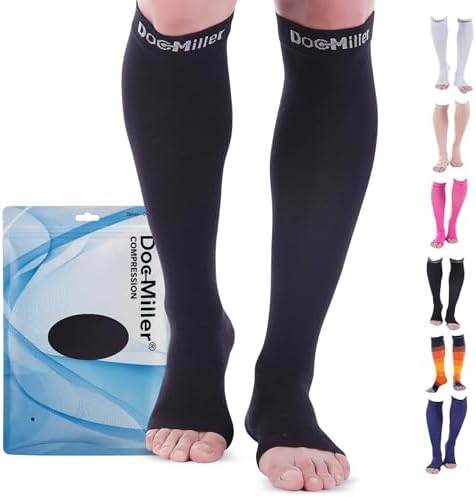
- Nylon Blend
- Imported
- 8-15 mmHg Graduated Compression – Designed for gentle leg support, these open toe compression socks provide light, gradu…
Tip #3: Fix your sitting posture
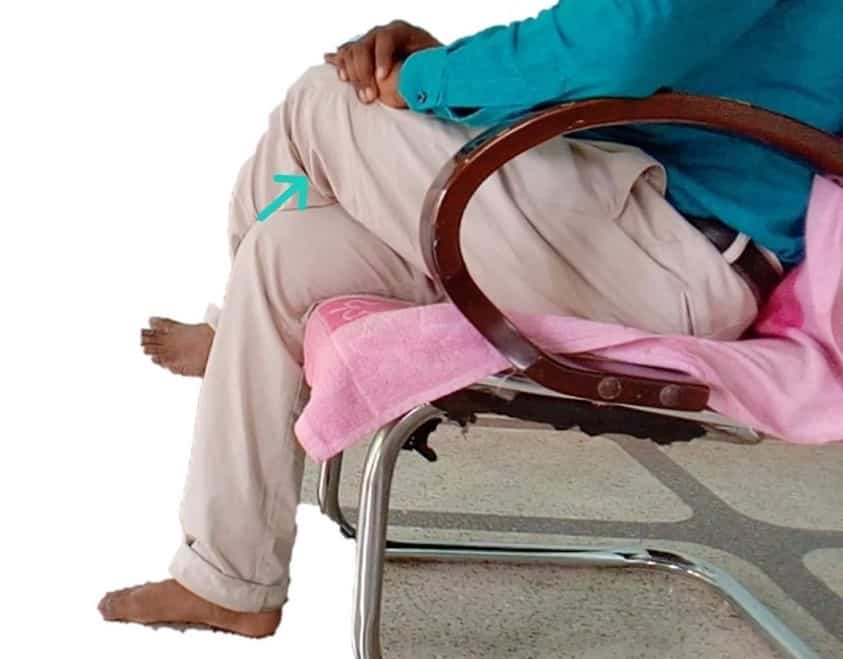
Crossing your legs while sitting can restrict blood flow in the veins of the lower legs. Over time this encourages pooling and can worsen symptoms.
Instead, sit with both feet flat on the floor or use a small footrest. Take short standing or walking breaks every 30–45 minutes if you have a desk job.
Tip #4: Choose supportive footwear (avoid high heels)
High-heeled shoes limit natural ankle movement. This reduces the pumping action of the calf muscles that helps push blood upward.
Prefer comfortable, low-heeled or flat shoes that allow free ankle motion. This supports better venous return throughout the day.
Best exercises for varicose veins
Targeted movements that activate the calf muscle pump (the body’s second heart) are among the most effective ways to support vein health. Structured exercise programmes have been shown to improve calf muscle pump function and dynamic calf strength in people with chronic venous insufficiency.23 These exercises can be done at home or at a desk and require no equipment.
Aim for moderate intensity — stop if you feel pain. Combine these with regular low-impact activity such as walking, swimming, or cycling. Exercise training also improves muscle strength, ankle range of motion, and (in milder cases) quality of life.5
Exercise #1: Heel raises (heel-off) in sitting
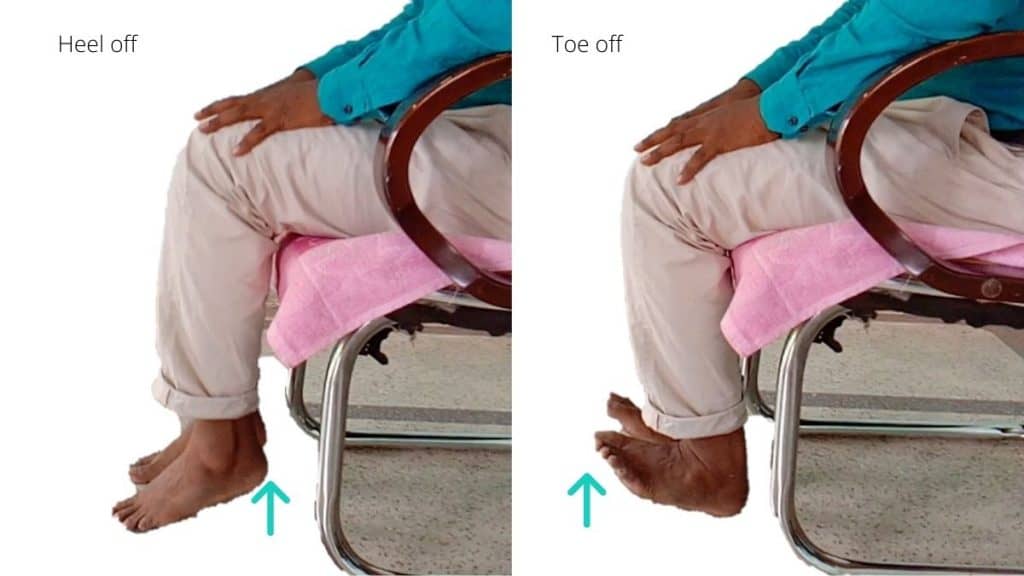
Ideal for desk workers or anyone who sits for long periods. Perform every 30–60 minutes. Progressive resistance exercises such as heel raises, especially when combined with regular physical activity, are supported by evidence as an adjunct to compression therapy.4
- Sit upright with feet flat on the floor.
- Lift both heels so you are balancing on the balls of your feet.
- Hold for 2–3 seconds, then lower the heels slowly.
- Repeat 15–20 times. Do 2–3 sets throughout the day.
Exercise #2: Toe raises in sitting
This movement works the opposite muscle group and further stimulates circulation.
- Sit with feet flat on the floor.
- Keep heels down and lift both toes toward the ceiling.
- Hold for 2–3 seconds, then lower the toes.
- Repeat 15–20 times for 2–3 sets.
Exercise #3: Ankle rotations
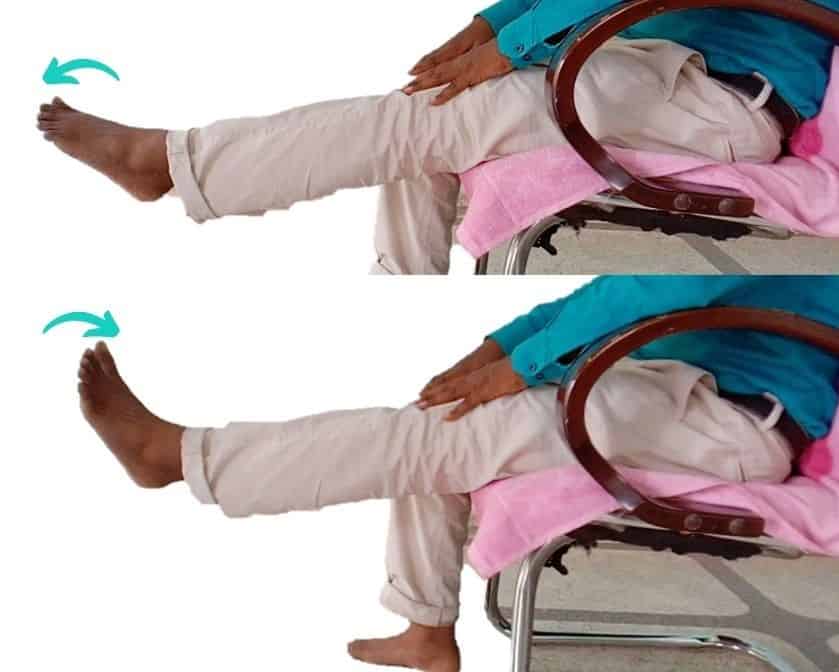
Ankle circles help keep the joint mobile and promote venous return.
- Sit or lie comfortably.
- Lift one foot slightly and slowly rotate the ankle clockwise 10 times.
- Then rotate counterclockwise 10 times.
- Switch legs and repeat. Perform 2–3 rounds per leg.
Exercise #4: Standing calf raises
A stronger version of the seated heel raise that can be done while waiting or during short breaks.
- Stand with feet hip-width apart, holding a wall or chair for balance if needed.
- Rise onto the balls of both feet, lifting the heels high.
- Hold for 2 seconds, then lower slowly.
- Aim for 15–20 repetitions, 2–3 sets.
Exercise #5: Walking & low-impact activity
Regular walking, swimming, or gentle cycling keeps the calf pump working continuously. Aim for at least 30 minutes of moderate activity most days of the week. If you have a standing job, take short walking breaks every 30 minutes to keep blood moving.
Bonus: Additional support for vein health
In addition to the tips and exercises above, compressive stockings remain one of the most evidence-based conservative tools. They help keep the lower leg optimally compressed and reduce blood pooling.4
If conservative methods do not provide enough relief, consult your doctor. Sclerotherapy is a commonly used procedure that involves injecting a sclerosant (such as sodium tetradecyl or polidocanol) into the affected veins, followed by compression.
“Try these exercises and tips for 2 weeks and share your progress in the comments!”
Related reading:
- How to Stop Leg Cramps at Night
- How to Relieve Swollen Feet and Ankles at Home
- Why the Calf Muscle is Called the Second Heart
FAQ

The author is a physiotherapist who has been practising for the last 17 years. He holds a Bachelor's in Physiotherapy (BPT) from SVNIRTAR (Swami Vivekananda National Institute of Rehabilitation and Research), one of the prestigious physiotherapy schools in India.
Whatever he learns dealing with his patient, he shares it with the world through blogs and e-books. He also owns a YouTube channel, "Sunit Physiotherapist" with over 8 lakh active subscribers. Here, he shares everything he gets to learn serving the patient.





I want to suggest the sclerotherapy procedure because in this process the doctor injects small and medium-sized varicose veins with foam or solution which closes these veins. And in a few days, varicose veins have faded. However, the same vein can require to be injected more than once, and this process is effective if finished properly.