
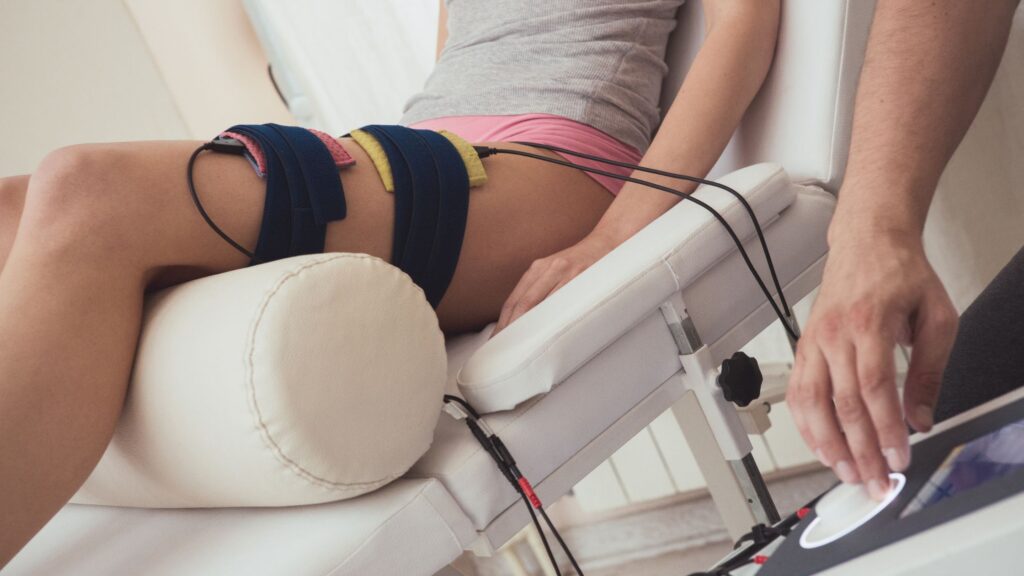
In physiotherapy, faradic and Galvanic currents stimulate the nerve and thereby elicit muscle contraction. However, faradic and Galvanic currents are two different types, and they are used in two very different situations.
This article will try to understand the difference between faradic and Galvanic currents and their uses and indications.
- What Are Faradic and Galvanic Currents in Physiotherapy?
- 4 Key Types of Low-Frequency Currents in Electrotherap
- Galvanic Current (Continuous Direct Current)
- Interrupted Galvanic Current (Pulsed DC)
- Faradic Current (Short-Duration AC Pulses)
- Surged Faradic Current (Modulated Waveform)
- Key Differences: Faradic vs Galvanic Current (Comparison Table)
What Are Faradic and Galvanic Currents in Physiotherapy?
Faradic and galvanic currents are part of electrotherapy, which uses low-voltage and low-frequency impulse currents for therapeutic purposes.
An Electrical Muscle Stimulator is a physiotherapy device that produces and applies this therapeutic current to treat pain, muscle strengthening, and muscle re-education in a paralytic patient.
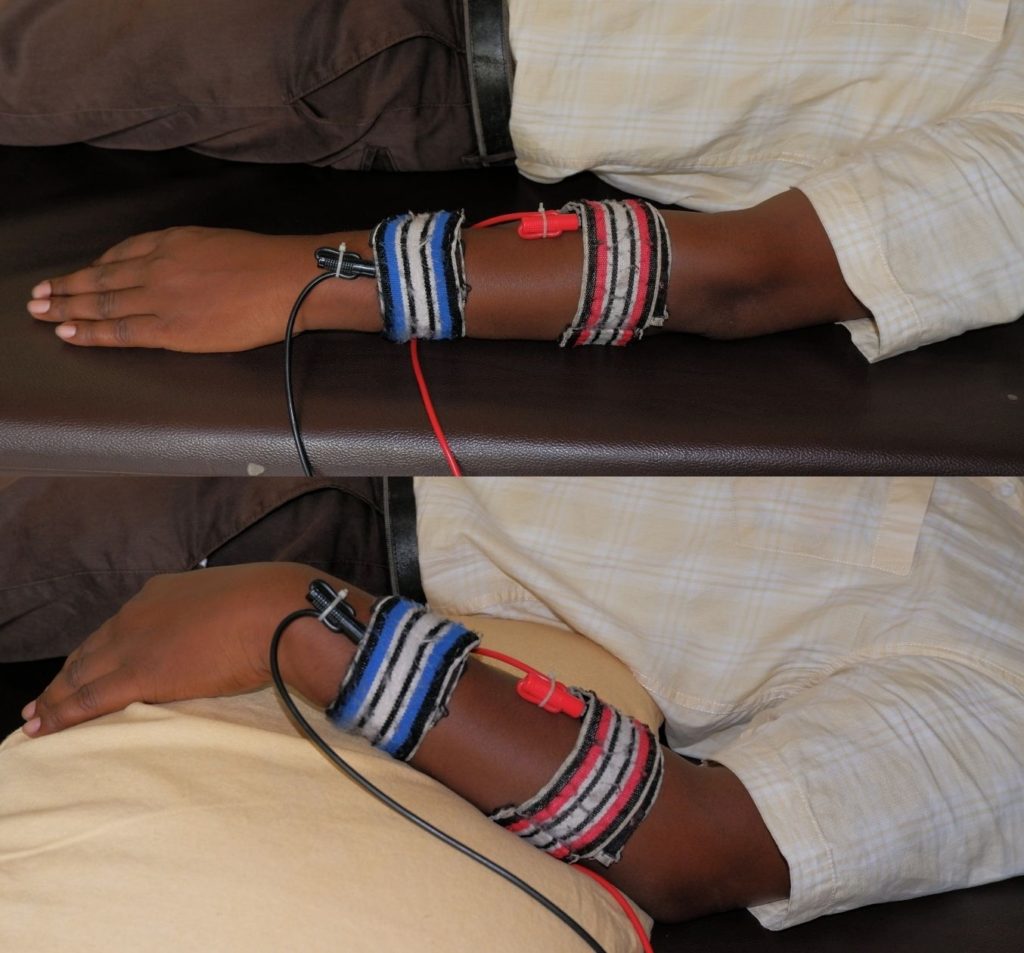
Usually, two electrodes are connected from the machine to the patient’s skin. The electrodes are often placed on the affected area of pain or at a pressure point, creating a closed circuit of electrical impulses that travel along nerve fibres.
Did you know that each movement of our body happens due to the flow of electric impulses? Normally, this electric impulse is produced by a brain cell and travels through the nerve to the concerned muscle.
If the flow of electric impulses is disrupted, a balance is lost, and symptoms such as neuralgia and paresis may appear. This is where the external low-frequency electric current is used.
4 Key Types of Low-Frequency Currents in Electrotherap
The most commonly used pulse waveforms in muscle rehabilitation are
- Galvanic Current.
- Interrupted Galvanic Current.
- Faradic Current.
- Surged Faradic Current
Galvanic Current (Continuous Direct Current)
In this treatment method, the duration of the current flow is long and continuous. The Galvanic current creates an electric field over the treated area that, theoretically, changes blood flow.
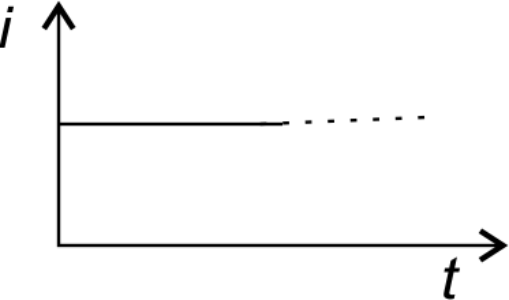
When a steady flow of direct current is passed through tissue, its effect is primarily chemical. It causes the movement of ions and their collection at the skin areas lying immediately beneath the electrodes[1.
Direct Galvanic current is mainly used for iontophoresis/ Ionization, i.e., the transference of drug ions into the tissues through the skin by electrolytic means for pain relief, stimulation of weak muscles, preliminary treatment of atonic paralysis, and disturbance in blood flow.
Generally, the current intensity passed through any body part does not exceed 0.3 to 0.5 mA/cm2 of the electrode surface. The duration of treatment is 10-20 minutes 1.
How Galvanic Current Stimulates Denervated Muscles
Galvanic current (a continuous direct current) uniquely targets denervated muscles—those disconnected from nerve supply due to injuries like peripheral nerve damage or spinal cord lesions. Unlike Faradic current, which relies on intact motor nerves, Galvanic current:
- Directly depolarizes muscle fibers using prolonged, low-frequency impulses (0.1–0.5 mA/cm²).
- Prevents atrophy by mimicking natural action potentials, triggering contractions even without neural input.
- Enhances blood flow via electrolytic effects, reducing muscle fibrosis during recovery.
Clinical Note: Visible muscle “twitches” during treatment confirm activation of denervated tissue.
Indications: When to Use Galvanic Current Therapy
Galvanic current is preferred for:
- Denervated Muscle Rehabilitation
- Post-polio paralysis, peripheral nerve injuries (e.g., radial/ulnar nerve palsy).
- Pain Management
- Chronic pain (e.g., osteoarthritis) via iontophoresis (drug delivery).
- Edema Reduction
- Vasodilation from cathode placement improves lymphatic drainage.
- Skin Ulcers & Wounds
- Accelerates healing through electrically stimulated cell migration.
Contraindications: Open wounds, metal implants, or thrombosis in the treatment area.
Treatment Protocol & Safety Guidelines
A. Standard Parameters
- Current Intensity: 0.3–0.5 mA/cm² (adjust based on patient tolerance).
- Electrode Placement:
- Cathode (-) over target muscle (stimulates contraction).
- Anode (+) proximal to cathode (reduces skin irritation).
- Duration: 10–20 minutes/session, 3–5x weekly for 4–6 weeks.
B. Safety Measures
- Skin Prep: Cleanse with alcohol to reduce impedance; use hydrogel pads to prevent burns.
- Monitoring: Stop if patient reports pain (beyond mild tingling) or skin redness.
- Post-Treatment: Apply moisturizer to electrode sites to counteract dryness.
Pro Tip: Combine with interrupted Galvanic current (300–600 ms pulses) for stronger contractions in advanced stages of reinnervation.
Interrupted Galvanic Current (Pulsed DC)
As the term suggests, the duration of the current is interrupted in an Interrupted Galvanic current. The duration of the impulse is long, and it can be adjusted together with frequency.
A duration of 100 ms is commonly used. It is often advantageous to increase this to 300 or 600 ms. Current pulses of about 100 ms duration require a frequency of about 30 per minute.
The interval between the impulses should never be shorter than the impulses themselves and is usually appreciably longer.
The rise and fall of intensity may be sudden (square impulses) or gradual (trapezoidal, triangular and saw-tooth impulses).
Faradic Current (Short-Duration AC Pulses)
Faradic current is a sequence of pulses with a defined shape and current intensity. The pulse duration is 0.1-1 ms, and the frequency is 50-100 Hz.
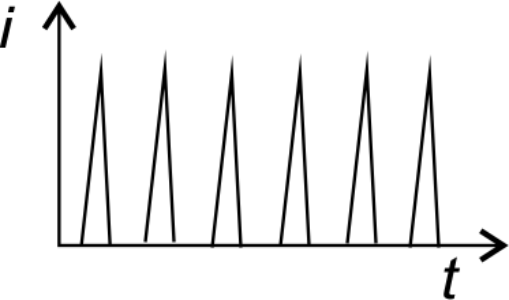
During such a waveform, the rising rate is rapid but not instantaneous, falling back rapidly to zero immediately after reaching the maximum, i.e. spike.
Faradic current acts upon muscle tissue and motor nerves to produce muscle contraction. There is no ion transfer and, consequently, no chemical effect. This may treat muscle weakness after lengthy immobilization and disuse atrophy1. It is also commonly used in the early phase of hand blast injury physiotherapy to maintain wrist and finger extensor activity when active movement is still painful.
How Faradic Current Strengthens Innervated Muscles
Faradic current (short-duration AC pulses at 50–100 Hz) selectively activates innervated muscles—those with intact nerve connections—through:
- Motor Nerve Stimulation: 0.1–1 ms pulses trigger rapid depolarization of peripheral nerves, mimicking natural neuromuscular signals.
- Tetanic Contractions: High-frequency pulses sustain muscle contractions, improving strength and endurance.
- Prevention of Disuse Atrophy: Ideal for immobilized patients (e.g., post-fracture) to maintain muscle mass.
Key Mechanism: Unlike Galvanic current, Faradic’s brief pulses avoid chemical effects, making it safer for prolonged use.
Best Uses in Muscle Re-Education & Pain Relief
- Muscle Re-Education
- Post-stroke hemiplegia or post-surgical weakness (e.g., ACL recovery).
- Retrains motor patterns via rhythmic contractions.
- Pain Modulation
- Gate-control theory: Overloads sensory nerves to block pain signals.
- Surged Faradic current reduces muscle spasms in low back pain.
- Sports Rehabilitation
- Accelerates recovery of strained muscles by improving blood flow.
Contraindications: Cardiac pacemakers, thrombophlebitis, or skin lesions.
Optimal Frequency & Duration for Faradic Stimulation
A. Treatment Parameters
- Pulse Frequency: 50–100 Hz (higher frequencies for pain relief, lower for strengthening).
- Pulse Duration: 0.1–1 ms.
- On/Off Cycle: 5–10 sec contraction, 20–50 sec rest (prevents fatigue).
B. Standard Protocol
- Intensity: Strong but comfortable tingling (no pain).
- Session Length: 10–15 minutes per muscle group.
- Course Duration: 3–5 sessions/week for 4 weeks.
Pro Tip: Use surged Faradic current (2–5 sec ramp-up) for smoother contractions in sensitive patients.
Surged Faradic Current (Modulated Waveform)
Suppose the peak current intensity applied to the patient increases and decreases rhythmically, and the peak amplitude’s rate of increase and decrease is slow. In that case, the resulting shape of the current waveform is called a surging current.
Surges of various durations, frequencies, and waveforms can be produced. The main field of application of the Faradic surge current is the treatment of functional paralysis.
Surges can be adjusted from 2 to 5-second surges continuously or by regularly selecting frequencies from 6 to 30 surges/minute. The rest period (pause duration) should be at least 2 to 3 times as long as that of the pulse to give the muscle sufficient time to recover.
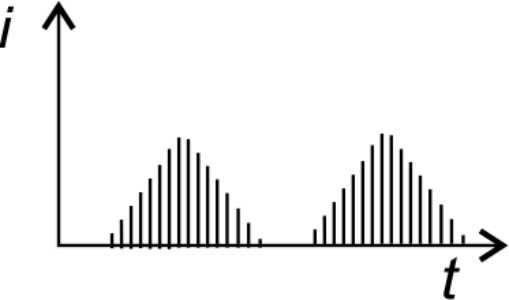
The ratio of the interval to the duration of the surging is also adjustable so that graded exercise may be administered. This current type is usually required to treat spasms and pain1.
Key Differences: Faradic vs Galvanic Current (Comparison Table)
Here is a brief difference between a galvanic type current and a faradic type current.
| Galvanic | Faradic | |
| Type of current | Direct Current | Direct Current |
| Duration of interruption | Galvanic: Direct currect; Interrupted Gavanic: Long duration interrupted D.C of 100 ms | Short duration Interrupted D.C of 0.1 to 1 ms |
| Frequency of current | 30 per minute | 50 to 100 Hz |
| Denervated muscle contraction | Can produce contraction of denervated muscle | Can NOT produce contraction of denervated muscle |
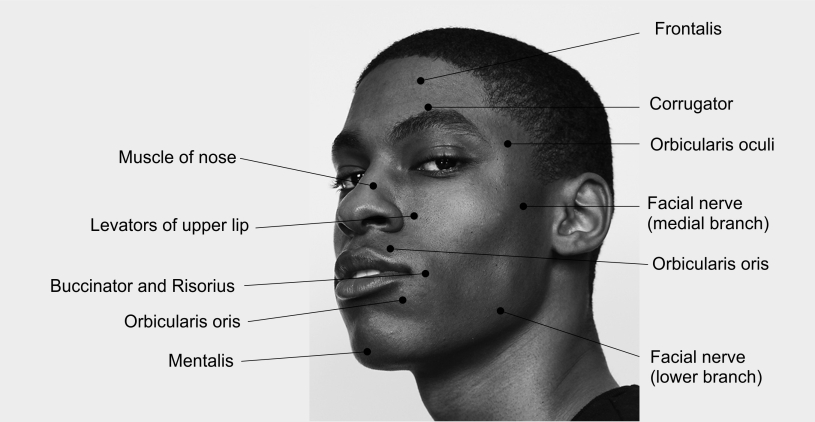
| Indications | Commonly used to stimulate small muscles (like facial muscles) | Commonly used to stimulate large muscles (ex: quadriceps) |
For the applied clinical protocol using these currents on stroke patients, see our Stroke & Hemiplegia Rehabilitation course.
FAQs About Faradic and Galvanic Current Therapy

The author is a physiotherapist who has been practising for the last 17 years. He holds a Bachelor's in Physiotherapy (BPT) from SVNIRTAR (Swami Vivekananda National Institute of Rehabilitation and Research), one of the prestigious physiotherapy schools in India.
Whatever he learns dealing with his patient, he shares it with the world through blogs and e-books. He also owns a YouTube channel, "Sunit Physiotherapist" with over 8 lakh active subscribers. Here, he shares everything he gets to learn serving the patient.


My left shoulder got stuck 5years ago while doing gym. X ray and mri. I did report normal. But 2month ago the joint rate was opened from that please in the shoulder. But now (unbalance) is needed. Solution palace.
Subhas
From – Kolkata. Wb
Pingback: IFT physiotherapy: Electrode placement, indication, contraindication - Physiosunit
Quite confused with the video and the information written below it.The video states Faradic current CAN stimulate denervated muscles and Galvanic current can not,yet one of the indication for Galvanic current on the text above states for denervated muscles. Which is which really? Thanks
Very nice and helpful subject
Very good and helpful subject
Pingback: IFT physiotherapy: Electrode placement, indication, contraindication : Physiosunit
best article
Glad that you find it helpful
Well-done.. very nice explore.tq so much
Glad you find it helpful
It’s very helpful content . And thank you so much .
Thank you so much
Very useful explanation ,great
In this busy scheduling day by day task. For every human difficulty to face the food habit. So, your article also gives me lots of knowledge. Thanks, keep posting.
Glad that you liked it
Clear description…thk u soo much
Glad that you liked it
A very good clarification from the medical end
Glad that you find it helpful
very good.provided good knowledge and satisfying.