
One-sided back pain can affect your ability to perform daily activities, exercise, and even sleep comfortably. Fortunately, specific stretches can help alleviate this pain.
Recent research supports that targeted exercises can be very effective, particularly when combined with other therapeutic techniques like manual therapy1. Stretching exercises have also been shown in systematic reviews to reduce pain intensity and improve function in people with low back pain2.
In this post, I will focus on exercises that I often prescribe to our patients in my clinic for such pain. Many patients report noticeable relief after consistently following these exercises.
Key Takeaways
- One-sided lower back pain is often linked to SI joint issues, tight paraspinal muscles, or piriformis tightness.
- Four effective home approaches: knee-to-chest stretch, piriformis stretch, spinal twist, and tennis-ball self-massage.
- Hold each stretch 20–30 seconds and repeat 2–3 times per side; practice consistently for best results.
- See a doctor if pain lasts more than 2 weeks, or if you have numbness, night pain, or unexplained weight loss.
There could be various reasons for one-sided back pain. It could be due to SI joint inflammation, stiffness of one-side paraspinal muscles, or stiffness of piriformis muscles. Whatever the cause, stretching exercises can help ease these kinds of pain.
So, without delay, let us start with knee-to-chest stretch.
1. Knee-to-Chest Stretch for Lower Back Pain Relief
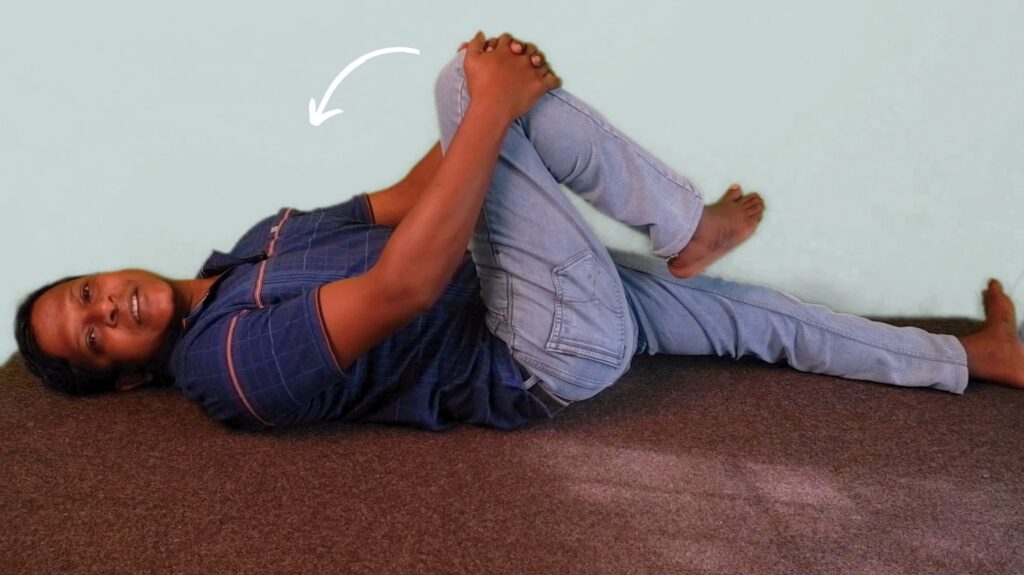
Our first exercise is a knee-to-chest stretch. This simple but effective stretch targets the lower back and glutes, which can help ease tension and pain.
- Start by lying on your back with both legs straight.
- Then, bend the knee of the side which is in pain. gently pull it towards your chest using both hands.
- Hold the stretch for about 20-30 seconds, taking deep breaths and trying to relax.
- Switch legs and repeat on the other side.
I find that this stretch helps to loosen up the muscles in my lower back and can give me some quick relief if I’m dealing with one-sided pain.
2. Piriformis Stretch for Sciatica & One-Sided Back Pain
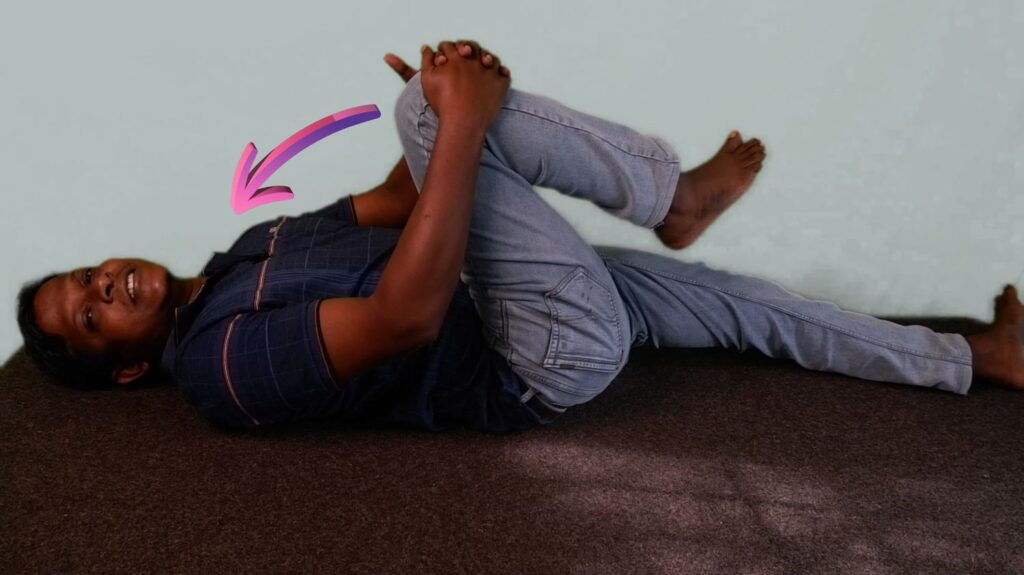
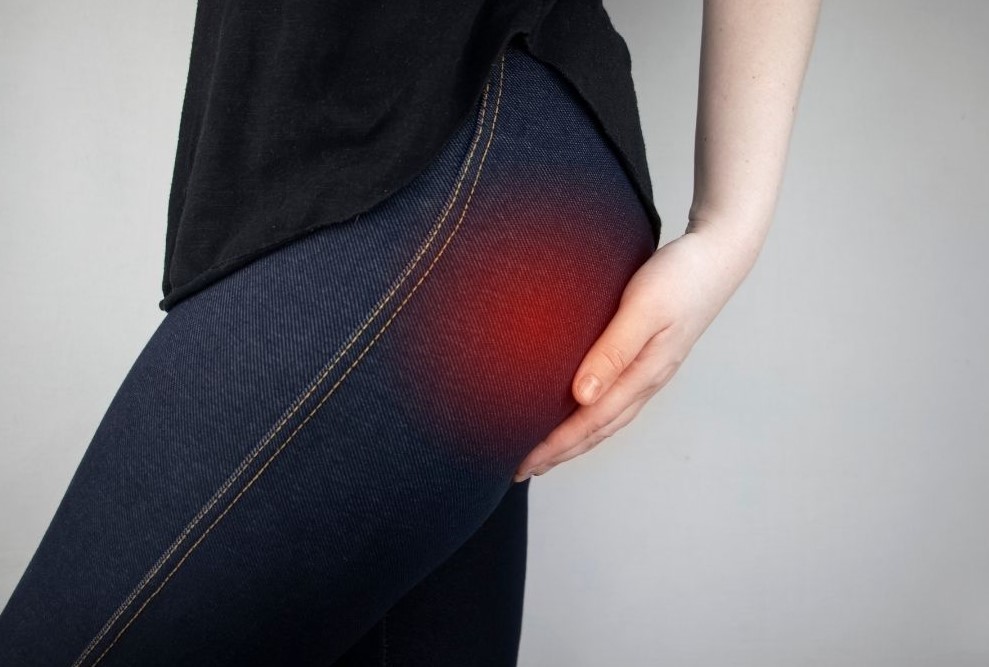
The piriformis muscle, located in the buttock region, can be a major contributor to one-sided back pain, especially if it’s tight or inflamed. This condition is termed piriformis syndrome.
A recent randomized controlled trial found that adding a piriformis stretch to standard treatment for sacroiliac joint problems produced greater improvement in disability than mobilization alone3.
This exercise targets this muscle, and many people with tightness in the piriformis notice meaningful relief after regular practice.
- For this exercise, your starting position will lie on your back with both knees bent and feet flat on the floor.
- In this position, cross one ankle over the opposite knee to make a figure-four shape.
- Hold the knee with both of your hands, as displayed in the figure.
- Now, gently pull the knee leg towards your chest in the direction of the opposite shoulder. You will feel a comfortable stretch in your buttocks and lower back.
- Hold the position for about 20-30 seconds and then relax.
- Repeat this for 3 to 4 times. Optionally you can perform this stretch on other side as well.
This stretch is great for releasing tension in the piriformis muscle, which can help with sciatic pain and discomfort on one side of the back.
3. Spinal Twist to Loosen Stiff Lower Back Muscles
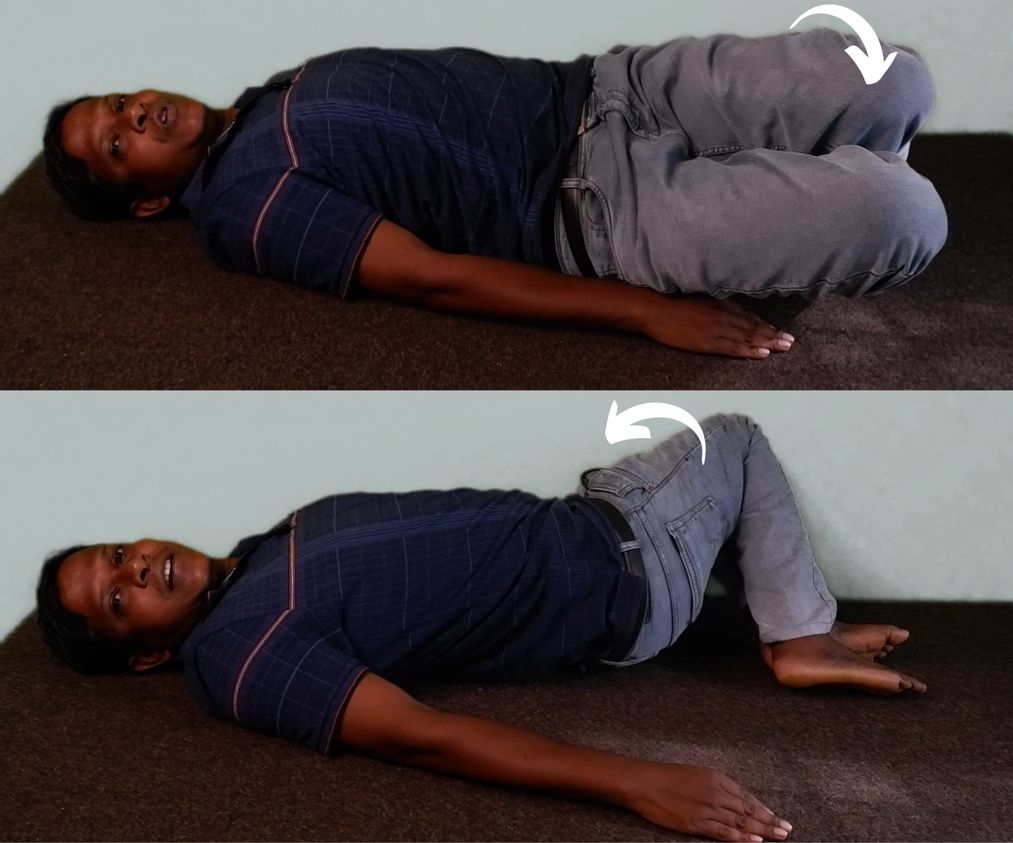
The third exercise is a core exercise that will help release tension in the entire back, especially in the lower and middle regions. It increases the flexibility of the stiff lower back.
Here is the correct process of doing it:
- Lie on your back with your arms out to the sides in a T position.
- Bend your knees and bring them up towards your chest.
- Gently drop your knees to one side, allowing your lower back to twist.
- Hold this position for about 20-30 seconds, then switch sides.
I love this stretch because it really helps to stretch the muscles around my spine and gives me a deep sense of relief from tension and pain.
4. Tennis Ball Self-Massage for Back Pain Relief
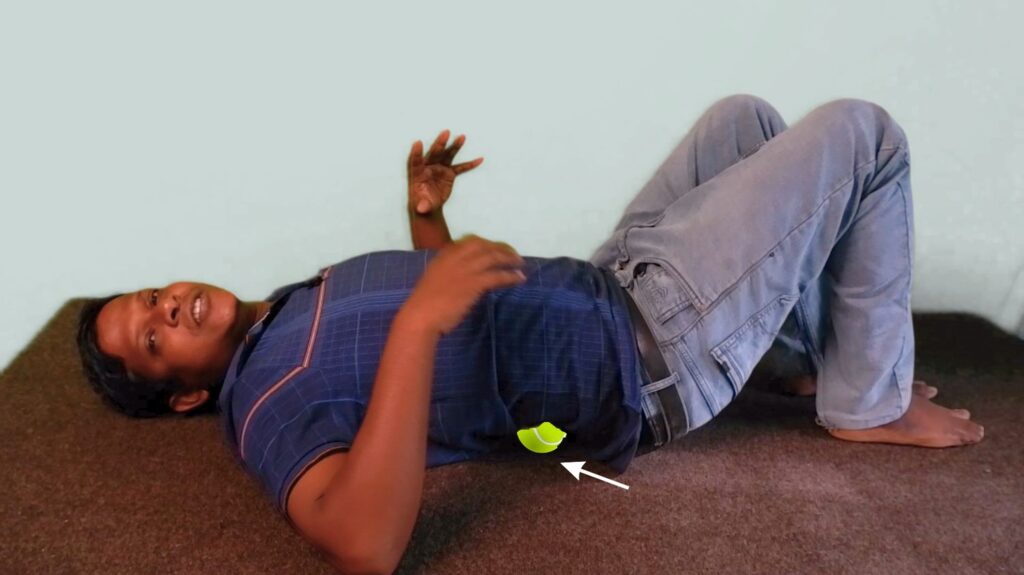
Now, moving on to my favorite exercise, which involves a tennis ball. This is a regular tennis ball you can find at any gift or sports shop. It’s not too hard and not too soft. This isn’t really an exercise; it’s more of a self-massage technique.
- The first step is lie down flat on your back.
- Simply take the tennis ball and place it where you’re experiencing the pain, close to the spine where you have pain.
- Now, gently rest your body weight on the ball and move slightly to massage the area.
- Move it around to all points where you are experiencing the pain.
- Perform this process for 4 to 5 minutes or to your convenience.
Research supports that applying sustained pressure to tender points in the lower back can reduce pain more effectively than light massage4.
Final words
I highly recommend incorporating these four stretches into your daily routine. I am sure you’ll benefit from them. You must also consider following the ergonomic way of sitting at a desk, which can significantly reduce this kind of discomfort. If one-sided discomfort relates to a sideways spinal curve, see our guide to scoliosis exercises at home.
If these exercises do not help you, you must consult your doctor for further investigation.
Keep Reading: Can sciatica get cured with physiotherapy?
FAQ

The author is a physiotherapist who has been practising for the last 17 years. He holds a Bachelor's in Physiotherapy (BPT) from SVNIRTAR (Swami Vivekananda National Institute of Rehabilitation and Research), one of the prestigious physiotherapy schools in India.
Whatever he learns dealing with his patient, he shares it with the world through blogs and e-books. He also owns a YouTube channel, "Sunit Physiotherapist" with over 8 lakh active subscribers. Here, he shares everything he gets to learn serving the patient.



Pingback: How to Fix Hip and Back Pain on One Side - SOS Herniated Disc