Many men have the problem of urine leakage. During regular walking, when they get up, and sit down, there is a slight leakage of urine, we call it urinary incontinence in medical terms.
But fortunately, with pelvic floor exercises, men or kegel exercises, we can manage this problem at home. These are very simple exercises.
So, what are these exercises? How to do them, and how much time do we have to do them, in which position? We will discuss it all in this article. Let us start with what causes urine leakage in men.
Why Do Men Leak Urine? Top Causes & Risk Factors
How Your Bladder & Pelvic Muscles Work (Simple Explanation)
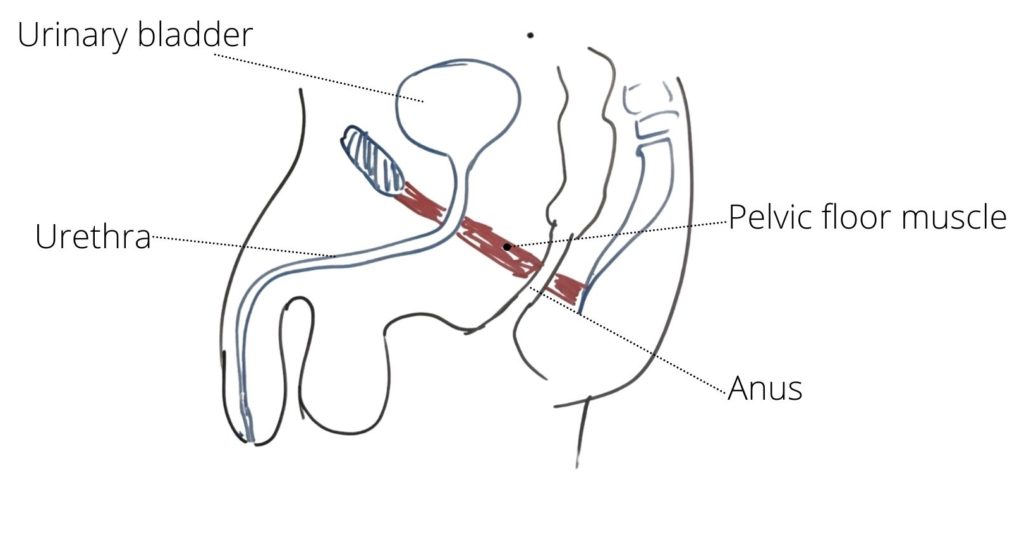
To better understand the cause of urine incontinence, we must first understand the basic anatomy of our urinary system. The diagram above illustrates the urinary system of the male, where you can observe the pelvic floor muscles.
The urethra (through which urine flows) and the anus both pass through these muscles, which are responsible for regulating the flow of urine.
We can voluntarily control our urine passage and halt the flow by contracting the pelvic floor muscles. This voluntary control over urine passage is a common phenomenon that most of us experience. The pelvic floor muscles also play a crucial role in controlling the passage of stool.
The same muscle is present around our anus and enables us to maintain our stool passage. This is particularly useful when we have diarrhoea or thin stool, as we can manage it by contracting the pelvic floor muscles.
Weak Pelvic Floor Muscles in Men: Common Causes & Risk Factors
A weak pelvic floor muscle can lead to urinary incontinence, which is involuntary urine leakage. This can happen during physical activities such as coughing, sneezing, laughing, or exercising. It can also occur during sexual activity or when there is a sudden urge to urinate.
In men, several factors commonly contribute to a weak pelvic floor:
- Prostate surgery or radiation – Procedures such as radical prostatectomy or radiation therapy for prostate cancer often weaken or damage the pelvic floor muscles and the urinary sphincter.
- Ageing – Muscle strength naturally declines with age, reducing support around the bladder and urethra.
- Obesity and excess weight – Extra pressure on the pelvic floor over time can stretch and weaken the muscles. You can check your risk using our BMI calculator.
- Chronic constipation or straining – Repeated straining to pass stool puts continuous stress on the pelvic floor.
- Chronic coughing or heavy lifting – Persistent coughing (from smoking or respiratory conditions) and frequent heavy lifting increase abdominal pressure and can weaken the pelvic muscles.
- Sedentary lifestyle – Lack of regular physical activity contributes to overall muscle weakness, including the pelvic floor. Simple options like chair exercises for seniors can help improve general strength and mobility.
- Neurological conditions – Conditions such as Hemiplegia, Quadriplegia, or GBS can affect the nerves that control the pelvic floor muscles.
Kegel exercises help many men regain better bladder control, but results vary depending on the underlying cause, consistency of practice, and individual factors. In severe cases, or if symptoms do not improve after several weeks of consistent exercise, consulting a doctor or a pelvic floor physiotherapist is recommended for a tailored assessment and treatment plan.
Research supports the value of pelvic floor muscle training for men. The American Urological Association recommends offering pelvic floor exercises both before and after radical prostatectomy1.
A 2023 Cochrane review found that while overall evidence is still mixed, pelvic floor training combined with biofeedback may help more men achieve better subjective control of leakage between 6 and 12 months1. More recent systematic reviews of supervised programs also report meaningful improvements in continence recovery when men learn correct technique and practice consistently2.
Kegel Exercises for Men: Step-by-Step Guide (With Video)
It is essential to strengthen the pelvic floor muscles through exercises such as Kegels to improve bladder control and prevent urinary incontinence. The exercises are straightforward, but you will need to practice them initially.
The kegel exercises for men are targeted to strengthen the muscle around our urethra and anus.
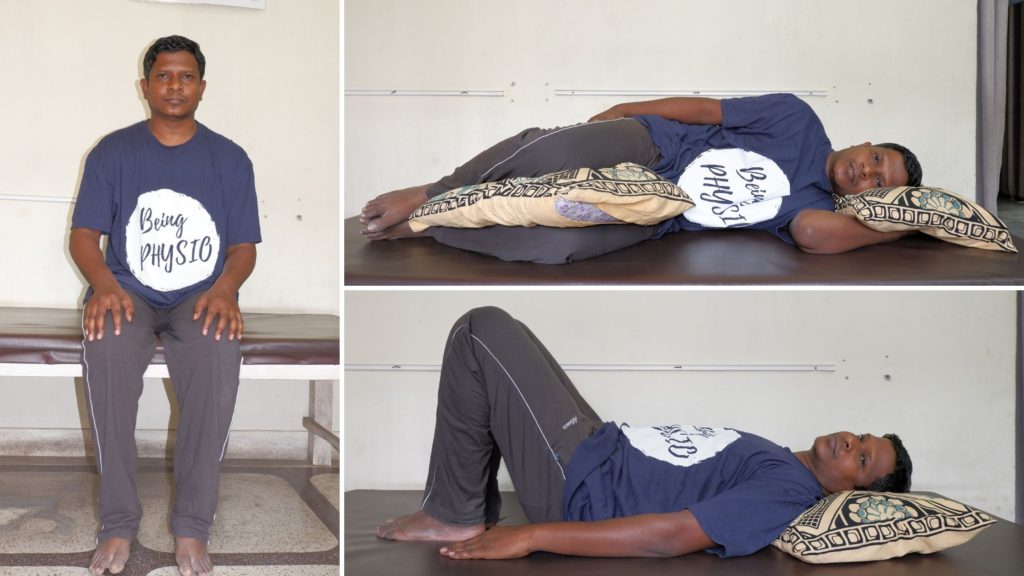
We will come to the specific exercise. These pelvic floor exercises are performed in three different positions, including standing. You can combine these positions or adopt one for your convenience. The first three positions are:
- Side-lying: We will lie on the side and keep the pillow between our knees.
- Lying on your back: Lie on your back with both knees bent.
- Sitting straight with your foot on the floor.
- Standing.
How to Do Kegels for Bladder Control (Easy Method)
To perform Kegel exercises for men, you first need to train yourself. You can do so while urinating.
- When urinating in a standing position, begin by passing urine.
- While urinating, try to stop the urine flow by contracting your pelvic floor muscles. This contraction can be felt as a pulling-up sensation in the muscles around your anus and urethra.
- Once you have stopped the urine flow, hold this contraction for a few seconds, then release and allow the urine to flow again.
- Repeat this process of stopping and starting the flow of urine 2-3 times during each session.
Gradually, you can perform pelvic floor muscle exercises in all three positions, lying on your side, back, or even sitting, by contracting the muscles.
- Start by contracting your pelvic floor muscles for a few seconds, then release and relax.
- Repeat this process 10-15 times during each session. As you become more comfortable with these exercises, you can gradually increase the duration and intensity of your contractions.
- Remember to breathe normally during these exercises and avoid holding your breath. Over time, regular pelvic floor muscle strengthening exercises can help improve bladder control and reduce the risk of incontinence.
Kegels for Bowel Control: Stop Leakage & Improve Stability
So this was for the muscle around the urethra; next is pelvic floor exercises for men to strengthen the muscles around the anus. This can be done in the same three different positions. So here is the exact procedure.
- Come to any one of the three mentioned positions.
- Now, think of you having diarrhoea and you are trying to stop it from passing your stool. This will make you contract the muscles around the anus.
- Contract it for a few seconds, then release it, again contract, then relax, then contract, relax.
- Do this regularly, 10 to 15 times in a session.
When you exercise both the muscles, i.e. the muscles around the anus and the muscles around the urethra slowly you will develop better control over the flow of urine.
7 Easy Ways to Remember Kegel Exercises Daily
Kegel exercises are a great way to strengthen the pelvic floor muscles, leading to improved bladder control, better sexual health, and other benefits.
However, like any exercise routine, it can be difficult to make Kegels a regular part of your daily routine. Here are some tips and advice on how to make kegel exercises a habit for better results:
- Schedule kegel exercises into your daily routine. Setting aside a specific time each day to do your Kegels, such as right before or after brushing your teeth, can be helpful.
- Use reminders to prompt you. You can set reminders on your phone or computer to remind you to do your Kegels at a specific time each day.
- Start with a small number of kegels. If you’re new to kegel exercises, start with a few repetitions each day and gradually increase the number over time.
- Vary your kegel routine. Try doing different kegel exercises to keep your routine interesting and challenging.
- Make Kegels a part of other activities. You can do kegels while watching TV, reading a book, or sitting at your desk.
So, commonly, people question how long it will take to recover.
Most men notice improvement in 4 to 8 weeks with consistent daily practice. Full benefits are often seen around 3 months. The more regularly you do the exercises, the sooner the results appear.
Ready to take control? Start doing these Kegel exercises today and track your progress. Share your results in the comments!
Keep Reading: Chair Exercises for Seniors: 13 Safe, Seated Moves for Strength & Mobility | 9 Benefits of Exercise
FAQ

The author is a physiotherapist who has been practising for the last 17 years. He holds a Bachelor's in Physiotherapy (BPT) from SVNIRTAR (Swami Vivekananda National Institute of Rehabilitation and Research), one of the prestigious physiotherapy schools in India.
Whatever he learns dealing with his patient, he shares it with the world through blogs and e-books. He also owns a YouTube channel, "Sunit Physiotherapist" with over 8 lakh active subscribers. Here, he shares everything he gets to learn serving the patient.