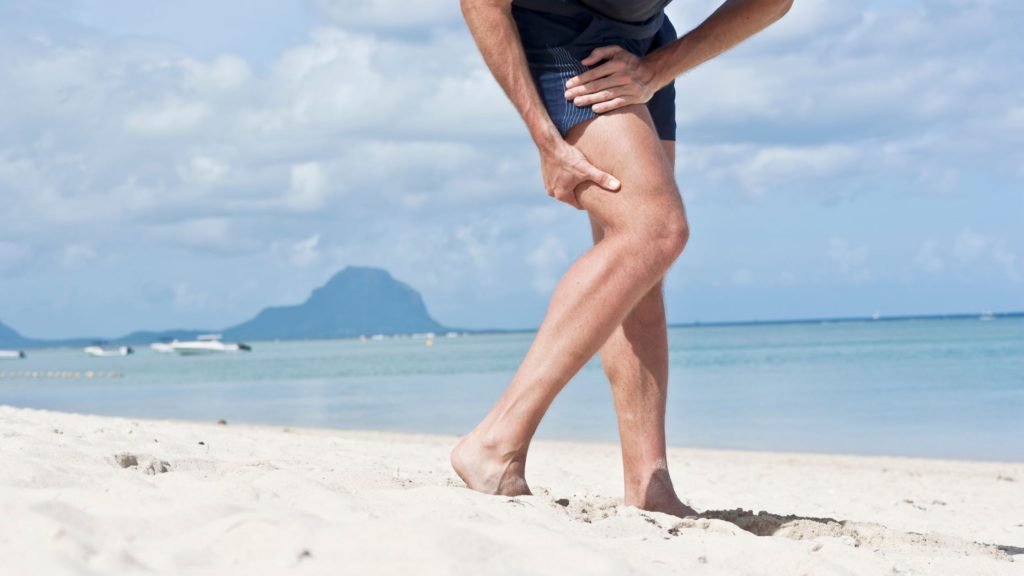
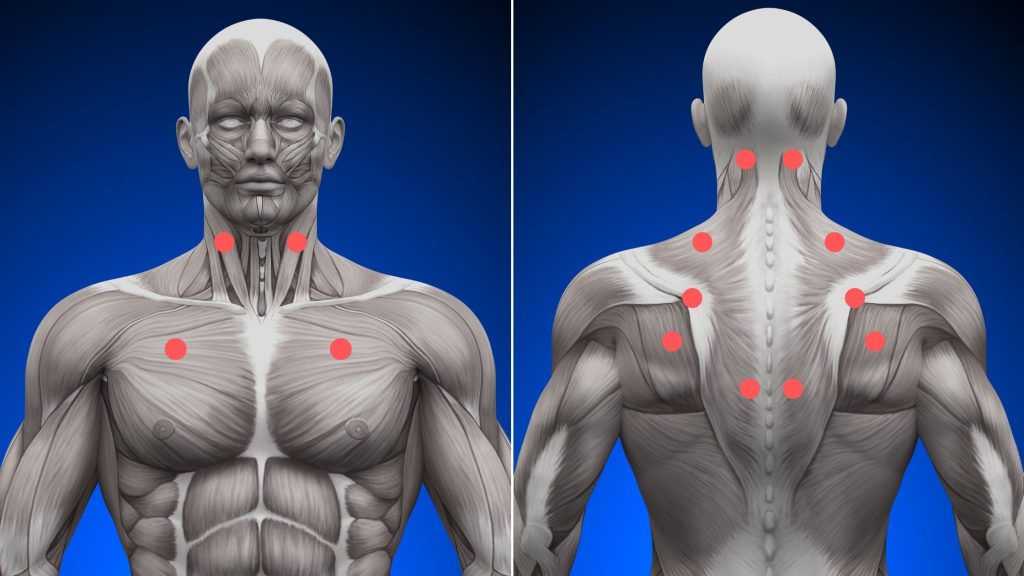
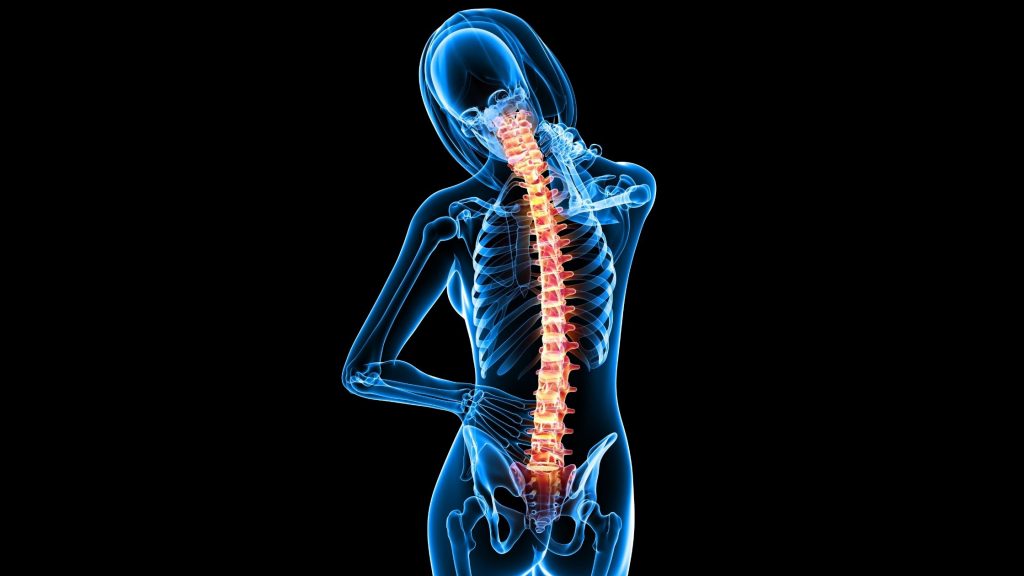
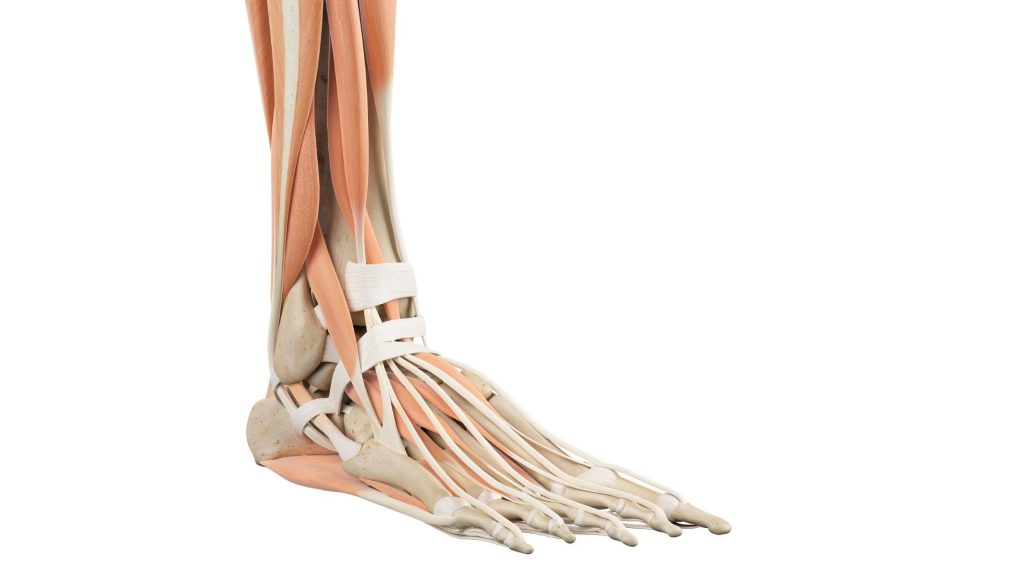
In a person with knee osteoarthritis, weak muscles around the knee are a strong contributor to knee pain. Strong knee muscles are very important for the protection of the knee joint.
So in this article, we will learn these exercises, and we strongly recommend you perform these exercises for your eyes daily, once in the morning and in the evening.
Also read: Rheumatoid arthritis vs osteoarthritis: which is worse? – know the key differences before starting any exercise plan.
How knee strengthening exercises help with knee pain?
Actually, osteoarthritis of the knee creates a vicious cycle of knee pain and weak knee muscles. Due to knee pain, the sufferer avoids physical activity, resulting in knee muscle weakness.
During the walking gait cycle, strong knee muscles prevent concentration of body weight over the knee joint by distributing the body weight evenly over both knees. Weak knee muscles are incapable of doing so, resulting in contributing to knee pain. This creates a vicious cycle of knee pain and muscle weakness.
There are other risk factors for knee arthritis pain. Not sure how much risk you personally carry? Take this quick knee osteoarthritis risk calculator to find out. However, to break this vicious cycle, we have to strengthen the knee muscles through strengthening exercises. These are very simple exercises, and anyone can learn and perform at home. Alignment issues such as bow legs (genu varum) can also increase medial knee load and benefit from targeted exercise alongside strengthening.
1) Knee press exercise to strengthen quads

Knee press exercise is also called as static quadriceps exercise, and it is one of the most basic and important of all knee strengthening exercises. This can be performed by an osteoarthritis sufferer at any level of pain.
For this exercise, our starting position will be a long sitting position.
- Sit straight in a long sitting position.
- Take a bedsheet and make a roll. You can also use a pillow or a towel roll.
- Let’s take a bed sheet roll and place it below the knee.
- Now, in this position, gently squeeze your quadriceps and press the roll towards the floor with your knee.
- Hold this pressed position for a minimum of 5 seconds and then release it slowly.
- Repeat this exercise for a minimum of 20 to 30 times in a session.
- This is an important exercise for strengthening the quadriceps muscle. The quadriceps muscle is present on the front side of our thigh.
2) For strong lower leg muscles, do ankle flexion, extension exercises

Ankle flexion and extension are important for strengthening and flexibility of the muscles of the lower leg. It does not directly affect the knee joint, but it is important for maintaining the overall dynamic of the knee.
This exercise is also performed in a long sitting position or lying position.
- So in a lying position, you have to simply flex and then extend your ankle gently and smoothly.
- To flex the ankle, point and move your great toes towards yourself and to extend it point your great toe and move your foot away from your body.
- Repeat this for a minimum of 15 to 20 times, the more you do, the better it is.
3) Abduction adduction of leg to strengthen outer and inner thigh muscles

Abduction of the leg is moving the leg away from the centre of your body, and adduction is moving the leg towards your body. So this exercise helps in strengthening the muscles on the inner and outer sides of the thigh.
Abduction strengthens the muscles on the outer side of the thigh, and adduction strengthens the muscles on the inner thigh.
- To perform this exercise, lie down flat on your back with legs straight and keep your leg in the neutral position with your great toe pointing towards the roof.
- In this position, slide your leg away from your body. This is called abduction.
- Here, you have to keep in mind that your great toe should always be pointed towards the roof; this will ensure that the right muscle is recruited for the exercise.
- After this, start adducting your leg by taking it towards the centre of your body.
- This movement should be slow, smooth and in a controlled manner.
- Repeat this process 10 to 15 times in each direction, that is, 10 to 15 times adduction and 10 to 15 times in abduction.
4) Knee flexion and extension exercise for strong hams

Flexion of the knee is important for the strengthening of the hamstring muscle. The hamstring is the muscle present on the back of the thigh, and it is an important flexor muscle.
- Exercise is performed in the lying position.
- In a lying position, simply flex your knee by sliding your heel on the bed.
- Flex it to a point where you feel no pain, and then slowly extend it.
- Repeat this alternate flexion and extension smoothly for a minimum of 15 to 20 repetitions.
6) Straight leg raise exercise

This also targets the quadriceps muscles
- Lie down straight on your back with your leg straight.
- Before you begin, you have to flex your ankle. Do this by pulling your foot towards yourself. This ensures that the quadriceps muscles are only recruited during the exercise.
- Now raise your leg straight without bending your knee up to a 30-degree angle. You should not go beyond 30°, as this will make the exercise less effective.
- Hold this position for 5 to 10 seconds and then lower it slowly.
- Repeat this process slowly and smoothly for a minimum of 10 repetitions.
7) Straight leg raise in sidelying

This is the progression of our abduction adduction exercise, which is performed in a gravity-free plane. This exercise is performed against gravity, so it requires slightly more muscle strength to perform it.
- So, for this exercise, come to the sidelying position.
- To make the posture more stable, bend the knee of the lower lying leg.
- Now, slowly raise your top leg, keeping it in a fully extended position.
- Here also, you have to raise it up to a 30-degree angle and hold it for a few seconds and then lower it down
- For maximum effect, repeat it for a minimum of 10 repetitions.
8) Pillow press between thighs to strengthen inner thigh muscle

- Lie down flat on your black back with both knees in a bent position and foot flat on the bed.
- In this position, take a thick pillow, or you can take two pillows and keep it between the thighs.
- Now, slowly press and squeeze the pillow between your thighs and hold it for 5 seconds.
- After a 5-second release, it slowly.
- Repeat this process 15 to 20 times in a session. This helps to strengthen your inner Thai muscles.
How to progress with knee strengthening exercises
Once you can perform all the above exercises comfortably, you can progress to adding some weight or resistance.
We recommend starting with a 1/2 kg weight cuff. Wrap the weight cuff around your ankle and then perform all the above exercises. Slowly you have to increase the weight from half a kg to 1 kg and then to 1.5 kg up to 2 kgs,
Additionally, you can add straightening in the high sitting position. To make the exercise more interesting, you can also use a resistance band or a theraband and perform exercises in a standing position.
On days when knee pain makes it hard to start exercising, some people also use a TENS unit for temporary pain relief before their session. If you have one at home, see this guide on how to use a TENS unit for knee pain with correct electrode placement.
If you’re managing knee osteoarthritis with exercises like these but eventually need a total knee replacement, the same strengthening principles apply after surgery too — see my illustrated Home Care & Exercise Guide After Total Knee Replacement for a full post-op home program.
For the fuller clinical picture — including the stages of OA, in-clinic treatment modalities, and what to avoid — see my complete guide: 7 Best Physiotherapy Exercises for Knee Osteoarthritis (OA).
Keep Reading: How Simple Walking Change Reduces Knee OA Pain by 60% Equivalent to Medication | 11 Best Bow Legs (Genu Varum) Correction Exercises | 9 Easy Exercises for Hip Arthritis Pain Relief
FAQ

The author is a physiotherapist who has been practising for the last 17 years. He holds a Bachelor's in Physiotherapy (BPT) from SVNIRTAR (Swami Vivekananda National Institute of Rehabilitation and Research), one of the prestigious physiotherapy schools in India.
Whatever he learns dealing with his patient, he shares it with the world through blogs and e-books. He also owns a YouTube channel, "Sunit Physiotherapist" with over 8 lakh active subscribers. Here, he shares everything he gets to learn serving the patient.