
Last updated on May 19th, 2024 at 06:48 pm
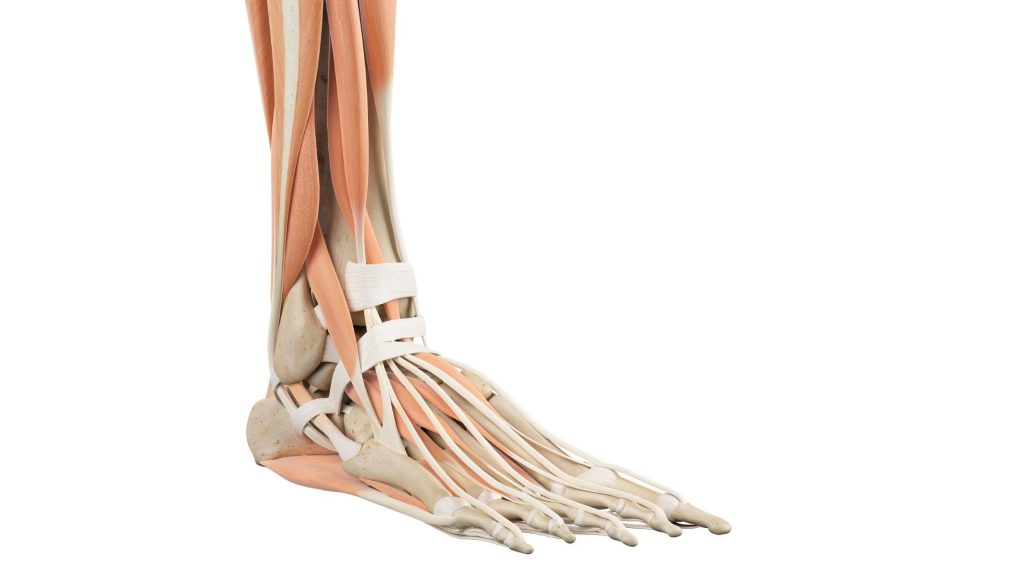
How long will it take to heal a torn ligament?
Healing times for torn ligaments can vary significantly depending on several factors, including the severity of the tear, the specific ligament involved, the patient’s age, overall health, and the treatment protocol followed.
Generally, ligament healing is a lengthy process due to the relatively poor blood supply to these structures compared to other tissues. Here’s a breakdown.
- Minor tears (Grade 1): Heal within 2-4 weeks with proper care.
- Moderate tears (Grade 2): These take longer to heal, and a 6-8 weeks recovery time is expected.
- For more severe tears (Grade 3): Complete tears often require surgery to reconnect the ligament and may take 3-6 months for full recovery.
So, what do these grades of ligament injury mean? How do other factors determine the healing period? Let’s find out in this article.
Repairing process of ligament injury
Before we move on to how, based on the level of injury, ligament tears are classified into three grades, it is very important to learn the repairing process.
The repair process of ligament tears is different from that of other soft tissues. Because ligaments have relatively low vascularity (blood supply), healing takes much more time.
Muscle pain due to exercise heals within a week (due to a micro-tear in muscle fibre). However, ligament sprains may take months to years to fully recover. The healing/recovery process of the ligament is the same as that of any other soft tissue, but it heals with the formation of fibrous tissue, which limits the ligament’s elasticity.
It consists of the below-mentioned phases.
Inflammatory Phase: The inflammatory phase follows immediately after the injury. Depending on the severity, it may last for 3-5 days. The internal bleeding and fluid from damaged cells together produce swelling within the joint. Joint swelling causes pain.
Repair Phase: After inflammation and swelling, the repair phase starts. It is mediated by blood clotting over the damaged tissue and lasts 3-21 days after the injury. With blood clots, the fibroblast cells proliferate and begin to lay down collagen tissue.
Remodelling phase: The remodelling phase follows the repair phase and can last up to a year. It involves the maturation of collagen tissue and the realignment of collagen tissue. The haphazardly placed collagen tissue is weak; with the alignment of collagen tissue, it gradually becomes stronger and has much more tensile strength.
Also read: 7 Easy Ankle Sprain Exercises to Start Running Early
Classification of a Ligament sprain
The healing period for ligament injury depends on the degree of ligament sprain. The higher the degree, the more time it takes to heal. The degree of damage to the ligament’s fibres can be classified into 3 grades1.
GRADE 1 SPRAIN:
- A grade 1 sprain is considered a mild sprain where only a few collagen fibres are damaged. This leads to a local inflammatory response characterized by pain over the affected ligament.
- Typically, grade 1 sprains result in minimal swelling and no joint instability.
- Treatment for a grade 1 sprain usually involves rest, ice, compression, elevation (RICE), and pain management.
- Allowing the ligament to heal correctly is essential to prevent further injury and promote full recovery.
- Healing of grade 1 ligament tear can take 2-4 weeks with proper care.
GRADE 2 SPRAIN:
- A grade 2 sprain involves the significant tearing of collagen fibres, leading to intense pain and swelling in the affected joint.
- This type of sprain requires prompt medical attention and may involve a longer recovery period compared to a grade 1 sprain.
- It’s important to follow the recommended treatment plan, which may include rest, ice, compression, elevation (RICE) and physical therapy to aid in healing and restore function to the affected joint.
- Grade 2 ligament injuries take longer to heal; it can take 6-8 weeks to recover fully.
GRADE 3 SPRAIN OR RUPTURE:
- A Grade 3 sprain or rupture occurs when the ligament is completely torn.
- Interestingly, immediately after the rupture, there may be no pain. However, subsequent pain can result from spasms around the joint.
- This condition can lead to joint effusion and marked joint instability. In some cases, surgery may be required to restore joint stability.
- Post-surgery, the healing period can take 3-6 months.
Conclusion
The healing time for a torn ligament varies depending on several factors. Mild injuries may heal in a few weeks, while severe injuries or those requiring surgery can take several months to a year. Surgical reconstruction is necessary for a complete ligament tear, and surgical repair is required for a grade 2 tear.
Fortunately, with the advent of internal bracing surgical techniques, the time required to return to work is greatly reduced. A Young athlete can be back to running if they fulfil five criteria after the ligament surgery.
Keep reading: Is ACL repair same as reconstruction? Reconstruction Vs Repair

The author is a physiotherapist who has been practising for the last 17 years. He owns a successful physiotherapy clinic named "Physiofirst" in Rourkela, Odisha, India.
He holds a Bachelor's in Physiotherapy (BPT) from SVNIRTAR (Swami Vivekananda National Institute of Rehabilitation and Research), one of the prestigious physiotherapy schools in India.
Taking every pain and disability case as a challenge is his motto. Whatever he learns dealing with his patient, he shares it with the world through blogs and e-books.
He also owns a blog, www.physiosunit.com and a YouTube channel, "Sunit Physiotherapist" with over 8 lakh active subscribers. Here, he shares everything he gets to learn serving the patient. His knowledge and invaluable experience in the field are proving beneficial to many.
Email him: sunitekka@gmail.com
Phone: +91-9178817004
Join him: www.facebook.com/physiocapsule

In such ankle condition,. please follow ankle exercises in this post: http://physiosunit.com/ankle-sprain-exercises/
I’m 4 plus mons. into my ankle being broke & ligaments torn. I’m 84 years old & active. I was in a cast for 2 plus mos. now in a boot. My ankle is still swollen. I’m not sure I got the right treatment. What can I do?
Pingback: 7 Best Knee Ligament Injury Treatment Exercises : Physiosunit
This link is going up on the Massage near Collary side. This will be telling up on the benefits of the shoulder side. This is only main factor for the main side of the different things.