As physiotherapists, we play a crucial role in the rehabilitation of patients after brain stroke and cardiac arrest. One principle is widely accepted in rehabilitation: the earlier the intervention begins, the better the outcome.
But this naturally raises an important question:
How early is “early” rehabilitation?
Recently, two papers published in the Physical Therapy and Rehabilitation Journal caught my attention because they addressed this very issue. One explored the effectiveness of home-based cardiac rehabilitation in frail older adults, while the other examined how early mobilisation should begin after a brain haemorrhage.
In this article, I’ll break down the key ideas from both studies in a simple and practical way. I would still encourage you to read the original papers for a deeper understanding.
1) How Effective Is Home-Based Cardiac Rehabilitation for Frail Seniors?
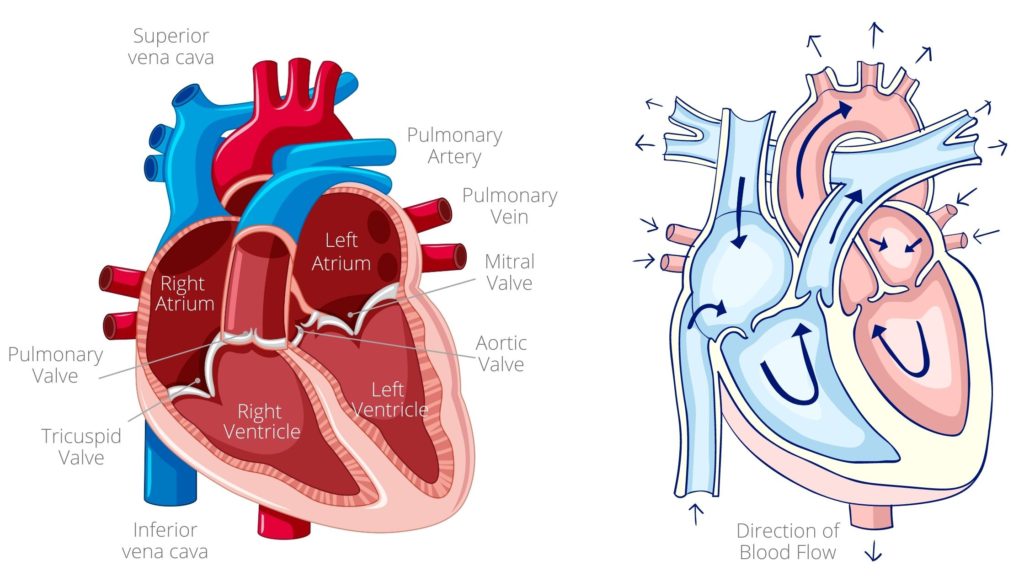
Older adults who are hospitalized for cardiovascular disease are at a high risk of experiencing a decline in physical function. (For background on how the heart normally functions, see our guide to the cardiac cycle phases and ECG correlation.) This often presents as:
- generalized weakness,
- difficulty walking,
- reduced balance,
- inability to perform daily activities independently.
This risk becomes even greater when the patient also has malnutrition, frailty, or cognitive impairment.
As physiotherapists, we routinely prescribe cardiac rehabilitation programs to improve endurance, mobility, and overall physical function. However, many frail elderly patients are unable to fully participate in standard outpatient rehabilitation due to problems such as:
- transportation difficulties,
- multiple medical conditions,
- reduced family support,
- poor confidence after hospitalization.
That is where home-based rehabilitation becomes especially relevant.
The Study: Cardiac Care Bridge (CCB)
Researchers conducted a randomized trial1 to evaluate a transitional care program known as the Cardiac Care Bridge (CCB).
This program combined:
- nurse-led home visits, and
- home-based physiotherapy sessions
after discharge from the hospital.
The structure of the program included:
Nursing follow-up
A community nurse visited the patient four times after discharge:
- at 2 days,
- 1 week,
- 3 weeks,
- and 6 weeks
These visits focused on:
- medication management,
- health monitoring,
- and early identification of complications.
Physiotherapy follow-up
At the same time, a physiotherapist provided up to nine home-based rehabilitation sessions over six weeks.
Importantly, these sessions were not limited to just “doing exercises.”
Instead, the physiotherapy focused on helping the patient:
- move safely in their home environment,
- regain confidence in daily activities,
- improve functional independence,
- and maintain an active lifestyle.
This practical, patient-centred approach is what makes home-based rehabilitation particularly valuable in frail seniors.
What Did the Study Find?
After 6 months of follow-up, the findings were quite encouraging.
Patients in the intervention group showed clinically meaningful improvements in physical functioning compared to those receiving usual care.
Key findings:
- 61% of patients in the intervention group improved their physical performance scores.
- In contrast, 37% of patients in the control group experienced deterioration.
Clinical takeaway:
This suggests that bringing rehabilitation into the patient’s home can help prevent functional decline in frail older adults with heart disease.
For physiotherapists, this is a very practical reminder that rehabilitation does not always need to happen in a hospital or clinic setting to be effective.
2) How Early Should Mobilisation Begin After a Brain Haemorrhage?
When it comes to stroke rehabilitation, one concept is deeply ingrained in physiotherapy practice:
Mobilise early — once the patient is medically stable.
But while this principle is widely accepted, there are still important questions in certain neurological conditions.
One such condition is aneurysmal subarachnoid haemorrhage (aSAH) — a severe type of brain haemorrhage that is associated with:
- high mortality,
- serious neurological complications,
- and long-term disability.
Even though these patients often need prolonged recovery, there has been limited evidence to guide how early physiotherapy mobilisation should begin after aneurysm repair.
The Study on Early Mobilisation After Brain Haemorrhage
To address this gap, researchers conducted a prospective study involving 102 patients with brain haemorrhage2.
Following aneurysm repair, physiotherapy mobilisation was provided for up to 14 days in:
- the acute ward, and
- the intensive care unit (ICU)
at a tertiary neurosurgical referral centre.
What Types of Physiotherapy Were Given?
The physiotherapy interventions included a range of progressive functional activities such as:
- active bed mobility
- sitting balance training
- sit-to-stand practice
- standing balance training
- tilt table sessions
- step transfer training
- walking practice
- stair climbing practice
- activities of daily living (ADL) training
This reflects an important rehabilitation principle:
early mobilisation is not simply about “getting the patient out of bed” — it is about graded, purposeful, function-oriented activity.
Once the patient becomes medically stable and is discharged, further progression can be made using structured neurorehabilitation approaches such as the Brunnstrom approach to improve standing and walking recovery.
Was Early Mobilisation Safe?
This is often the biggest concern in acute neurological rehabilitation.
The good news from the study was that early mobilisation was generally safe.
The researchers found:
- mobilisation often began within the first 14 days,
- and there were no major adverse events such as:
- falls,
- accidental removal of lines,
- or serious physiotherapy-related complications.
That is a very important finding for acute care physiotherapists.
It supports the idea that carefully monitored early rehabilitation can be safely introduced even in patients recovering from serious brain haemorrhage.
But Not Every Patient Can Be Mobilised Early
The study also highlighted an equally important clinical reality:
Not every patient is ready for mobilisation at every session.
The most common barriers to mobilisation were:
- neurological instability
- hemodynamic instability
These factors prevented mobilisation in approximately 32% of planned therapy sessions.
This is highly relevant in clinical practice.
It reminds us that while early rehabilitation is beneficial, it must always be balanced with:
- patient safety,
- medical stability,
- and day-to-day clinical judgement.
In other words, early mobilisation should never mean rushed mobilisation.
Which Patients Did Better?
Another interesting finding from the study was that outcomes were strongly influenced by the patient’s clinical condition at admission.
The results showed:
- 65.2% of patients with a good clinical grade were able to achieve independent walking within two weeks
- compared to only 12.9% of those in the poor-grade group
Clinical meaning:
This tells us that baseline neurological severity plays a major role in early functional recovery.
For physiotherapists, this helps in:
- setting realistic rehabilitation goals,
- planning treatment intensity,
- and counselling family members more accurately.
What Do These Two Studies Teach Us?
Although these studies involved different patient groups, they both point toward the same important message:
Early physiotherapy matters.
Whether it is:
- a frail older adult recovering from cardiac illness, or
- a patient recovering from brain haemorrhage,
early rehabilitation can make a meaningful difference in recovery.
Key Lessons for Physiotherapists
1) Rehabilitation should begin as soon as it is medically safe
Delaying physiotherapy unnecessarily may contribute to:
- muscle weakness,
- loss of mobility,
- functional decline,
- and delayed recovery.
2) Home-based rehabilitation can be highly effective
For frail and vulnerable patients, bringing therapy into the home environment may improve:
- accessibility,
- compliance,
- and functional outcomes.
3) Early mobilisation must be individualised
Not every patient can tolerate the same intensity or timing of rehabilitation. Treatment should always be based on:
- medical stability,
- neurological status,
- hemodynamic condition,
- and patient tolerance.
This is exactly why individualised protocols still need to be delivered consistently and documented clearly – without that, we can’t tell whether a good outcome came from early timing, the specific exercises used, or something else entirely. I go into this in more detail in why intervention fidelity matters in physiotherapy.
4) Functional training should be prioritised
The most effective rehabilitation is not just exercise for the sake of exercise. It should focus on restoring meaningful activities such as:
- sitting,
- standing,
- walking,
- transfers,
- and daily tasks.
Final Thoughts
These studies reinforce something we often see in real clinical practice:
The right rehabilitation at the right time can significantly change recovery outcomes.
Early physiotherapy is not simply about moving quickly — it is about intervening intelligently, safely, and purposefully.
As physiotherapists, our role is not only to help patients move again, but also to help them regain confidence, function, and independence as early as possible.
That is where timely rehabilitation becomes truly powerful.
For a structured, step-by-step application of these principles to stroke and hemiplegia patients, see our Stroke & Hemiplegia Rehabilitation course, covering assessment, exercise therapy, gait re-education, and electrotherapy.

The author is a physiotherapist who has been practising for the last 17 years. He holds a Bachelor's in Physiotherapy (BPT) from SVNIRTAR (Swami Vivekananda National Institute of Rehabilitation and Research), one of the prestigious physiotherapy schools in India.
Whatever he learns dealing with his patient, he shares it with the world through blogs and e-books. He also owns a YouTube channel, "Sunit Physiotherapist" with over 8 lakh active subscribers. Here, he shares everything he gets to learn serving the patient.