- Natural asthma relief: 5 drug-free breathing exercises to manage symptoms
- Proven techniques: Diaphragmatic, pursed lip, Buteyko, Papworth methods + yoga (pranayama)
- Key benefits: Strengthens lungs, reduces inflammation, improves oxygen flow
- For best results: Practice 15-20 reps, twice daily, alongside medications
- Emergency tip: Use pursed lip breathing during attacks to open airways faster
As the temperature drops, people with asthma often experience difficulty breathing. Although medicines are important, certain exercises can also improve their effectiveness in managing asthma.
In this article, we will discuss simple breathing exercises that can help you breathe better, strengthen your respiratory muscles, and increase flexibility in your chest. These exercises can be easily done at home and help you manage your asthma symptoms better.
Diaphragmatic Breathing for Asthma: Step-by-Step Guide
Asthma is a condition that can affect the way we breathe, often leading to shallow chest breathing. This type of breathing can worsen asthma symptoms and make it difficult to get enough air into the lungs.
To counteract this pattern of breathing, one technique that can be helpful is called diaphragmatic breathing.
Diaphragmatic breathing, also known as belly or abdominal breathing, involves focusing on breathing with the diaphragm muscle instead of the chest. To practice this technique:
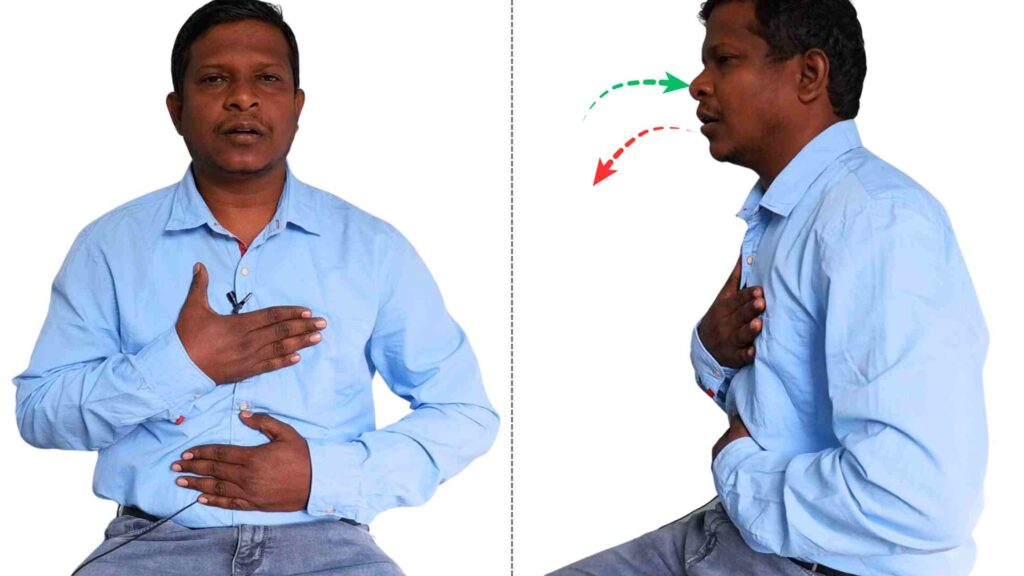
- Start by finding a comfortable position, either sitting or lying down. Placing a pillow under your knees may be helpful to support your lower back.
- Next, place one hand on your chest and the other on your abdomen.
- Take a slow, deep breath in through your nose, and feel your abdomen expand as you inhale.
- Feel your abdomen contract and gently pull inwards as you exhale through your mouth.
- Try to exhale twice as long as you inhale.
- Aim to practice diaphragmatic breathing for 15 to 20 repetitions in each session. You can do this several times daily whenever you need to relax or reduce stress.
When practising diaphragmatic breathing, it’s important to keep your chest still and allow all movement in the abdomen. This can take some practice, so don’t worry if it is initially challenging.
How to Do Pursed Lip Breathing for Asthma Relief

Pursed lip breathing is a technique that can help you control and regulate your breathing. To perform this exercise
- First, sit comfortably and relax your shoulders.
- Then, inhale slowly and deeply through your nose.
- As you exhale, purse your lips as if you were going to whistle or blow out a candle. Exhale slowly through your pursed lips, ensuring the exhalation is two to three times longer than the inhalation. You should feel a slight resistance in your lips as you exhale.
- Repeat this exercise 15 to 20 times per session.
It helps slow your breathing rate, reduce shortness of breath, and improve oxygen saturation in your blood. Pursed lip breathing can also help manage anxiety or stress, as it promotes relaxation and calmness.
Buteyko Breathing Method for Asthma: Benefits & How to Practice
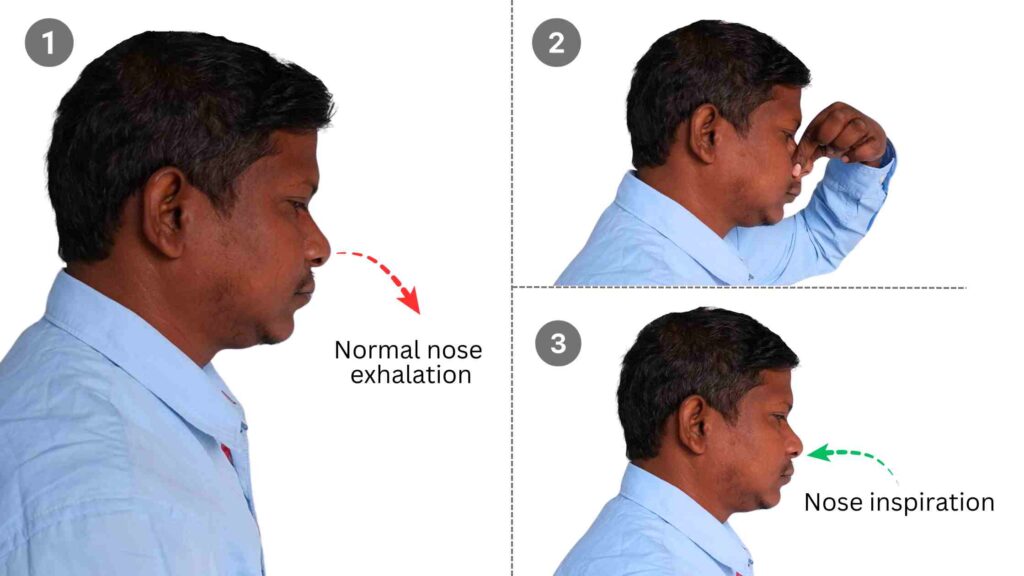
The Buteyko breathing exercise is a technique that involves breathing in a specific way to improve breath control and alleviate symptoms associated with breathing difficulties. To perform this exercise:
- You’ll first need to sit comfortably with your back straight. Begin by taking a few deep breaths to relax your body and clear your mind.
- Next, take a normal breath through your nose and exhale gently.
- After exhaling, close your nose and mouth with your fingers and hold your breath until you feel the urge to breathe again. This may take a few seconds to a minute or more, depending on your lung capacity and how relaxed you are.
- Once you feel the urge to breathe, release your nose and mouth and take a slow, deep breath through your nose.
- After inhaling, exhale gently and continue with normal breathing for about 10 seconds before repeating the process. You can repeat this exercise several times a day, as needed.
The Buteyko breathing exercise can help you train your body to breathe more efficiently, reducing symptoms of breathing difficulties such as asthma, bronchitis, and anxiety. With regular practice, this technique can help you feel calmer, centred, and in control of your breathing.
Papworth Breathing Technique for Asthma Control
This breathing exercise is designed to improve respiratory function by emphasising nose breathing and diaphragmatic breathing. To perform this exercise:
- Find a comfortable seated position with your back straight and your feet flat on the floor. You can close your eyes if you wish, but it is not necessary.
- Start by breathing in through your nose slowly and deeply, feeling the air fill your lungs. Place a hand on your stomach to monitor the movement of your diaphragm as you inhale. Your stomach should expand as you breathe in.
- Then, exhale slowly through your nose, feeling your stomach contract as you release the air.
As you continue breathing in this way, try to focus on the sensation of the air entering and leaving your body. Try to breathe as gently as possible, allowing the air to flow in and out naturally.
You may find that your mind starts to wander or become distracted. If this happens, simply bring your attention back to your breath and continue the exercise.
This combination of nose breathing and diaphragmatic breathing can be performed regularly, ideally for a few minutes each day. It can help to improve respiratory function by increasing oxygen intake and improving the efficiency of the lungs.
Additionally, this exercise can help reduce stress and promote relaxation.
Best Breathing Exercises for Asthma: Summary & Expert Tips
A study has revealed that Nitrate supplements can improve breathing in seniors. However, exercises play an important role. Incorporating these breathing exercises into your routine, ideally twice daily with 15 to 20 repetitions, can significantly benefit asthma patients.
In addition to this, we also recommend adding pranayama, a yoga for breathing, to the final list. One study also shows that a 24-week regular exercise program improves asthma control in adults1.
Remember to maintain consistency and complement these exercises with your prescribed medications.
If mucus buildup from bronchitis or a chest infection is also making it hard to breathe, postural drainage positions can complement these breathing exercises by helping clear your airways.
FAQ

The author is a physiotherapist who has been practising for the last 17 years. He holds a Bachelor's in Physiotherapy (BPT) from SVNIRTAR (Swami Vivekananda National Institute of Rehabilitation and Research), one of the prestigious physiotherapy schools in India.
Whatever he learns dealing with his patient, he shares it with the world through blogs and e-books. He also owns a YouTube channel, "Sunit Physiotherapist" with over 8 lakh active subscribers. Here, he shares everything he gets to learn serving the patient.