
Medical disclaimer: The Schamroth window test is a simple screening sign for finger clubbing. It is not a diagnostic test for lung cancer or any specific disease. A positive result (absent diamond window) means you should consult a doctor for proper evaluation. A negative result does not rule out serious conditions, including early-stage lung cancer. This article is for educational purposes only and is not a substitute for professional medical advice.
Have you heard of the Schamroth Window Test? It is a quick, easy finger check you can do at home to look for signs of finger clubbing (also called digital clubbing or nail clubbing). Clubbing can be associated with several medical conditions, including some lung and heart diseases.
In this article, we explain what the test is, how to perform it correctly, what finger clubbing means, and why it is important to see a doctor if the test is positive.
What is the Schamroth window test?
The Schamroth window test (also known as Schamroth’s sign or the diamond-hole finger test) was described by South African cardiologist Leo Schamroth in 1976. He noticed the sign on his own fingers while recovering from infective endocarditis.
It is a simple clinical manoeuvre used to detect the early loss of the normal angle between the nail and the nail bed — one of the first signs of finger clubbing.
How to perform the Schamroth window test (step-by-step)
You can do this test in a few seconds:
- Hold both hands in front of you with the palms facing you (or slightly toward each other).
- Place the dorsal (nail) surfaces of the same fingers from each hand against each other — most people use the index fingers. Gently press the nails and the soft tissue just behind the nail beds together.
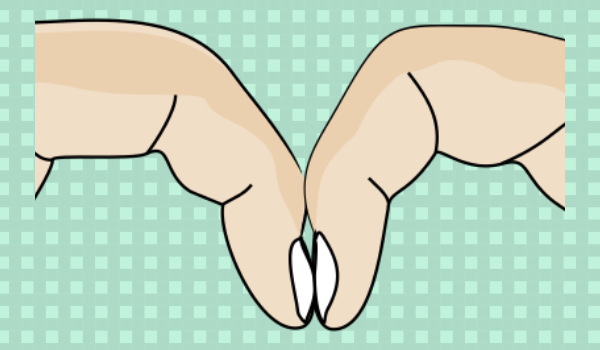
- Look carefully at the base of the nails (near the cuticles). In a normal person, a small diamond-shaped gap or “window” of light should be visible between the two nail beds.
- If the diamond-shaped window is missing or obliterated and the nails form a continuous straight or wider angle, the Schamroth sign is positive. This suggests finger clubbing.
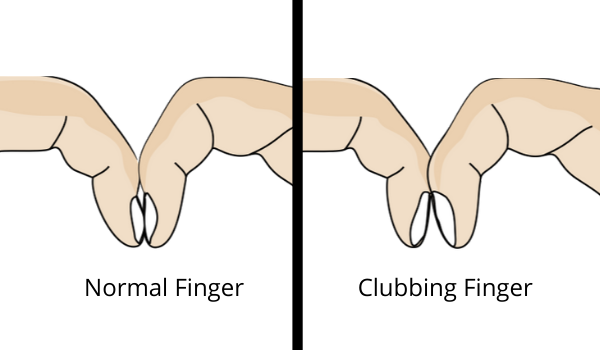
Important: A positive Schamroth sign indicates possible clubbing. It does not confirm lung cancer or any other specific diagnosis. Clubbing has many possible causes and requires medical assessment.
What is finger clubbing?
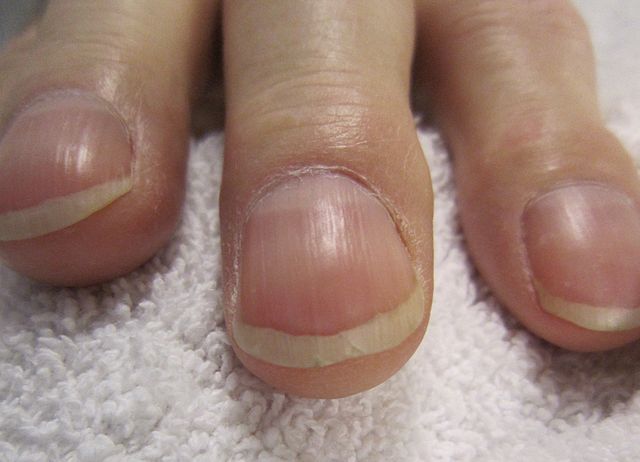
Finger clubbing (digital clubbing) describes changes in the soft tissues of the fingertips and the shape of the nails. Typical features include:
- Bulbous swelling of the distal part of the fingers (and sometimes toes)
- Increased curvature of the nails (often described as “watch-glass” or “spoon-like”)
- Loss of the normal angle (Lovibond’s angle) between the nail bed and the proximal nail fold
- Soft, spongy feeling of the nail bed when pressed
In advanced cases, new bone formation can occur around the wrists, ankles or fingers — a condition called hypertrophic osteoarthropathy, which is sometimes mistaken for arthritis.
What causes finger clubbing?
Clubbing is a clinical sign, not a disease itself. It can be associated with many conditions, including:
- Lung diseases — lung cancer (especially non-small cell), interstitial lung disease, bronchiectasis, lung abscess, cystic fibrosis, mesothelioma
- Heart diseases — cyanotic congenital heart disease, infective endocarditis. Heart health is also linked to other conditions such as rheumatoid arthritis and cardiovascular risk.
- Gastrointestinal and liver conditions — inflammatory bowel disease (Crohn’s, ulcerative colitis), liver cirrhosis
- Other causes — thyroid acropachy, certain infections, or idiopathic/hereditary clubbing with no underlying disease
Only a minority of people with lung cancer develop clubbing (estimates vary, often cited around 5–15% depending on the type and stage). The exact mechanism is not fully understood but is thought to involve increased blood flow and growth factors (such as VEGF) released in response to the underlying condition.
Research continues to show the broader benefits of lifestyle measures. For example, exercise is increasingly recognised as valuable in cancer prevention and recovery, and studies have also examined the positive effects of exercise during chemotherapy.
When should you see a doctor?
See a doctor promptly if:
- The Schamroth window is absent or reduced
- You notice new or progressive changes in the shape of your fingertips or nails
- Clubbing is accompanied by other symptoms such as persistent cough, unexplained weight loss, shortness of breath, chest pain, or coughing up blood
A doctor can confirm whether clubbing is present, investigate possible causes with history, examination and appropriate tests, and arrange referral if needed. Early evaluation is always better than waiting. For related respiratory support strategies, see our guide on breathing exercises that can help with certain lung conditions.
Also read: How Colin Egglesfield’s Cancer Journey Teaches Us Exercise’s Crucial Role in Recovery
This article was updated for medical accuracy and clarity. Always seek personalised advice from a qualified healthcare professional.

The author is a physiotherapist who has been practising for the last 17 years. He holds a Bachelor's in Physiotherapy (BPT) from SVNIRTAR (Swami Vivekananda National Institute of Rehabilitation and Research), one of the prestigious physiotherapy schools in India.
Whatever he learns dealing with his patient, he shares it with the world through blogs and e-books. He also owns a YouTube channel, "Sunit Physiotherapist" with over 8 lakh active subscribers. Here, he shares everything he gets to learn serving the patient.




Pingback: Rectal Cancer Vanishes in a Medical Study| Gives Hope to Cancer Patients - Physiosunit
Pingback: Rectal Cancer Vanishes in Medical Study| Gives Hope to Cancer Patients - Physiosunit